Quick Answer
In one sentence: Choose the setup together rather than imposing it, keep it simple, prioritize the pieces that protect independence like visitor screening and monitored detection, and understand that a home security system is not a medical alert system.
The longer answer: If you are reading this, you probably want two things at once: for a parent to keep their independence, and for some way to know they are okay. Those goals are not opposites. The right setup, decided with them rather than for them, supports both. The hard part is rarely the equipment; it is the conversation, the respect, and knowing what security can and cannot do. This guide covers all three, honestly.
Key Takeaways
- Independence and safety are not opposing goals. Chosen together, the right setup supports both.
- The conversation matters more than the catalog. Resistance is usually about protecting independence, not stubbornness.
- Security is not surveillance. Cameras involving a parent should be agreed on openly, never covert.
- Simplicity is a safety feature. A system that is confusing or prone to false alarms gets ignored or unplugged.
- A home security system is not a medical alert system. For falls, a dedicated device with fall detection is a separate category.
Helping a parent stay safe at home is one of those things that sounds simple and turns out to be delicate. Buy the wrong way, or push too hard, and a well-meant gesture can feel like a loss of independence or a vote of no confidence. Done well, it can do the opposite: give a parent more confidence to stay in the home they love, and give you a little more peace of mind. The difference is almost entirely in how you go about it.
Start With the Conversation, Not the Catalog
It is tempting to solve the worry by buying something and installing it on your next visit. Resist that. The most important step happens before any purchase, and it is a conversation.
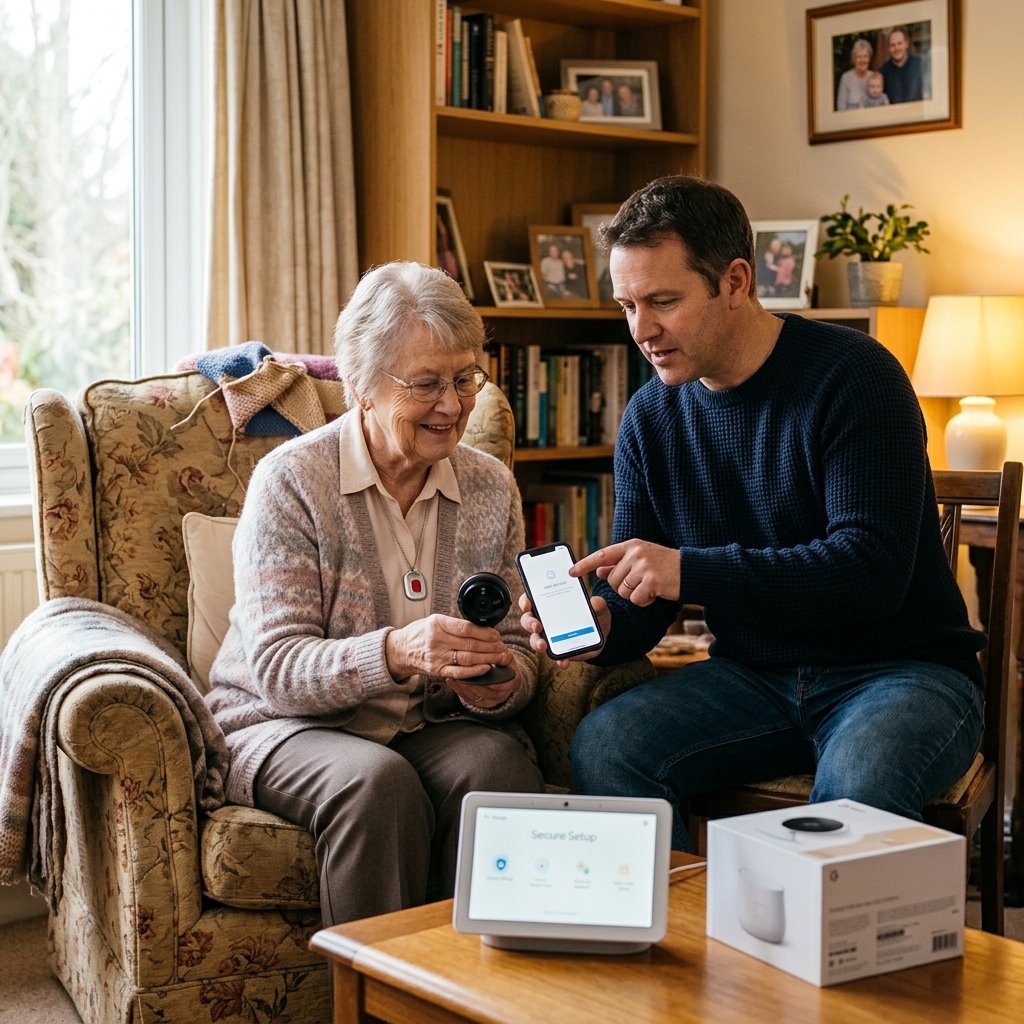
Guidance on this from aging-in-place and senior-safety specialists is consistent on one point: older adults often resist safety devices not because they do not see the value, but because accepting them can feel like admitting vulnerability or surrendering independence. That reaction is reasonable and worth respecting. The framing that works is partnership, not rescue. These tools are chosen together, to help your parent keep doing what they already do, on their own terms.
A few things that help. Ask what would actually make them feel more comfortable, rather than announcing what you have decided. Lead with their goals, usually staying in their own home, rather than your worries. Start with one small, obviously useful thing rather than a whole system. And give them control of it, so it feels like their tool, not your leash.
Security Is Not Surveillance
This distinction deserves its own section, because it is where good intentions most often go wrong.
A camera pointed at your parent's daily life is not the same as a doorbell that shows who is at the door, and the two should never be blurred. Monitoring a home for genuine hazards, an intruder, a fire, a burst pipe, is security. Watching an adult inside their own home to keep tabs on them is surveillance, and doing it without their full knowledge and agreement crosses a line, however loving the motive.
A simple rule
If there is a camera or sensor that involves your parent, they should know it is there, agree to it, and ideally control it. Indoor cameras in particular should be their decision, placed where they want, off-limits where they want. A device your parent has chosen is reassuring. A device they discover was watching them is a betrayal. The first protects the relationship; the second damages it.
What's Genuinely Different About a Parent's Setup
A system for an older parent is not just a standard system in a different house. A few priorities shift, and simplicity moves to the top of the list.
Simplicity is a safety feature. A system that is confusing, or that false-alarms often, is a system that gets switched off, unplugged, or ignored. Prioritize large, clear controls, a minimum of steps, and reliable sensors that do not cry wolf. The best setup is one your parent can actually use without frustration, every day.
Fewer, better pieces beat a sprawling system. You are not trying to build a fortress. A small number of genuinely useful, well-chosen devices will be used and valued. An overwhelming array will not.
Someone should respond when they cannot. For a parent who lives alone, the value of professional monitoring is highest, because the whole point is that help arrives even if no one in the house can call for it. Our comparison of monitored versus self-monitored systems is worth reading with this in mind.
Want Help Choosing a Setup That Fits Your Parent, Not a Catalog?
Our advisors can talk through simple, respectful options that support independence, and compare them across our provider partners. Free consultation, no pressure.
Call (855) 248-8052 or Request a Free QuoteThe Pieces Worth Prioritizing
If you focus on a handful of things that clearly earn their place, you will do more good than with a wall of gadgets. These come up most often for good reason.
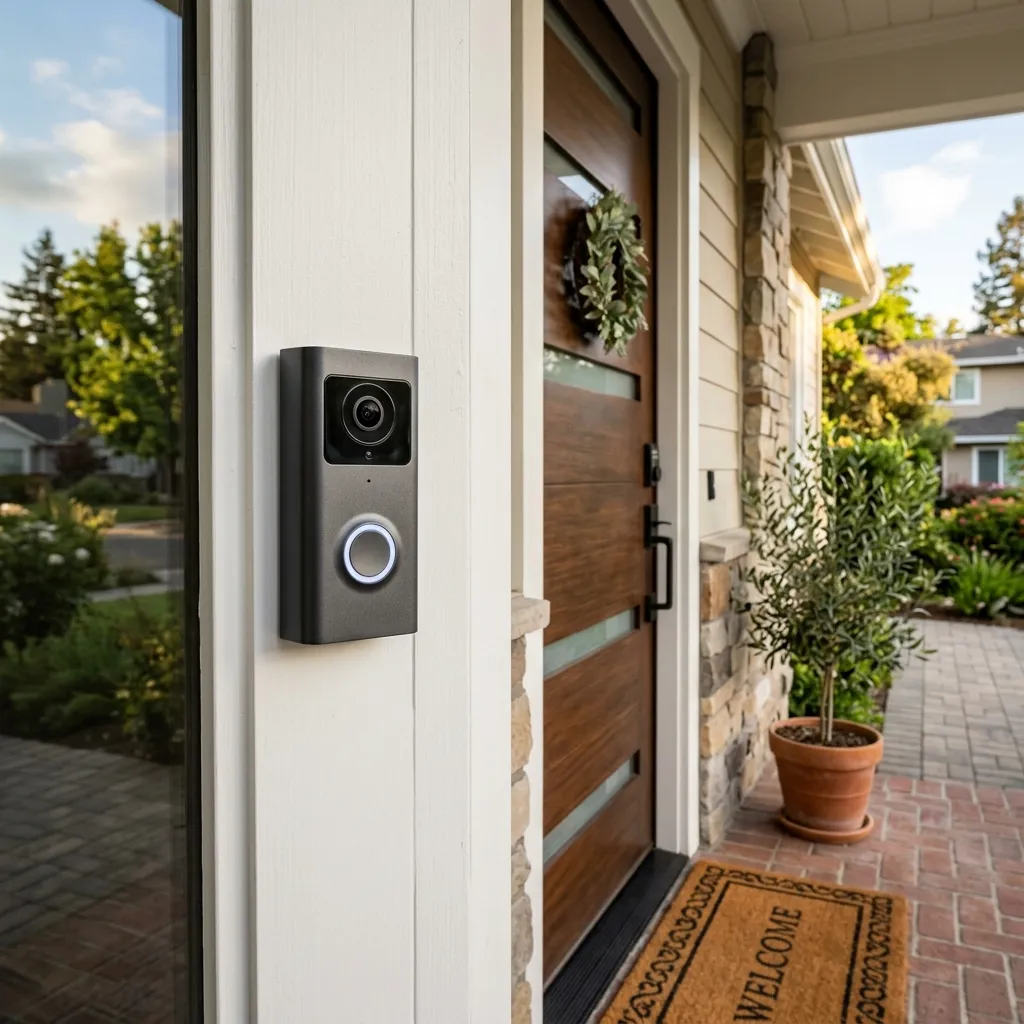
A video doorbell with two-way talk. Arguably the single most useful device here. It lets your parent see and speak to whoever is at the door without getting up or opening it, which matters both for convenience and, as we will cover, for avoiding scams. Our guide comparing a doorbell to a full system explains what it does and does not cover.
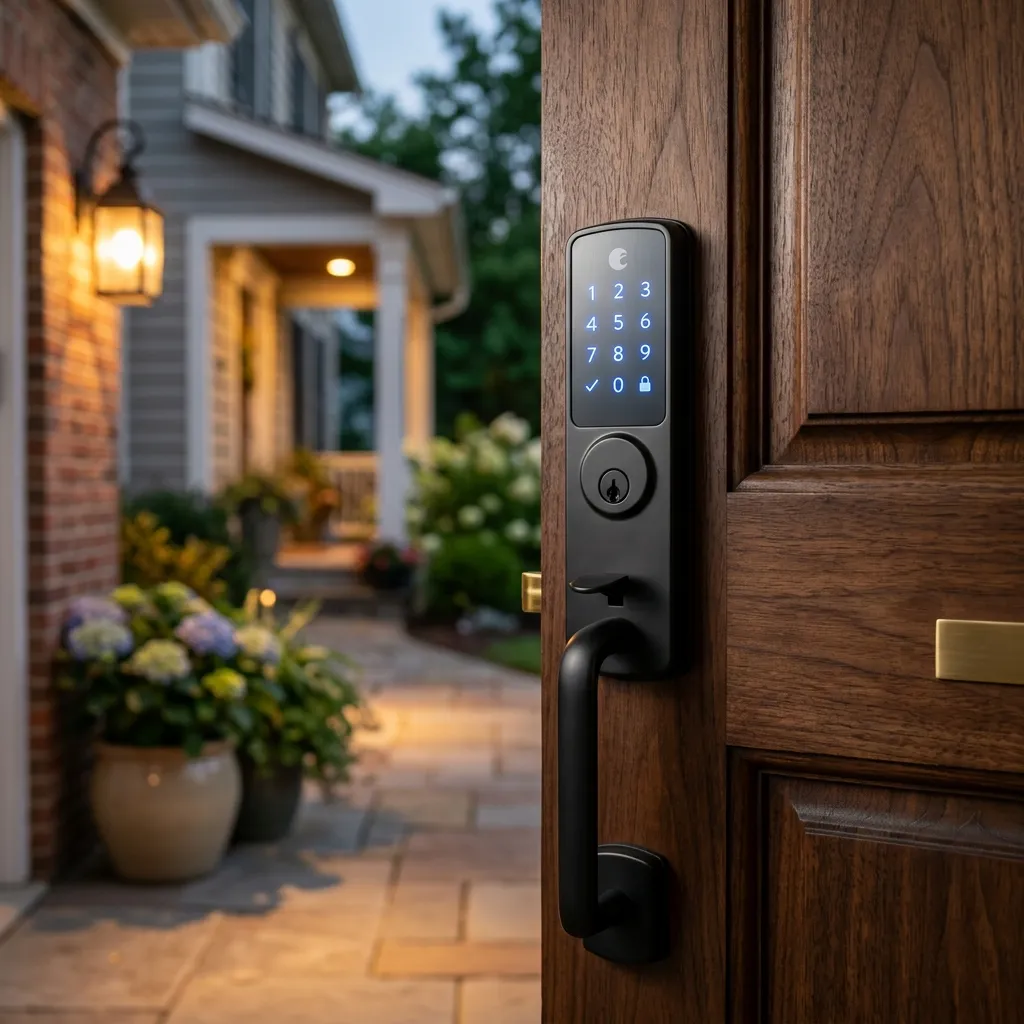
Smart locks with revocable codes. A keypad lock removes the fumbling with keys, and lets you give a temporary code to a visiting helper or family member, then remove it the day it is no longer needed. No lost keys, no locks to re-key.
Monitored smoke and carbon monoxide detection. So a hazard brings a response even if your parent does not hear the alarm or is unable to act. Our guide to smoke alarm safety covers why the type and age of the alarm matter too.
Water and freeze sensors. A burst pipe or a failed heater in a cold snap can do enormous damage quietly. An early warning is cheap protection.
Motion-activated lighting. Simple, inexpensive, and genuinely valuable: lights that come on automatically in hallways, bathrooms, and stairwells reduce the risk of a stumble in the dark. This is one of the highest-value, lowest-cost things on the list.
Where Home Security Ends and Medical Alert Begins
This is the honest part that product pages tend to blur, and getting it right matters more than any single purchase.
A home security system and a medical alert system are different things. Consumer testing is blunt about it: a security system generally does not double as a medical alert device. Some systems offer a panic button you can press in an emergency, which is useful, but it is not the same as a dedicated medical alert with fall detection, which can call for help automatically when someone cannot press a button themselves.
Why this matters: according to the Centers for Disease Control and Prevention, falls are the leading cause of injury-related death among adults aged 65 and older. If falls are a genuine concern for your parent, a dedicated medical alert system with fall detection is its own category, and worth looking at alongside, not instead of, home security. The two are complementary.
Two honest practical notes
First, treat any of this as a decision for your parent and their doctor, not something to be talked into. Second, on cost: original Medicare generally does not cover medical alert systems, though a Medicare Advantage plan or Medicaid may help depending on the plan and your state. Check specifics rather than assuming either way.
Guarding Against the Scams That Target Older Adults
This is one of the most practical and least-discussed reasons a little home security helps. Older adults are disproportionately targeted by fraud, both at the door and by phone. Reporting from the FBI has documented tens of thousands of older fraud victims in a single year, with losses running well over a billion dollars. A surprising amount of it starts with someone at the front door.
This is exactly where a video doorbell earns its place. Being able to see and speak to a caller without opening the door defuses the classic pressure tactic of the unexpected visitor, the fake utility worker, the too-good contractor, the urgent-sounding stranger. A few simple habits reinforce it: keep doors locked, never feel obliged to open the door to someone unexpected, and agree as a family that no decision has to be made on the doorstep. A camera plus permission to say no is a strong defense.
How to Set It Up Together
- Start with a conversation about what would make your parent feel more comfortable and independent, not a list of what you have bought.
- Begin with one clearly useful, simple thing, often a video doorbell or automatic lighting, and let it prove its worth.
- Agree openly on anything involving a camera, and give your parent control of it.
- Add monitored detection for hazards if your parent lives alone, so help can come when they cannot call it.
- Treat fall detection and medical alerts as a separate question, decided with your parent and their doctor.
- Keep it simple, revisit it as needs change, and let your parent lead wherever they can.
Frequently Asked Questions
How do I talk to my parent about home security without offending them?
Lead with their goal of staying independent in their own home, not with your worries. Ask what would make them more comfortable, choose it together, and start with one small, obviously useful thing rather than a whole system.
Is it okay to put cameras in my parent's home?
Only with their knowledge and agreement. Monitoring hazards like fire or intrusion is security; watching an adult inside their own home without consent is surveillance. Indoor cameras especially should be their decision, on their terms.
Can a home security system detect falls?
Generally no. A security system is not a medical alert device. Some offer a panic button, but that is not the same as automatic fall detection. For falls, a dedicated medical alert system is a separate, complementary category.
What is the single most useful device for an aging parent?
Often a video doorbell with two-way talk. It lets your parent see and speak to visitors without opening the door, which helps with everyday convenience and, importantly, with avoiding the door-to-door scams that target older adults.
Should my parent have professional monitoring?
For a parent living alone it is especially valuable, because help can be dispatched even if no one in the home can call for it. Weigh it against self-monitoring based on how much time they spend alone.
How do I protect my parent from scams?
A video doorbell lets them screen callers without opening the door, which defuses doorstep pressure. Pair it with simple habits: keep doors locked, never open to unexpected visitors, and agree no decision is ever made on the doorstep.
What is the easiest system for a senior to use?
The simplest one they will actually use. Prioritize large clear controls, few steps, and sensors that rarely false-alarm. A confusing or over-sensitive system gets ignored or unplugged, which removes the protection entirely.
Does Medicare cover medical alert systems?
Original Medicare generally does not, though a Medicare Advantage plan or Medicaid may help depending on the plan and your state. Check the specifics with the plan directly rather than assuming coverage either way.
What if my parent refuses any help at all?
Respect it, and keep the door open. Start with the least intrusive, most obviously useful thing, and let them lead. Pushing hard usually backfires; a device they choose later is worth more than one they resent now.
What are the highest-value, lowest-cost things I can do?
Automatic motion lighting in hallways and stairwells, a video doorbell, and making sure smoke and carbon monoxide detection works. These cost little, respect independence, and address the most common everyday risks directly.
Related Reading
- Monitored vs Self-Monitored Security Systems: The Real Cost Comparison
- Video Doorbell vs Full Security System: Is One Enough?
- Fire Safety at Home: What Your Smoke Alarm Isn't Telling You
- What is 24/7 Professional Monitoring, and Is It Worth It?
- Smart Locks vs Traditional Deadbolts: Which Actually Keeps You Safer?
Explore our services:
- 24/7 Professional Monitoring
- Smart Locks
- Monitored Smoke & Carbon Monoxide Detectors
- Home Security Overview
Help That Respects Their Independence
The best thing you can do for a parent is give them tools that help them stay independent, chosen with them, not for them. That is worth far more than the most feature-packed system installed over their objections.
Home Secure Connect is an independent home security advisor. We help families across the USA choose simple, respectful setups that support a parent's independence, and compare options across our trusted provider partners. For medical alert and fall detection, we will point you to the right dedicated resources. Free consultation. No obligation. No pressure.
Call (855) 248-8052 or Request a Free QuoteAvailable Mon to Fri, 10am to 8pm ET.
Trending This Week
Smart Locks vs Traditional Deadbolts: Which Actua…
September 23, 2026 · About 8 min read
Alarm System vs Security System: What's the Diffe…
September 21, 2026 · About 8 min read
Monitored vs Self-Monitored Security Systems: The…
September 14, 2026 · About 8 min read