Fiber Internet: Symmetric Speeds
from 300 Mbps to 5 Gig
Fiber-optic internet delivers the fastest, most reliable home internet you can get — with upload speeds that finally match download speeds. We help homeowners across all 50 states find available fiber providers, choose the right speed tier, and get installed without the usual headaches.
If your internet feels slow, you may have a connection-type problem.
Video calls that freeze when more than one person is on the line. Upload progress bars that hang forever when you send a file. Buffering wheels during the climactic scene of a movie. Smart home cameras that lag a few seconds behind reality. These aren't just frustrations. They're usually symptoms of a connection that's stretched too thin — and they're symptoms fiber-optic internet largely solves.
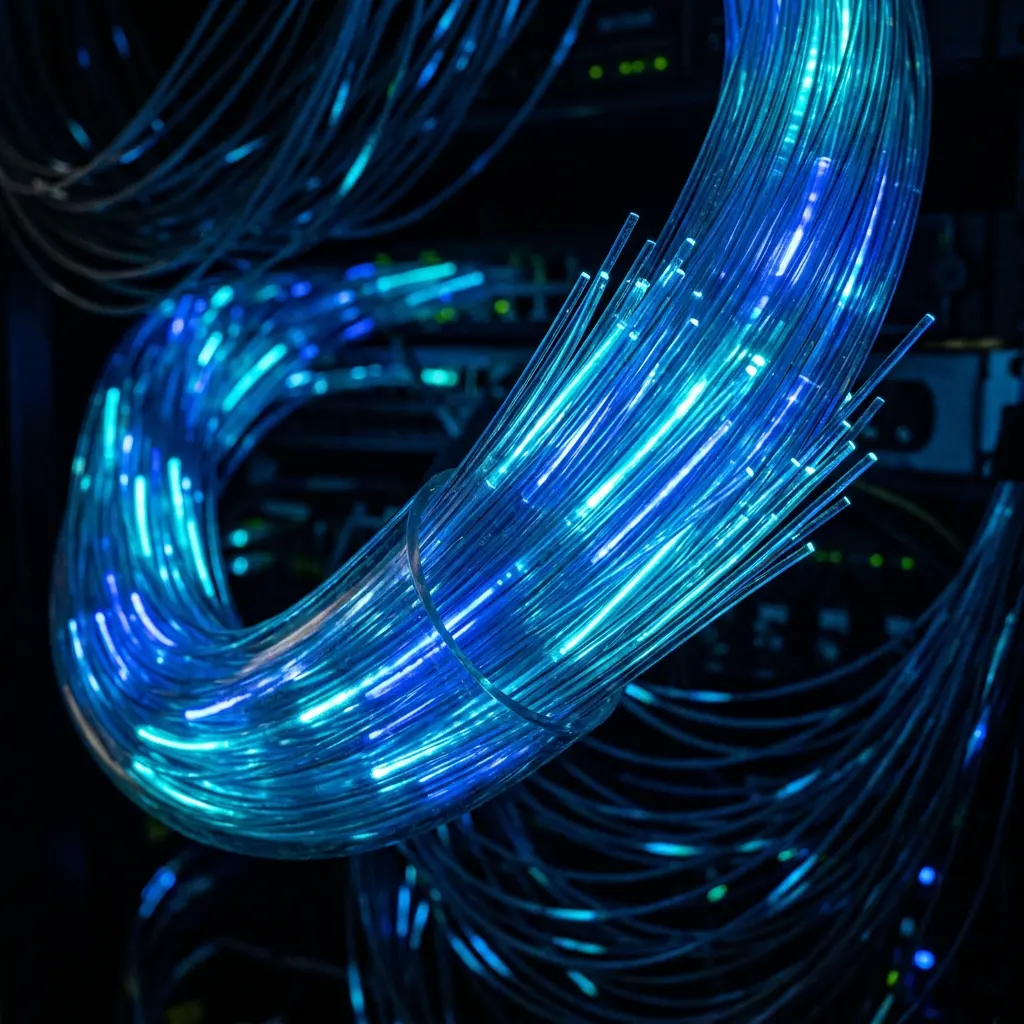
Fiber doesn't fix slow internet by being faster. It fixes slow internet by being a fundamentally different technology. Light pulses through glass instead of electrical signals through copper. Upload speeds that match download speeds. Lower latency. Far better reliability during peak hours. The result isn't just numbers on a speed test — it's an internet connection that quietly does what you ask of it, every time.
Why Fiber Internet Is Different (Not Just Faster)
Speed is what fiber gets advertised on. But the speed isn't actually what makes the daily experience different. Three things matter more.
1. Symmetric Upload and Download
With most cable internet plans available today, download speeds are significantly faster than upload speeds, often by a factor of three to ten depending on the specific plan and the underlying technology. The newest cable standard, DOCSIS 4.0, supports symmetric multi-gigabit speeds but its rollout is still in progress and not yet widely available. Fiber doesn't have this trade-off at any tier — a 1 Gig fiber plan gives you 1,000 Mbps in both directions. The symmetric vs asymmetric internet difference is most noticeable on video calls, file sharing, cloud backups, and any workload that depends on what you send out, not just what you receive.
2. Lower Latency
Latency is the small delay between when you click and when the server responds. Fiber typically delivers lower latency than cable and significantly lower latency than satellite or 5G home internet. The practical difference shows up most in online gaming, video calls, and remote desktop work, where small delays add up quickly.
3. Better Reliability During Peak Hours
Cable internet shares bandwidth among neighbors on the same network branch, which is why speeds can drop in the evenings when streaming demand is high. Fiber networks are designed differently — each connection is more isolated, so peak-hour slowdowns are less common. This is one of the most underrated practical advantages and one of the most common reasons homeowners notice an improvement after switching.
Fiber Internet Speed Tiers: What 300 Mbps, 1 Gig, and 5 Gig Actually Mean
Fiber providers offer plans from 300 Mbps up to 5 Gig (and in some markets, 8 Gig or even higher). Choosing the right tier saves money and avoids overpaying for speed you'll never use.
| Speed Tier | Who It's Right For |
|---|---|
| 300 Mbps | Small households (1-2 people), light streaming, occasional video calls, basic remote work. Plenty for most everyday use. The entry-level fiber tier. |
| 500 Mbps | Households with 3-4 people streaming, working from home, gaming casually. Comfortable margin for everyday use without thinking about it. |
| 1 Gig | The popular sweet spot. Large families, multiple 4K streams, work-from-home with video calls, gaming, smart home with many devices. 1 gig internet handles essentially any household need with room to spare. |
| 2 Gig | Power users, content creators uploading large video files, households with many simultaneous heavy users, future-proofing. |
| 5 Gig | The top current consumer tier in most markets. Professional content creators, small businesses run from home, technology enthusiasts. Most households will never use this fully. |
Fiber vs Cable Internet: What Actually Differs
Most American homes choose between fiber and cable. Here's the honest comparison.
The fiber vs cable internet decision is usually less about which is technically better and more about which is actually available at your address. Fiber wins on essentially every technical metric, but if it's not available in your neighborhood yet, modern cable, particularly the new DOCSIS 4.0 standard rolling out across the country, is genuinely fast and reliable for most uses. We help homeowners compare both during the consultation.
Want to compare fiber and cable options at your address?
We check what's actually available at your specific home — fiber, cable, and 5G home internet — and recommend the right choice for your household, your budget, and your usage.
Fiber Internet in My Area: How to Check Availability
Fiber availability varies significantly by address — even house to house on the same block in some neighborhoods. A few things to know about checking.
The Fiber Internet Availability Map Reality
Major fiber providers each maintain their own coverage maps, often shown at the zip-code level. The challenge: actual availability is street-by-street, sometimes even house-by-house. Two homes on the same block can have different fiber options because the build-out happened at different times. The most accurate check is always an address-specific lookup, not a zip-code map.
How We Check Fiber Internet in Your Area
As an independent advisor, we check what fiber providers are available at your specific address, what speed tiers they offer there, and what backup options exist if fiber isn't yet available. The check is address-specific (not just zip-code level), which is the most accurate way to know what you can actually get. It is the single most useful thing we do for new customers in the first call.
Fiber Internet Las Vegas, Tampa, and Other Major Markets
We help homeowners across all 50 states confirm fiber availability and choose the right provider. Markets where fiber availability has expanded significantly in recent years include the Las Vegas metro area, the Tampa Bay region (our home market), and dozens of other metros where multiple fiber providers now operate. If you've been searching for fiber internet Las Vegas or fiber internet in your area more generally, the address-specific check is typically the fastest way to see what's actually available — we handle it during a short consultation.

What Homeowners Are Saying
★★★★★
"[INSERT REAL TESTIMONIAL — going from cable to fiber, noticeable daily improvement, especially uploads and video calls.]"
— [First Name] [Last Initial], [City, State]
★★★★★
"[INSERT REAL TESTIMONIAL — HSC helped them figure out the right speed tier, didn't oversell, avoided overpaying.]"
— [First Name] [Last Initial], [City, State]
★★★★★
"[INSERT REAL TESTIMONIAL — Las Vegas or other specific market, easy install experience, reliable service.]"
— [First Name] [Last Initial], [City, State]

Address-Specific Availability Check
We check what fiber is available at your specific address, not just your zip code, and confirm exact speed tiers and plans. This is the single most useful thing we do in the first call.
Honest Speed Tier Guidance
We talk you out of speed tiers you don't need as often as we talk you into them. Most households are well-served by 500 Mbps to 1 Gig and don't benefit from 2 Gig or 5 Gig in daily use.
Professional Install Coordination
We coordinate the install timeline with your fiber provider, handle Wi-Fi 7 router setup with strong whole-home coverage, and verify everything works correctly before we leave.
All 50 States, Real Advisors
Las Vegas, Tampa, and everywhere else. Whether you need fiber internet installation near me or in a market you're moving to, a real advisor walks you through your options.
Frequently Asked Questions
Modern fiber internet ranges from 300 Mbps up to 5 Gig in most markets that have it, with some markets offering even higher speeds. Fiber generally delivers consistent speeds close to its advertised rates, though the result you actually see depends on your specific provider, your in-home Wi-Fi setup, and the devices you're using. The most important practical difference from cable is that fiber's upload speed matches download speed (symmetric), which is what makes day-to-day usage feel different. Cable plans typically offer fast downloads but uploads are often three to ten times slower, which is why video calls and large file uploads can feel sluggish even on a fast cable plan.
Pricing for 1 Gig fiber internet from leading US providers typically runs in the $70 to $100 per month range, depending on the provider, market, and any current promotional offers. Entry-level fiber (300 Mbps) typically runs in the $50 to $65 range, and multi-gigabit tiers (2 Gig and 5 Gig) run higher, generally from around $145 up to $245 per month at the top tier. Some providers offer flat-rate pricing that stays consistent month to month with no promotional jump after the first year, while others advertise lower promotional prices that increase at renewal. Specific pricing varies significantly between providers and between markets even for the same provider. We provide accurate, specific quotes based on what's actually available at your address during the free consultation.
For most American households, no. The honest answer is that 500 Mbps to 1 Gig is enough for almost any combination of streaming, gaming, video calls, smart home devices, and remote work. The only households that genuinely benefit from 2 Gig or 5 Gig are content creators uploading massive video files, small businesses run from home, or homes with many simultaneous heavy users on different services at the same time. We talk to homeowners every week who upgraded to higher tiers expecting a noticeable improvement and didn't see one. Choose the speed tier that matches actual usage, not aspirational usage.
If fiber is available at your address, fiber is the better choice in almost every case — faster, more symmetric, lower latency, more reliable, typically no data caps. If fiber isn't available, modern cable (especially with newer DOCSIS 4.0 technology) is genuinely fast and reliable for most uses. The fiber vs cable internet decision is usually less about preference and more about availability. We check both during the free consultation and recommend what fits your address.
The most accurate way is a specific address lookup rather than a zip-code map. Major fiber providers each maintain their own coverage tools, but availability often varies street-by-street even inside a 'covered' zip code. As an independent advisor, we run the address-specific check for you, confirm what's actually available, what speed tiers, and what other backup options exist if fiber isn't available yet. The check typically takes about 5 minutes.
Yes. Fiber internet Las Vegas coverage has expanded considerably over recent years, with significant build-out across the metro area. Availability varies by neighborhood, with some areas served by fiber and others where cable or fixed wireless options are still the best choice. The most accurate answer for a specific address is a quick address-level check, which we handle during the consultation.
Modern fiber installations typically include a fiber gateway (modem) from the provider. Whether you need a separate Wi-Fi router or just use the gateway's built-in Wi-Fi depends on your home size and layout. For homes larger than about 2,000 square feet or with multiple floors, a separate Wi-Fi 7 router (or mesh system) typically delivers much better whole-home coverage than the gateway's built-in Wi-Fi. We handle the right setup as part of professional installation, including the right fiber internet router and Wi-Fi configuration for your specific home.
Almost always yes, if it's available. Working from home depends heavily on upload speed (for video calls, screen sharing, cloud sync, large file uploads), and this is exactly where cable internet falls short. Fiber's symmetric upload speeds make remote work meaningfully smoother — video calls don't freeze when you talk, screen sharing stays smooth even with multiple participants, and large file uploads finish in minutes instead of hours. For most work-from-home households, fiber pays back the upgrade quickly in less frustration and fewer interruptions.
Check What Fiber Is Available at Your Address
Talk to a real advisor about fiber internet options at your home. We confirm what's available at your address, recommend the right speed tier for your household, handle professional installation, and set up your Wi-Fi for strong whole-home coverage and smart home security. No pressure. No fees.
Or call (855) 248-8052. Mon to Fri, 10am–8pm ET.