Quick Answer
In one sentence: Stay calm, enter your disarm code, and confirm with your monitoring station, never by calling 911, because if they cancel the dispatch before an officer arrives, it usually isn't counted as a false alarm and no fine applies.
The longer answer: A false alarm feels like a nuisance, but it has both a clock and a cost. In the first minute, handling it correctly can prevent a dispatch and a fine entirely. Over time, repeated false alarms bring escalating penalties and can even get your alarm response suspended, which is the real danger. The good news is that nearly all false alarms trace to a short list of preventable causes. This guide covers the immediate steps, the true cost, and how to make sure it doesn't keep happening.
Key Takeaways
- Don't panic. Enter your disarm code, then confirm with your monitoring station, never call 911 to cancel.
- If the dispatch is cancelled before an officer arrives, it usually isn't counted as a false alarm or fined.
- Repeated false alarms bring escalating fines and can lead to your alarm response being suspended.
- Most false alarms come from user error, unsecured doors, low batteries, pets, or drafts near sensors.
- Training everyone with access, and asking for enhanced call verification, prevents the majority of them.
Almost everyone with a security system sets it off by accident eventually, walking in and forgetting to disarm, a pet wandering past a sensor, a door left ajar. The alarm blares, the heart races, and for a moment nobody remembers what to do. That moment is exactly when it helps to have a plan, because what you do in the next sixty seconds decides whether this is a harmless blip or a fined dispatch. Let's start there.
The First Minute: Don't Panic, Cancel the Dispatch
When the alarm goes off and you know it's a false alarm, there's a clear, calm sequence. Police and alarm ordinances across the country describe essentially the same steps.
Do this, in order
- Don't panic. Carefully enter your disarm code at the panel or keypad to silence and reset the system. A rushed, wrong code only adds confusion.
- Wait for your monitoring station to call. When they do, give your verbal password or account ID so they know it's really you and can stand down the dispatch.
- If they don't call you, call them. Keep the monitoring station's number posted by your panel, and call to cancel the police dispatch yourself.
- Never call 911 to cancel. This is the one near-universal rule: 911 cannot cancel your alarm dispatch. Only your monitoring station can, so always go through them.
- Don't leave until it's resolved. Stay until you've confirmed with the monitoring station that the dispatch is cancelled.
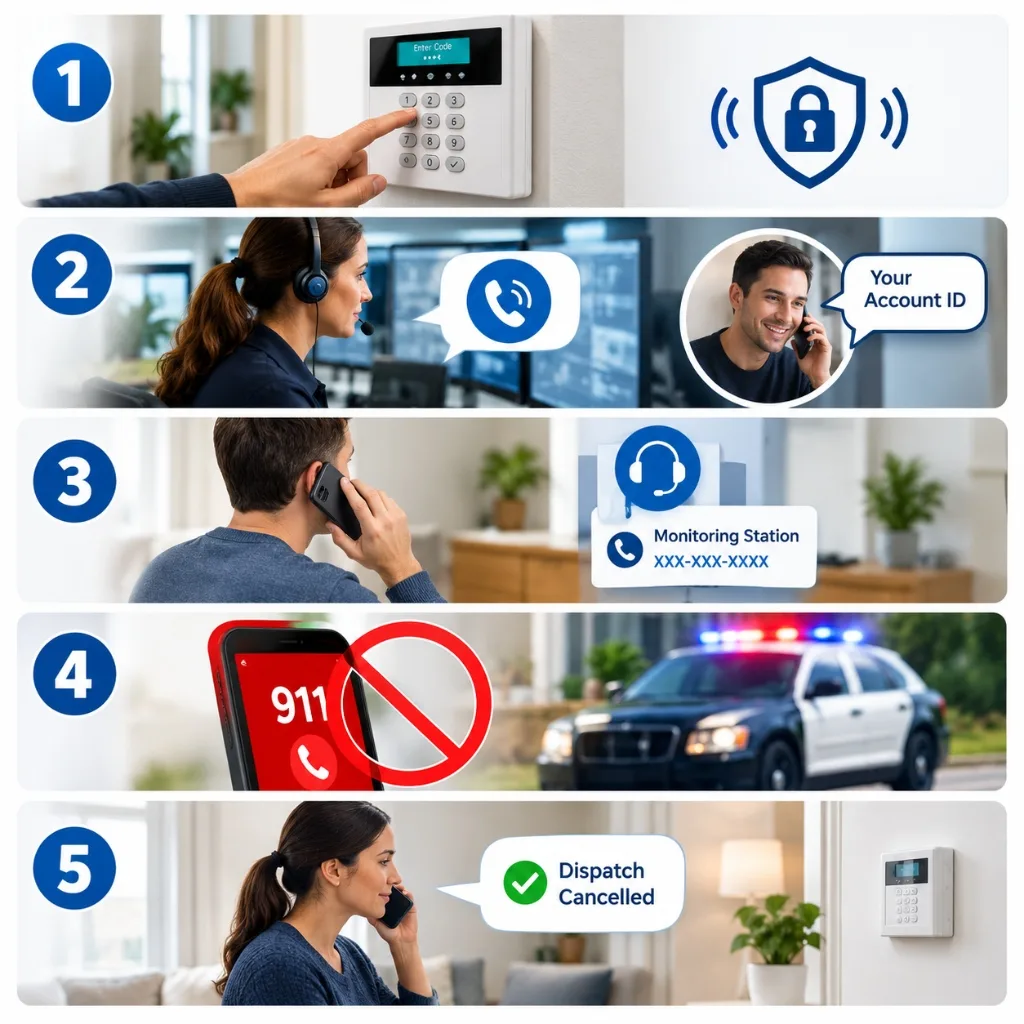
Why the speed matters: many alarm ordinances state that if the alarm company cancels the dispatch before the responding officer reaches your home, it is not counted as a false alarm and no fine is assessed. In other words, a fast, correct cancellation can erase the whole problem. Our guide to how professional monitoring works explains the verification call on the other end of that process.
The gotcha almost nobody knows
Your account has a normal verbal password and, separately, a duress code, a special word or code that quietly signals you're being forced to disarm under threat. If you accidentally speak your duress code to the operator during the fluster of a false alarm, dispatch happens anyway, even if you also give the correct password. Know which is which, keep your duress code memorable but distinct, and never confuse the two under pressure.
What a False Alarm Actually Costs You
Here's the part people underestimate until a bill arrives. False alarms are not free, and the costs escalate in a way designed to make you fix the underlying cause.
Registration and permits
Many cities and counties require you to register your alarm system, sometimes for a fee, and having an unregistered system can itself carry a penalty.
Escalating fines
Penalties vary widely by jurisdiction, but the common pattern is that the first one or two false alarms in a year are free or a warning, after which each one costs more than the last. In some ordinances the fines climb from tens of dollars into the hundreds, up to a cap around a thousand dollars for frequent offenders. Check your local rules, because they differ a lot.
Suspension of response, the real danger
This is the one that matters most. In many jurisdictions, too many false alarms, or unpaid fines, can lead the police to suspend response to your alarm altogether. That means when a real break-in happens, no one is dispatched. Fire, carbon monoxide, medical, and panic alarms are usually exempt from suspension, but intrusion response is not.
Put simply, the cost of ignoring repeated false alarms isn't just money. It's the protection itself, quietly switched off by the very system meant to help you.
Alarm keeps going off and you can't find why?
Our advisors can help you trace a recurring false alarm to its cause and talk through fixes across our provider partners, before it costs you fines or your response. Free consultation, no pressure.
Call (855) 248-8052 or request a free quote online.Why False Alarms Happen
Fixing false alarms starts with knowing what causes them, and the list is short. Police false-alarm programs report the same handful again and again.
User error, by far the biggest
Someone enters without disarming, fumbles the code, or was never properly shown how the system works. This includes everyone with access: family, house cleaners, sitters, contractors, lawn crews, and guests.
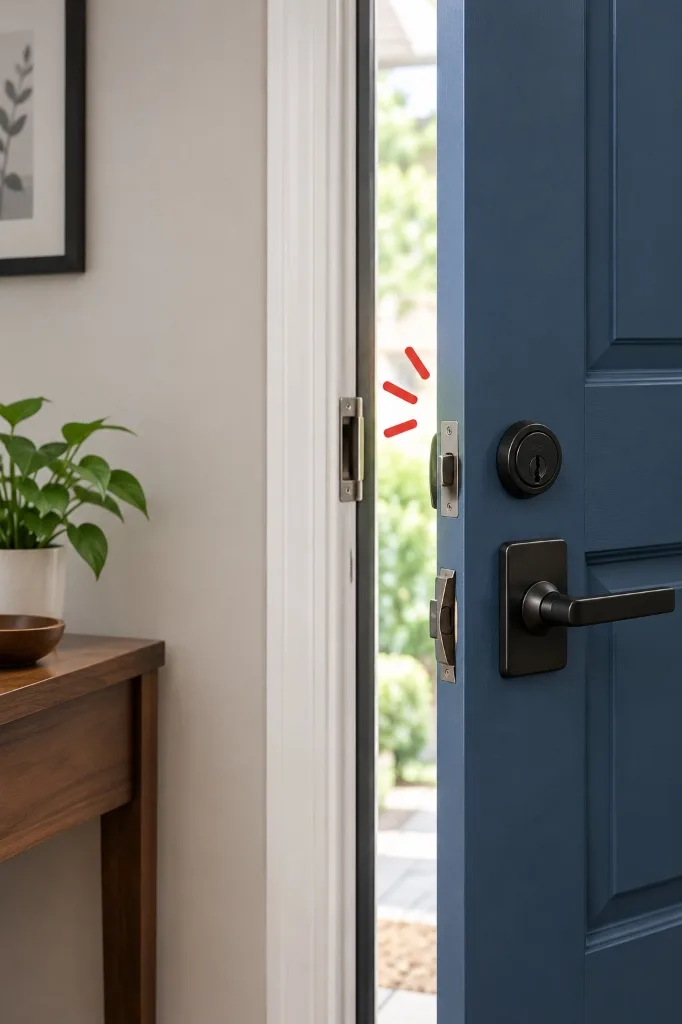
Unsecured doors and windows
An unlocked, loose-fitting, or slightly open door or window can trip a sensor, or let someone in who then sets off the alarm.
Weak or dying batteries
Low batteries in sensors are a classic cause, and even changing batteries can briefly interrupt power and trigger an activation if the system isn't expecting it.
Pets
A pet wandering past a motion sensor is a frequent culprit, and a barking dog can even set off some glass-break detectors.
Drafts and decorations
Air from a heater or air conditioner, or an open window, moves plants, curtains, balloons, and seasonal decorations, and a motion sensor reads that movement as an intruder.
Sensitivity and placement
A sensor set too sensitive, or installed in the wrong spot, trips at the smallest thing.
How to Stop Them Happening Again
Match the fix to the cause and most false alarms simply stop. A few prevention steps do the heavy lifting.
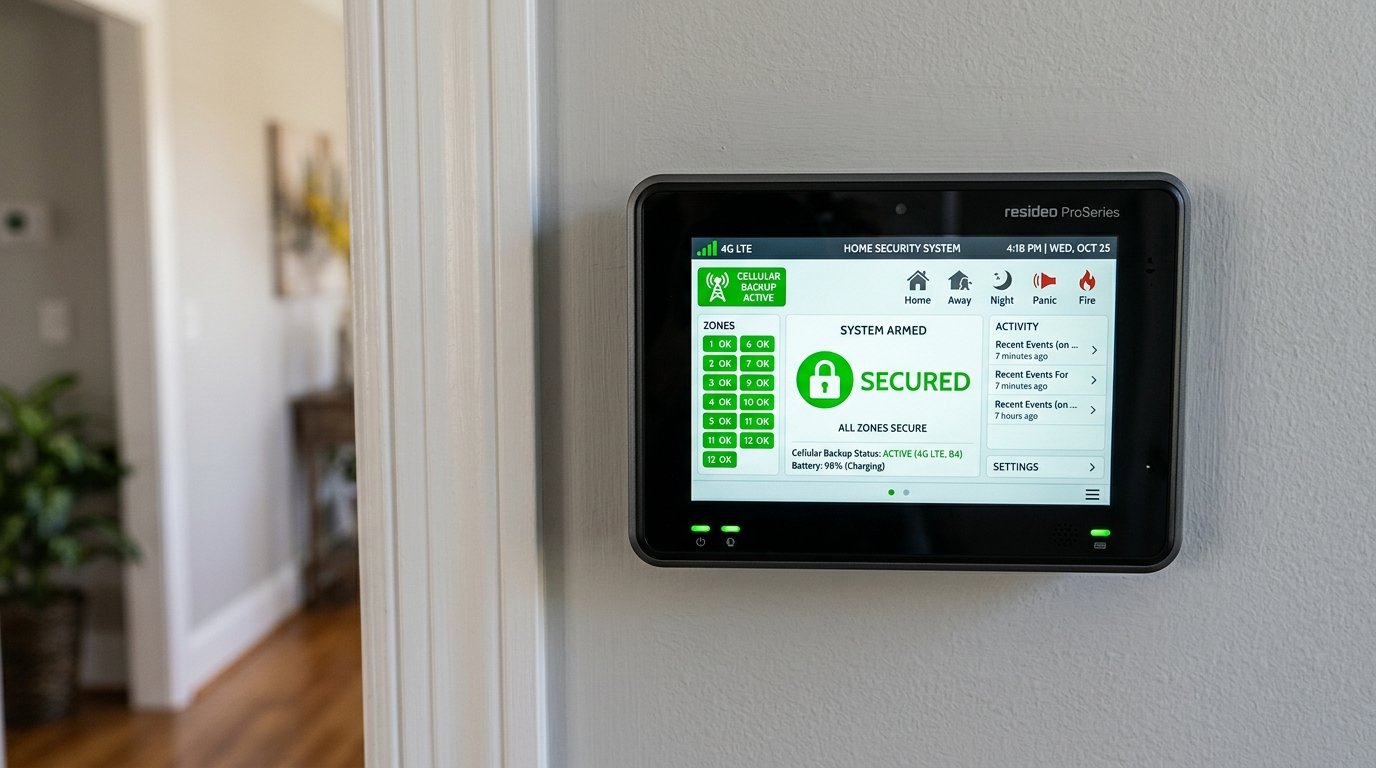
Train everyone with access
This is the single biggest lever, because user error is the top cause. Make sure every family member, and anyone with a key or code, knows how to arm, disarm, and cancel, and knows the password. Rehearse the cancel process.
Secure doors and windows before arming
Get in the habit of checking everything is closed and locked before you set the system.
Stay ahead of batteries
Replace them at the first low warning, and tell your monitoring company before you change them or do work that interrupts power, so they don't treat it as an event.
Use pet-immune sensors, and keep clutter clear
If you have pets, use motion sensors rated to ignore them, and test that feature. Keep pets, balloons, fans, plants, and decorations away from sensor zones. Our guide to sensors and how to place them helps here.
Ask for enhanced call verification
Ask your monitoring company to call two or more people before requesting a dispatch. This step alone has been shown nationally to cut false-alarm dispatches by over half. Some systems also offer cross-zoning, where two sensors must trip before a response is requested.
When a False Alarm Is Telling You Something Real
One important caveat: don't treat every false alarm as pure nuisance, and above all, don't respond by disabling the system or pulling a sensor's batteries. A repeated false alarm from the same place is often a diagnosis, not just an annoyance.
The same sensor tripping again and again can mean a failing sensor, a door or window that no longer seals properly, a battery on its last legs, or a genuine intermittent fault worth fixing. Disabling it removes real protection and hides the underlying problem. Instead, treat a recurring false alarm as a signal to investigate that specific device, the same diagnostic mindset our guide to testing your system uses. If you can't find the cause, that's the moment to call your provider, not to switch the system off.
Cause and Fix: Quick Reference
A fast lookup for the most common recurring false alarms.
| If this keeps happening | Try this |
|---|---|
| Someone keeps tripping it on entry | Retrain everyone on the disarm code and entry delay; make sure each person has their own code. |
| A motion sensor trips with no one there | Move pets, plants, curtains, and decorations out of its zone; lower sensitivity; switch to a pet-immune sensor. |
| A door or window sensor keeps faulting | Check the door or window seals and closes fully; realign the sensor halves; replace the battery. |
| It happens around battery changes | Notify your monitoring company before changing batteries or doing work that cuts power. |
| The same device fails repeatedly | Treat it as a possible fault: test the device, and if it still fails, have it serviced rather than disabled. |
| Dispatches keep getting requested | Ask your monitoring company for enhanced call verification, so more people are called first. |
Frequently Asked Questions
How do I cancel a false alarm?
Enter your disarm code to silence the system, then confirm with your monitoring station and give your verbal password. If they don't call you, call them. Never call 911 to cancel; only the monitoring station can.
Will I be fined for a false alarm?
It depends. Many ordinances don't fine the first one or two a year, then escalate. Crucially, if the dispatch is cancelled before an officer arrives, it usually isn't counted as a false alarm at all.
Why should I not call 911 to cancel my alarm?
Because 911 cannot cancel your alarm dispatch; only your monitoring station can. Calling 911 adds confusion and ties up emergency lines. Always cancel through the monitoring station, whose number should be posted by your panel.
What causes most false alarms?
User error is the biggest cause, followed by unsecured doors and windows, low batteries, pets, and drafts moving plants or decorations near motion sensors. Nearly all of these are preventable with a few habits and settings.
Can too many false alarms get my alarm ignored?
Yes. In many jurisdictions, repeated false alarms or unpaid fines can lead police to suspend response to your alarm. That means no dispatch during a real emergency, which is why fixing recurring false alarms matters.
What is a duress code and why does it matter here?
It's a code that secretly signals you're being forced to disarm under threat, triggering a dispatch even if you give the right password. Accidentally speaking it during a false alarm causes police to be sent, so keep the two distinct.
How do I stop my pet from setting off the alarm?
Use motion sensors rated to ignore pets of your animal's size, and test that feature. Keep pets out of glass-break sensor range, and avoid placing motion detectors where a pet roams freely while the system is armed.
My alarm keeps going off for no reason. What should I do?
Treat it as a diagnosis, not a nuisance. A recurring trip often means a failing sensor, a door that no longer seals, or a dying battery. Investigate that device, and call your provider rather than disabling it.
What is enhanced call verification?
A setting where your monitoring company calls two or more people to confirm an alarm before requesting a dispatch. Shown nationally to cut false-alarm dispatches by over half, it's worth asking your provider to enable it.
Should I turn off my system if it keeps false alarming?
No. Disabling it removes your protection and hides the real problem. Instead, find and fix the cause, or have the faulty device serviced. A recurring false alarm is a repair signal, not a reason to go unprotected.
Related Reading
- How to Test if Your Home Security System Is Actually Working
- What is 24/7 Professional Monitoring, and Is It Worth It?
- Monitored vs Self-Monitored Security Systems: The Real Cost Comparison
- What Modern Home Security Does That Old Systems Didn't
Explore our services:
Fewer Alarms, Real Protection
A system you trust is one that only sounds when it should. Handling a false alarm well, and preventing the next one, keeps your protection sharp and your response intact.
Home Secure Connect is an independent home security advisor. We help homeowners across the USA track down recurring false alarms and choose settings and equipment that reduce them, across our trusted provider partners. Free consultation. No obligation. No pressure.
Call (855) 248-8052 or Request a Free QuoteAvailable Mon to Fri, 10am to 8pm ET.
Trending This Week
Home Security for Apartments and Rentals: What Ac…
September 28, 2026 · About 9 min read
Smart Locks vs Traditional Deadbolts: Which Actua…
September 23, 2026 · About 8 min read
Alarm System vs Security System: What's the Diffe…
September 21, 2026 · About 8 min read