This article is about making sure your alarms warn you in time and that you have a plan. It is general guidance, not a substitute for your local fire department's advice. If you smell gas or suspect carbon monoxide, leave immediately and call 911 or your gas company from outside.
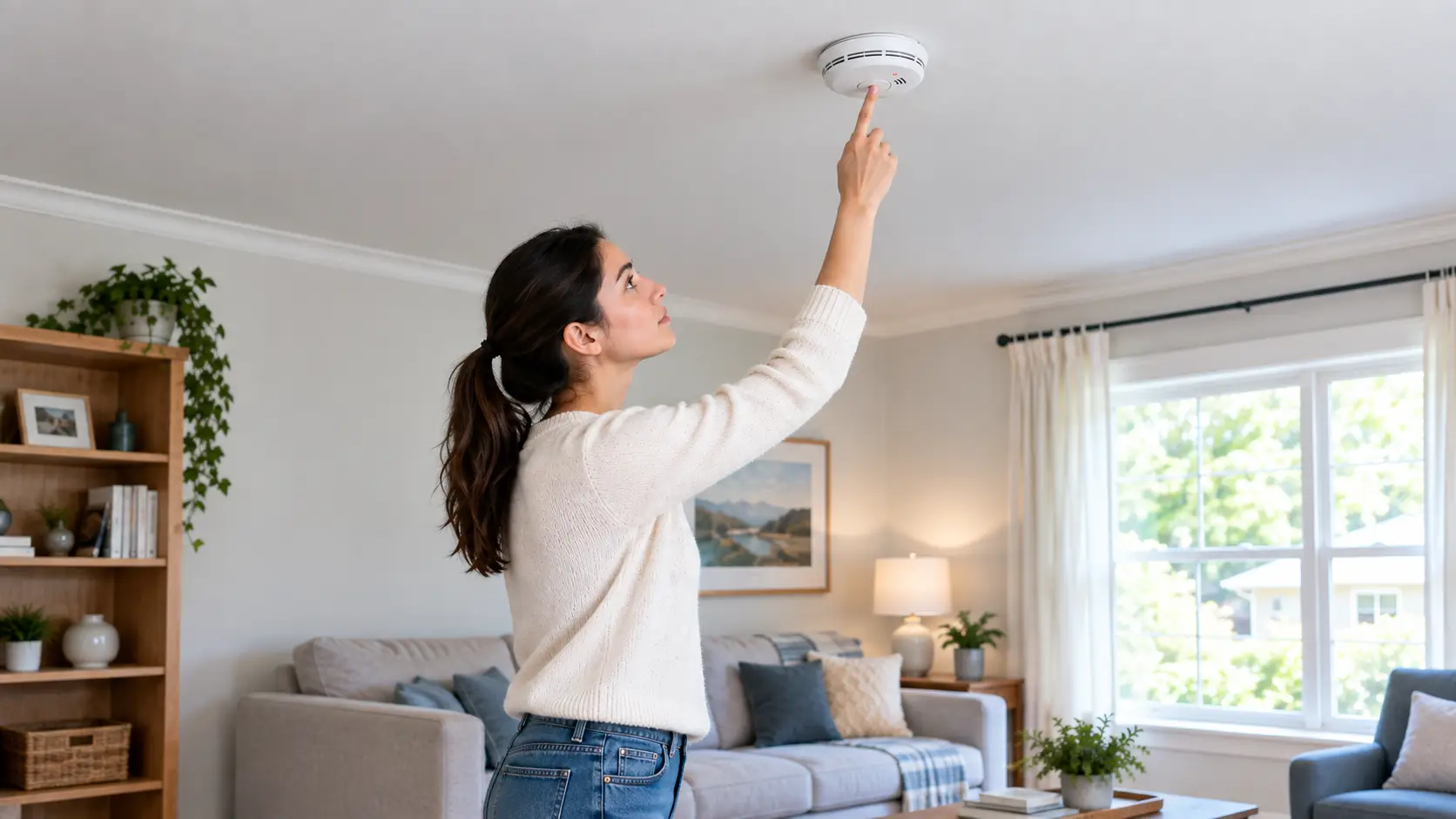
Quick Answer
In one sentence: A working smoke alarm is essential, but a standard one quietly leaves out four things: which fires it is slow to catch, that it has an expiry date, that it says nothing about carbon monoxide, and how little time modern furnishings now leave you to escape.
The longer answer: Most fire-safety advice stops at 'test it monthly and change the batteries', which is true and incomplete. The alarm on your ceiling has real blind spots that almost nobody checks, and a few of them can cost the minutes that matter most. This guide covers what a standard alarm does not tell you, why it matters, and the short list of things worth doing this week.
Key Takeaways
- Alarm type matters. Ionization alarms are slower on smoldering fires; photoelectric alarms are slower on fast-flaming fires. Authorities recommend both.
- Smoke alarms expire. NFPA guidance is to replace them 10 years from the manufacture date, or 7 years for a combination smoke and CO alarm.
- A smoke alarm does not detect carbon monoxide unless it is a combination unit. CO is odorless and colorless.
- Escape time has shrunk. Synthetic furnishings burn far faster than the natural materials of decades ago.
- NFPA reports most home fire deaths happen in homes with no working smoke alarm.
A smoke alarm is one of the highest-value safety devices you can own. The National Fire Protection Association reports that most home fire deaths occur in homes with no smoke alarms or none that work. So this is not an argument against them, it is the opposite. It is about making sure the one you have is actually doing the job you assume it is, because a few common blind spots quietly undermine that assumption.
It Isn't Telling You Which Fires It's Slow to Catch
This is the blind spot almost nobody knows about, and it's the most important. There are two smoke-sensing technologies, and they respond very differently to different kinds of fire.
Ionization alarms respond fastest to fast, flaming fires, the kind with small smoke particles. Photoelectric alarms respond fastest to slow, smoldering fires, the kind that start in upholstery, mattresses, or wiring and produce a lot of smoke before visible flames.
Here's why that matters. The National Institute of Standards and Technology has found that ionization detectors can sometimes fail to alarm in a smoldering fire even when the room is thick with smoke, while photoelectric detectors typically alarm substantially sooner in those conditions. Smoldering fires are exactly the ones that start while a household is asleep, which is when they are most dangerous. You cannot predict which type of fire you will have, which is why the US Fire Administration and the National Fire Protection Association recommend installing both technologies, or a single combination alarm that contains both.
Check this today
Take one alarm down and read the back. The label states whether it is ionization, photoelectric, or dual-sensor. If your home has only ionization alarms, fire-safety authorities suggest adding photoelectric or dual-sensor units, particularly in and near bedrooms. If forced to choose a single type, the emerging consensus favors photoelectric, because smoldering fires kill more sleeping occupants.
It Isn't Telling You That It's Expired
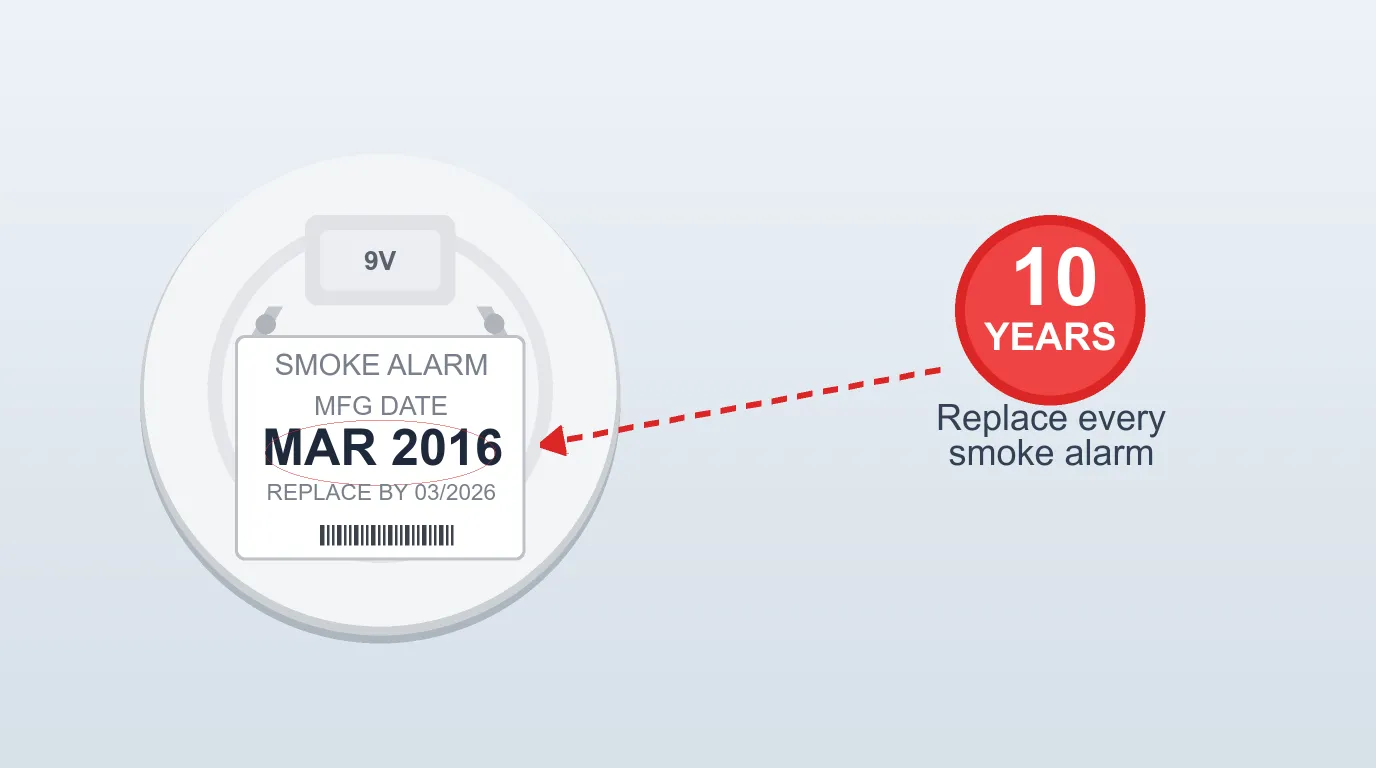
A smoke alarm does not last forever, and it will not announce when it has aged out. The sensor degrades over time, yet the unit still chirps and still passes a button test, which gives a false sense of safety. NFPA guidance, reflected in NFPA 72, is to replace smoke alarms 10 years from the date of manufacture, and combination smoke and carbon monoxide alarms after about 7 years.
The manufacture date is printed on the back of the unit, not the date you installed it. If you have never checked, do it now, because a surprising number of homes are protected by alarms well past their reliable life. The button test only confirms the battery and horn work. It does not confirm the sensor is still sensitive.
It Isn't Telling You About Carbon Monoxide
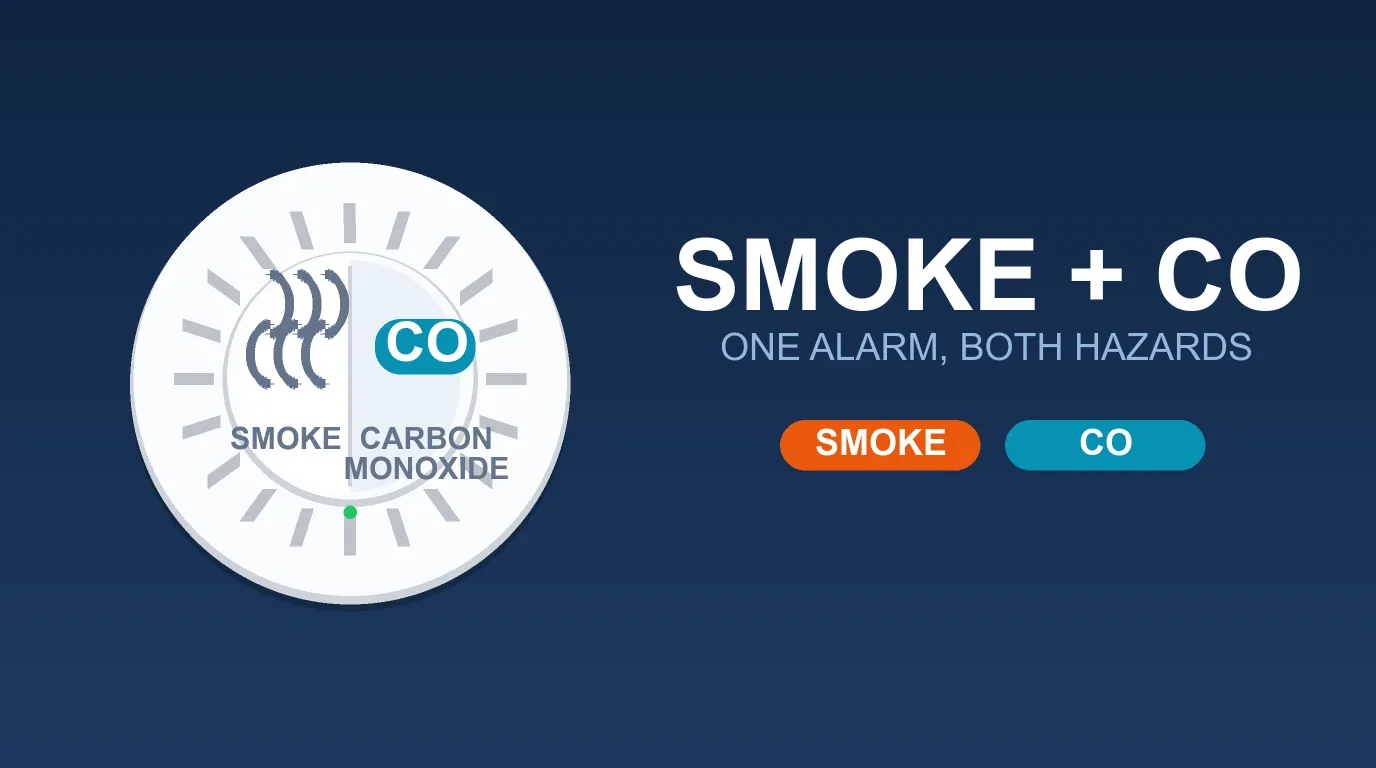
A standard smoke alarm detects smoke. It does not detect carbon monoxide, and the two are completely different hazards. Carbon monoxide is odorless, colorless, and tasteless, so unlike smoke there is no natural warning at all. It comes from fuel-burning appliances, attached garages, and blocked flues, and its early symptoms are easy to mistake for the flu.
Unless your unit is specifically a combination smoke and CO alarm, it is silent on carbon monoxide entirely. A dedicated CO alarm, or a combination unit, is what covers this gap. Because the exposure often happens overnight, and because a standard alarm does nothing to alert anyone if the house is empty, this is one area where monitored detection adds real value. Our guide to monitored smoke and carbon monoxide detectors covers that case in full.
Not sure what your home is actually covered for?
Our advisors can talk through smoke and carbon monoxide coverage, including monitored options that alert you even when nobody is home. Free consultation, no pressure.
Call (855) 248-8052 or request a free quote online.It Isn't Telling You How Little Time You Now Have
This is the finding that changes how seriously people take the rest. Research from UL, conducted with the National Fire Protection Association's research foundation and building on work by NIST, has documented that modern homes burn far faster than homes did decades ago. The reason is the contents. Today's furnishings and many building materials are made largely of synthetic materials like plastics and foams, which ignite quickly, burn hotter, and produce toxic smoke faster than the natural materials they replaced.
The scale is startling. In fire testing, a room furnished with natural materials took around 29 minutes to become fully involved, while a comparable room furnished with modern synthetic materials was consumed in roughly three and a half minutes. That is the difference between having time to gather everyone calmly and having only enough time to get out.
What that means for your plan
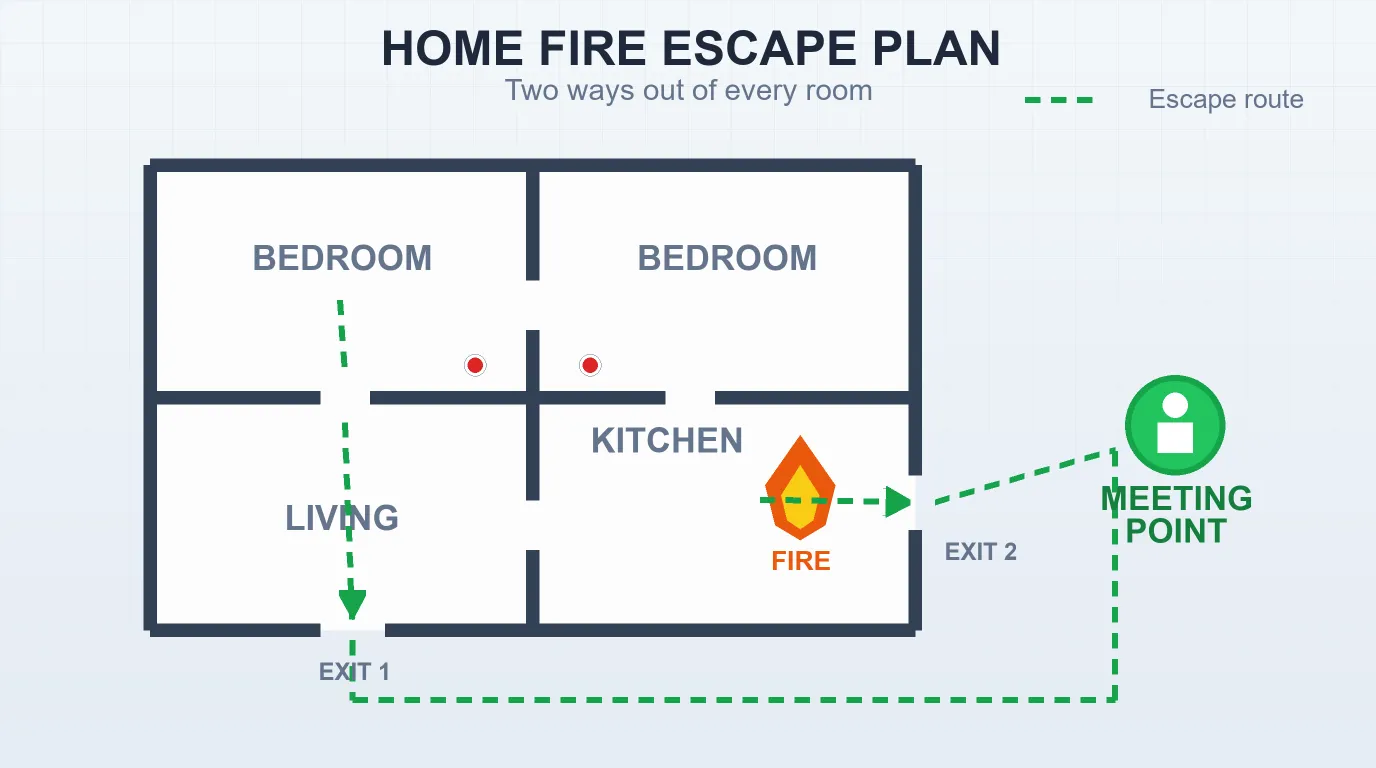
- Assume you may have only a few minutes, not many. Plan for speed, not for gathering belongings.
- Know two ways out of every room, and agree a meeting point outside.
- Practice the plan with everyone in the home, including children, at least twice a year.
- Sleep with bedroom doors closed. A closed door slows fire and smoke and buys time.
The Other Thing: Nuisance Alarms and Disabling
There's a dangerous chain reaction worth naming. Older ionization alarms are especially prone to going off during cooking or from steam, and a device that cries wolf during dinner is a device people disable. A disabled alarm is the worst outcome of all, because it removes the protection entirely.
If nuisance alarms are a problem in your kitchen, the fix is not to remove the battery. It is to relocate the alarm slightly further from the cooking area, or to move to a photoelectric or newer combination alarm, which are less prone to cooking triggers. Updated UL standards for smoke alarms, which took effect in 2024, were designed specifically to reduce cooking nuisance alarms while improving detection of smoldering fires.
A Short List Worth Doing This Week
- Check the manufacture date on the back of every alarm and replace any past its 10-year mark, or 7 years for combination units
- Read the sensor type on each; add photoelectric or dual-sensor coverage near bedrooms if you only have ionization
- Confirm you have carbon monoxide coverage, not just smoke
- Put an alarm on every level, inside each bedroom, and outside each sleeping area, per NFPA placement guidance
- Test every alarm monthly, and replace batteries when they chirp rather than removing them
- If your alarms are not interconnected, so that all sound when one does, consider upgrading, since an alarm in the basement may not wake someone upstairs
- Write and practice a two-exit escape plan with a meeting point outside
Frequently Asked Questions
What is the difference between ionization and photoelectric smoke alarms?
Ionization alarms respond faster to fast, flaming fires; photoelectric alarms respond faster to slow, smoldering ones. Since you cannot predict the fire type, authorities recommend both technologies or a single combination alarm.
How often should I replace my smoke alarm?
NFPA guidance is 10 years from the manufacture date printed on the back, or about 7 years for a combination smoke and carbon monoxide alarm. The sensor degrades even while the unit still chirps and tests fine.
Does a smoke alarm detect carbon monoxide?
No, not unless it is specifically a combination smoke and CO alarm. Carbon monoxide is odorless and colorless, so you need a dedicated CO alarm or a combination unit to detect it at all.
How much time do I have to escape a house fire?
Often only a few minutes. Fire testing found a room with synthetic furnishings was consumed in roughly three and a half minutes, versus around 29 minutes for natural materials. Plan to leave immediately, not to gather things.
Which smoke alarm should I choose if I can only pick one?
The emerging consensus favors photoelectric, because smoldering fires kill more sleeping occupants, though a combination or dual-sensor alarm is better still. Check the label on the back to see what you currently have.
Why does my smoke alarm keep going off when I cook?
Older ionization alarms are prone to cooking nuisance alarms. Do not remove the battery. Relocate the alarm further from the cooking area, or switch to a photoelectric or newer combination alarm less prone to false triggers.
Where should smoke alarms be placed?
NFPA placement guidance is one on every level of the home, inside each bedroom, and outside each separate sleeping area. Interconnected alarms, where all sound when one triggers, are strongly preferred.
Is testing my alarm enough to know it works?
The button test only confirms the battery and horn work, not that the sensor is still sensitive. That is why age matters: an expired alarm can pass the button test yet respond poorly to actual smoke.
What does it mean that a smoke alarm is interconnected?
Interconnected alarms all sound together when any one detects smoke. This matters because a fire starting far from bedrooms might not wake sleepers if only the nearest alarm sounds. NFPA 72 addresses this requirement.
Do I still need alarms if I have a monitored system?
Yes. Monitored detection adds a response when nobody is home, but you still need working alarms in the right places and types. The two work together rather than one replacing the other.
Related Reading
- Monitored Smoke and Carbon Monoxide Detectors
- What is 24/7 Professional Monitoring, and Is It Worth It?
- Homeowner Insurance Discounts for Security Systems: The Real Math
Explore our services:
A Safer Home, Sensibly
Most of what makes the biggest difference here costs little or nothing: checking dates, knowing your alarm types, and practicing a plan. Where it helps, monitored detection can add a response even when the house is empty.
Home Secure Connect is an independent home security advisor. We help homeowners across the USA understand their smoke and carbon monoxide coverage and compare monitored options across our trusted provider partners. Free consultation. No obligation. No pressure. For fire-safety specifics, your local fire department is always the best authority.
Call (855) 248-8052 or Request a Free Quote. Available Mon to Fri, 10am to 8pm ET. In an emergency, call 911.Trending This Week

Contract vs No-Contract Home Security: Which Actu…
September 2, 2026 · About 7 min read
What Modern Home Security Does That Old Systems D…
August 26, 2026 · About 8 min read
Homeowner Insurance Discounts for Security System…
August 24, 2026 · About 8 min read