Quick Answer
In one sentence: 24/7 professional monitoring means a trained operator at a certified center watches your alarm around the clock and dispatches police, fire, or medical help within about 30 seconds when your system triggers, and it's worth it for most homeowners because an unmonitored alarm is just a noise maker.
The longer answer: Your alarm system is only as good as what happens when it triggers. Without monitoring, a triggered alarm just makes noise, and research shows most people ignore audible alarms. Professional monitoring, which averages about $25 to $35 per month, adds a trained operator who verifies the alert and dispatches emergency services with your exact location. It also qualifies you for homeowner insurance discounts that self-monitoring usually doesn't. This guide explains exactly how monitoring works, what it costs, and when it's genuinely worth it.
Key Takeaways
- Professional monitoring dispatches emergency help within about 30 seconds of your alarm triggering.
- An unmonitored alarm is essentially a noise maker. Research shows around 85% of audible alarms are ignored by neighbors.
- Professional monitoring costs about $25 to $35 per month, often $10 to $25 net after the homeowner insurance discount.
- Verified alarms from a monitoring center often get higher police response priority than a self-reported call.
- Professional monitoring is usually required to qualify for homeowner insurance discounts; self-monitoring typically isn't.
Most people arm their security system at night and hope they never need it. But here's the question that actually matters: when your alarm goes off and you're not home, or you're asleep, who responds? That single question is the difference between a system that protects you and one that just makes noise.
That's what 24/7 professional monitoring is for. If you've read our guides on whether you need a home security system and DIY vs professional installation, this post goes deep on the piece that most determines whether a system actually works: the monitoring behind it. Here's exactly how it works and whether it's worth paying for.
What is 24/7 Professional Monitoring?
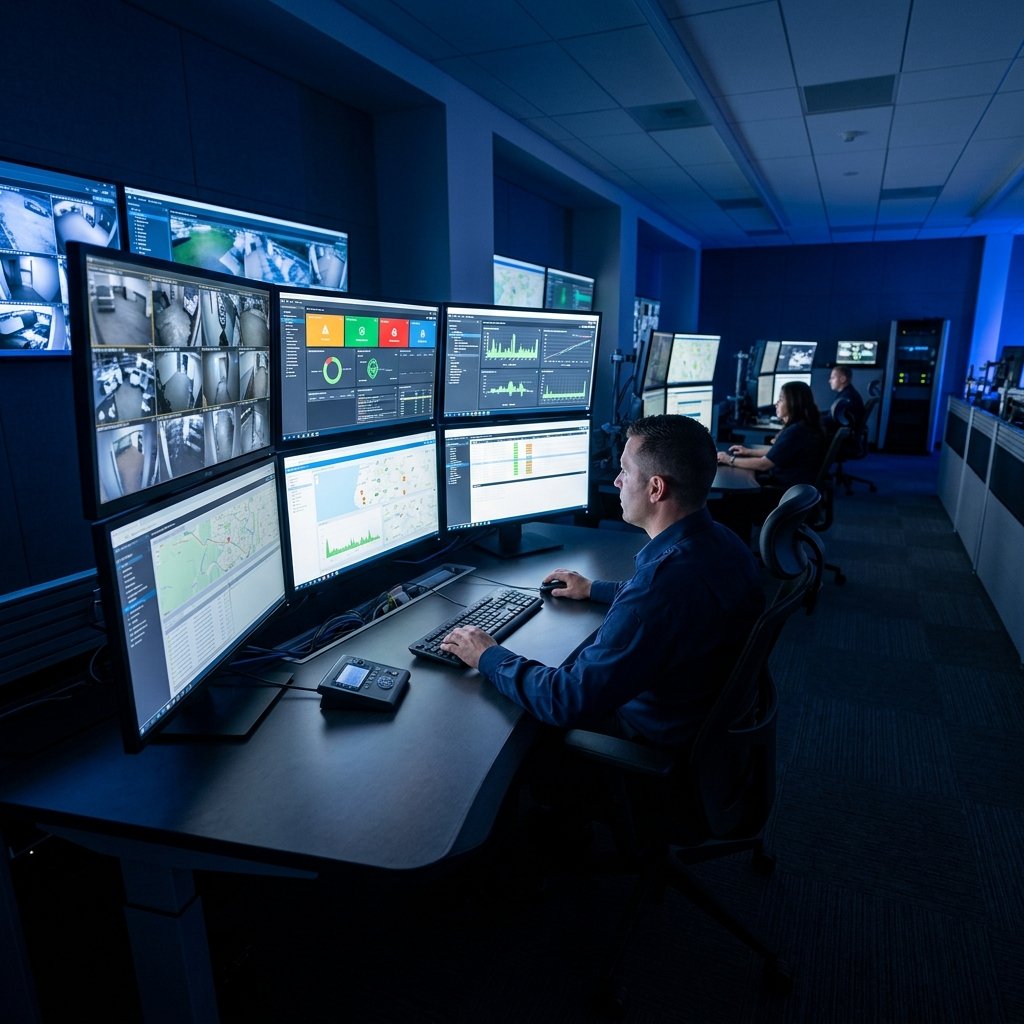
24/7 professional monitoring is a service where a certified central monitoring station watches your security system around the clock, every day of the year. When a sensor detects an intrusion, smoke, carbon monoxide, or water, or when you press a panic button, your system sends an encrypted signal to the monitoring center. A trained operator receives it within seconds, verifies the situation, and dispatches the right emergency service to your exact location.
The key word is certified. Reputable monitoring centers are UL-listed, meaning they meet rigorous standards for staffing, backup power, redundancy, and response. That certification isn't just a badge. It's what most homeowner insurance providers require before they'll give you a monitored-system discount. The signal path is also supervised and encrypted, so the center is alerted even if someone cuts your power, phone line, or internet during a break-in.
How Does Alarm Monitoring Work When Your Alarm Goes Off?
Most homeowners have never seen what actually happens in the seconds after an alarm triggers, which is exactly where the monitored vs unmonitored alarm difference becomes clear. Here is the real sequence, step by step, based on how certified monitoring centers operate.
The First 60 Seconds: Signal to Dispatch
Trigger (0 seconds)
A sensor detects intrusion, smoke, carbon monoxide, or water, or a panic button is pressed. Your control panel registers the event.
Signal Sent (seconds)
The panel transmits an encrypted signal to the UL-listed monitoring center, usually over cellular so it works even if the internet or phone line is down.
Operator Receives (seconds)
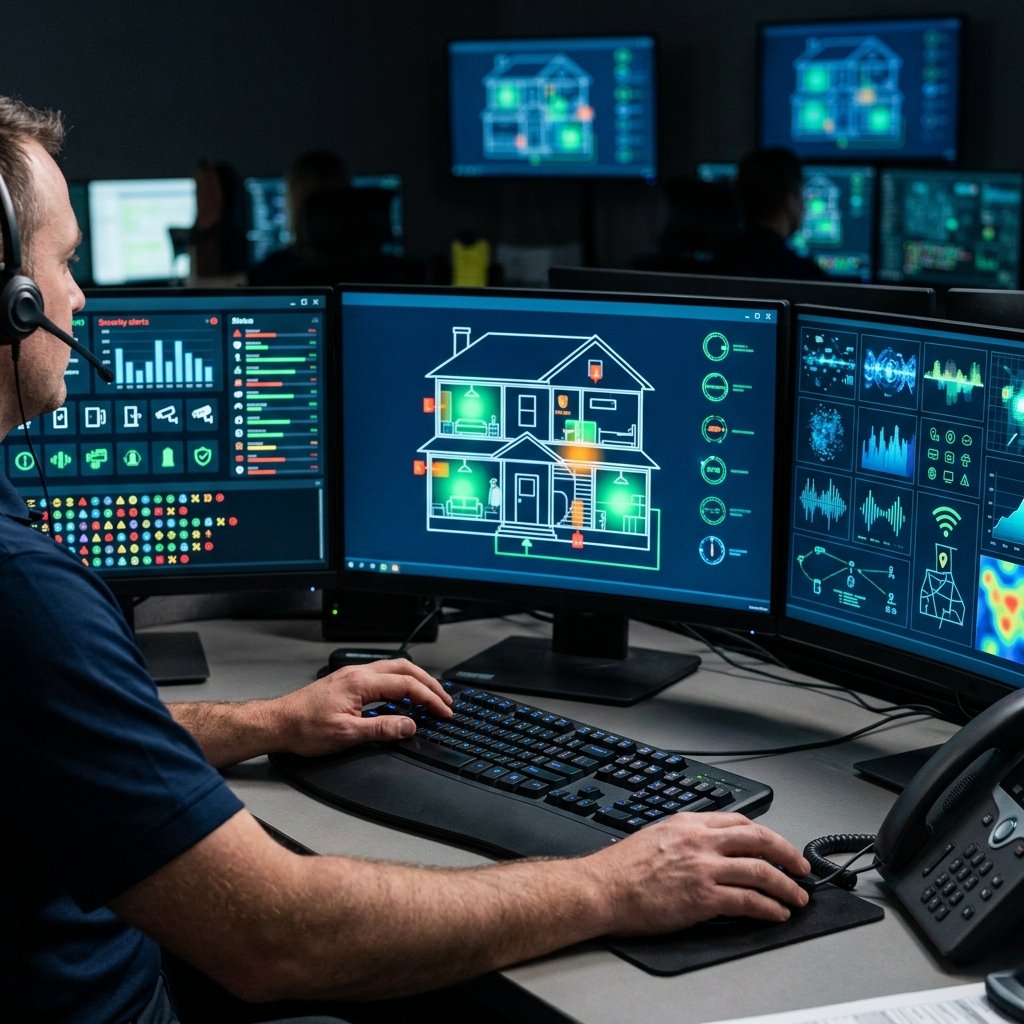
A trained operator sees the alert with zone information showing exactly which sensor triggered and where in your home.
Verification
The operator follows a verification protocol. With two-way voice, they can speak through your panel directly. If there's no response, they call your premises, then work through your emergency contact list. Anyone can cancel a false alarm with a verbal passcode.
Dispatch
If no one cancels, the operator dispatches police (intrusion), fire and EMS (smoke or carbon monoxide), or EMS (medical or panic), with your exact address and zone details.
Stays on the Event
The operator remains on the event until it's resolved, and may keep trying to reach you while responders are on the way.
According to monitoring industry sources, the entire signal-to-action sequence typically happens in under 30 seconds. And because the alarm was verified by a certified center, police often treat it as higher priority than a call reporting an alarm you heard yourself, a distinction noted by monitoring providers such as CSI Security and Security Partners. That verification step is a big part of what you're actually paying for.
Self vs Professional vs Interactive Monitoring
There are three main types of monitoring, and the difference between them determines what actually happens when your alarm triggers. The professional monitoring vs self monitoring question is the one most homeowners weigh first, since it's the biggest jump in both protection and cost. True 24/7 home security monitoring only comes with the professional and interactive tiers.
| Feature | Self-Monitoring | Professional | Interactive |
|---|---|---|---|
| Monthly cost | Free to $15 | $25 to $35 | $35 to $60 |
| Who responds | You (phone alerts only) | 24/7 operators | 24/7 operators |
| Emergency dispatch | You call 911 yourself | Automatic | Automatic |
| App control & cameras | Basic app | Usually limited | Full app plus video |
| Insurance discount | Usually not eligible | Yes (UL-listed) | Yes (UL-listed) |
| Works if you're asleep or away | Only if you see the alert | Yes | Yes |
Pricing ranges above reflect industry averages reported by monitoring providers in 2026. The core trade-off is simple: self-monitoring saves money but depends entirely on you noticing and acting on an alert, while professional and interactive monitoring guarantee a trained response even when you're asleep, on a plane, or simply don't have your phone.
Not sure which level of monitoring your home needs?
Our advisors help homeowners weigh self, professional, and interactive monitoring against their budget and how often the house sits empty. Free consultation, no pressure.
Call (855) 248-8052What Homeowners Get Wrong About Monitoring
From what our advisors hear in conversations with homeowners across the country, a few misunderstandings come up again and again:
Myth "A loud siren is enough."
This is the most common one. Research shows around 85 percent of audible alarms are ignored by neighbors. A siren without monitoring mostly just annoys the street. Reality: It doesn't bring anyone to your door.
Myth "I'll just get the phone alert and call 911 myself."
That works only if you see the alert, are in a position to act, and aren't asleep or in a meeting. Reality: Homeowners in Texas and Florida who travel often tell us this is exactly when they realized self-monitoring wasn't enough.
Myth "Monitoring is too expensive."
Many homeowners don't realize the insurance discount often cuts the effective cost roughly in half. Reality: After a 10 to 15 percent homeowner insurance discount, professional monitoring often nets out to $10 to $25 per month.
Myth "All monitoring is the same."
It isn't. UL-listed certification, cellular signal backup, and two-way voice make a real difference in reliability. Reality: Homeowners in California and hurricane-prone coastal states especially value cellular backup, since it keeps working during power and internet outages.
The theme in every one of these conversations: the alarm hardware is the easy part. What happens after it triggers is what people are really paying for.
What Does Professional Monitoring Cost?
Here's the honest cost picture for 2026, based on industry pricing.
Switching providers: if you already own your equipment, a new monitoring company can often reprogram your panel for about $50 to $150, with no need to buy new hardware.
For a full breakdown of equipment and installation costs alongside monitoring, see our guide to new home security installations.
So, Is Professional Monitoring Worth It?
Here's the honest answer, broken down by situation, in the same spirit as the rest of our guides.
Usually worth it if...
- Your home is empty during work or school hours, or you travel often
- You want the homeowner insurance discount (which often offsets much of the cost)
- You have valuables, or you care for children or aging parents
- You want fire and carbon monoxide protection that dispatches even when you're not home
You might reasonably skip it if...
- Someone is home almost all the time and reliably has their phone
- You're in a very low-crime area and your insurer offers no meaningful discount
- You're testing a self-monitored setup short term before committing
For most US homeowners whose houses sit empty part of the day, the answer is yes, especially once the insurance discount is factored in. The value isn't the monthly fee. It's knowing that when your alarm triggers and you can't act, someone will.
Frequently Asked Questions
Quick answers to the questions US homeowners most often search about professional monitoring.
What does 24/7 professional monitoring actually do?
A certified monitoring center watches your alarm around the clock. When it triggers, a trained operator verifies the alert and dispatches police, fire, or medical services to your exact location, usually within about 30 seconds, even if you're asleep or away.
Is professional monitoring worth the monthly cost?
For most homeowners, yes. An unmonitored alarm is essentially a noise maker, and around 85% of audible alarms are ignored by neighbors. Professional monitoring guarantees a trained response, and the homeowner insurance discount often offsets much of the cost.
How fast does professional monitoring respond?
The signal-to-action sequence typically happens in under 30 seconds. The operator receives the alert within seconds, verifies it, and dispatches emergency services with your exact address and zone information.
What is the difference between monitored and unmonitored alarms?
A monitored alarm sends a signal to a central station that dispatches help. An unmonitored alarm only makes noise and relies on you or a neighbor to respond. Research shows most audible alarms are ignored, so an unmonitored system offers far less real protection.
Does professional monitoring qualify for an insurance discount?
Usually yes. Most US homeowner insurers offer a 10 to 15 percent discount for a professionally monitored, UL-listed system. Self-monitored systems typically don't qualify. You'll need to provide documentation to your insurer to receive the discount.
What happens if I trigger a false alarm?
Before dispatching, the operator verifies the alert by contacting you and your emergency contacts. You can cancel a false alarm with a verbal passcode or your cancellation code. This verification step exists specifically to reduce unnecessary dispatches.
Does professional monitoring work during a power or internet outage?
Yes, if it uses cellular signaling and battery backup. Certified systems use encrypted, supervised cellular pathways, so the monitoring center is still alerted even if the power, phone line, or internet is cut, and backup batteries keep the system running for hours.
Can I switch monitoring companies without buying new equipment?
Often yes. If you own your equipment and aren't under contract, a new company can usually reprogram your existing panel for about $50 to $150. Leased equipment may need to be returned, so check your contract first.
What is interactive monitoring?
Interactive monitoring is professional monitoring plus full app control and video verification. You get remote arming, real-time camera access, and smart home integration, typically for $35 to $60 per month. It's the most feature-rich option.
Do I need professional monitoring for fire and carbon monoxide?
It's strongly recommended. Monitored smoke and carbon monoxide detectors dispatch the fire department and EMS automatically, even when you're not home. An unmonitored detector only sounds locally, which does nothing if the house is empty.
Related Reading
More honest guides from Home Secure Connect:
- Do You Actually Need a Home Security System? An Honest Answer
- DIY vs Professional Home Security Installation: An Honest Comparison
- How Do Burglars Actually Choose Which Homes to Break Into?
Explore our home security services:
Get a Second Opinion, Free
The alarm hardware is the easy part. What happens after it triggers is what actually protects your home. That's worth getting right.
Home Secure Connect is an independent home security advisor. We help homeowners across the USA choose the right level of monitoring from our trusted provider partners, check whether the insurance discount applies to their situation, and avoid paying for features they don't need. Free consultation. No obligation. No pressure.
Call (855) 248-8052Available Mon to Fri, 10am to 8pm ET
Trending This Week

Contract vs No-Contract Home Security: Which Actu…
September 2, 2026 · About 7 min read
Fire Safety at Home: What Your Smoke Alarm Isn't …
August 31, 2026 · About 8 min read
What Modern Home Security Does That Old Systems D…
August 26, 2026 · About 8 min read