Quick Answer
In one sentence: Use a wireless, adhesive-mount, no-contract system you can pack up and take with you, add a few no-permission physical reinforcements, and remember that your building's security protects the common areas, not your unit.
The longer answer: Securing a rental is a genuinely different problem from securing a house, and the constraints, no drilling, no permanent changes, and the fact that you'll probably move, shape everything. The good news is that the old barriers are largely gone: modern systems mount with adhesive, run wireless, and pack up in half an hour. The catch is that a few apartment-specific gaps need attention your building won't give them. This guide covers what actually works, and what to skip.
Key Takeaways
- Rentals need wireless, adhesive-mount, no-contract systems that come with you when you move.
- Drilling, contracts, and landlord permission are mostly outdated barriers; modern kits avoid all three.
- Your building's security covers common areas, not inside your unit. That gap is yours to close.
- Several strong reinforcements need no permission: a door plate, a sliding-door bar, and window film.
- In shared buildings, keep cameras pointed at your own space, not hallways, neighbors, or roommates.
A lot of renters assume home security isn't for them: too much drilling, too much commitment, too much landlord hassle. So they skip it, which is a shame, because consumer security reviews report that apartments are broken into at higher rates than houses, ground-floor units especially. With roughly 44 million renting households in the country, that's a lot of homes going unprotected on the strength of a few outdated assumptions. Let's clear those up and get to what genuinely works.
A Rental Is a Different Security Problem
Before the how, it's worth being clear about the why, because a rental isn't just a smaller house from a security point of view. It comes with a specific set of constraints that rule some solutions out and make others ideal.
- You usually can't drill into walls or door frames, or make permanent changes
- You can't put up a yard sign, one of the classic deterrents
- You'll likely move every one to three years, so anything you install has to come with you
- You may share entrances, hallways, and walls, which changes both the risks and the privacy rules
- A long professional contract will usually outlast your lease
Those constraints aren't a reason to skip security. They're a specification. Once you know the entry points that matter most, which our guide to how burglars choose homes lays out, the right rental setup almost designs itself.
The Three Myths That Stop Renters
Most renters who skip security do it because of three beliefs, and all three are out of date.
Myth 1: You have to drill
Not anymore. Modern systems use adhesive-mounted sensors and wireless hubs. The sensors stick on with removable strips and peel off cleanly, leaving no holes and no damage to your deposit.
Myth 2: You're stuck in a long contract
Also outdated. Plenty of systems offer month-to-month monitoring or free self-monitoring you can cancel when your lease ends, rather than the multi-year contracts that outlast a typical tenancy.
Myth 3: Your landlord won't allow it
Because nothing is drilled or permanently altered, most landlords have no objection to a removable wireless system. When in doubt, show them the equipment; it comes off without a trace. Do still check your lease, which we'll come back to.
What Actually Works: The No-Drill Setup
Here's the practical core. Renter security guides consistently describe five features as the markers of a renter-friendly system, and any setup with them will serve you well and travel with you.
| Feature | Why it matters for a rental |
|---|---|
| Adhesive-mount sensors | Stick on and peel off clean. No drilling, no holes, no deposit risk. |
| Wireless hub with cellular backup | No hardwiring, and it keeps signaling if the internet drops. |
| No contract | Month-to-month or free self-monitoring you can cancel at lease end. |
| Fully portable | Pack the hub, peel the sensors, and reinstall at your next place in about half an hour. |
| Discreet, right-sized | Small sensors that fit apartment doors and windows without dominating the space. |
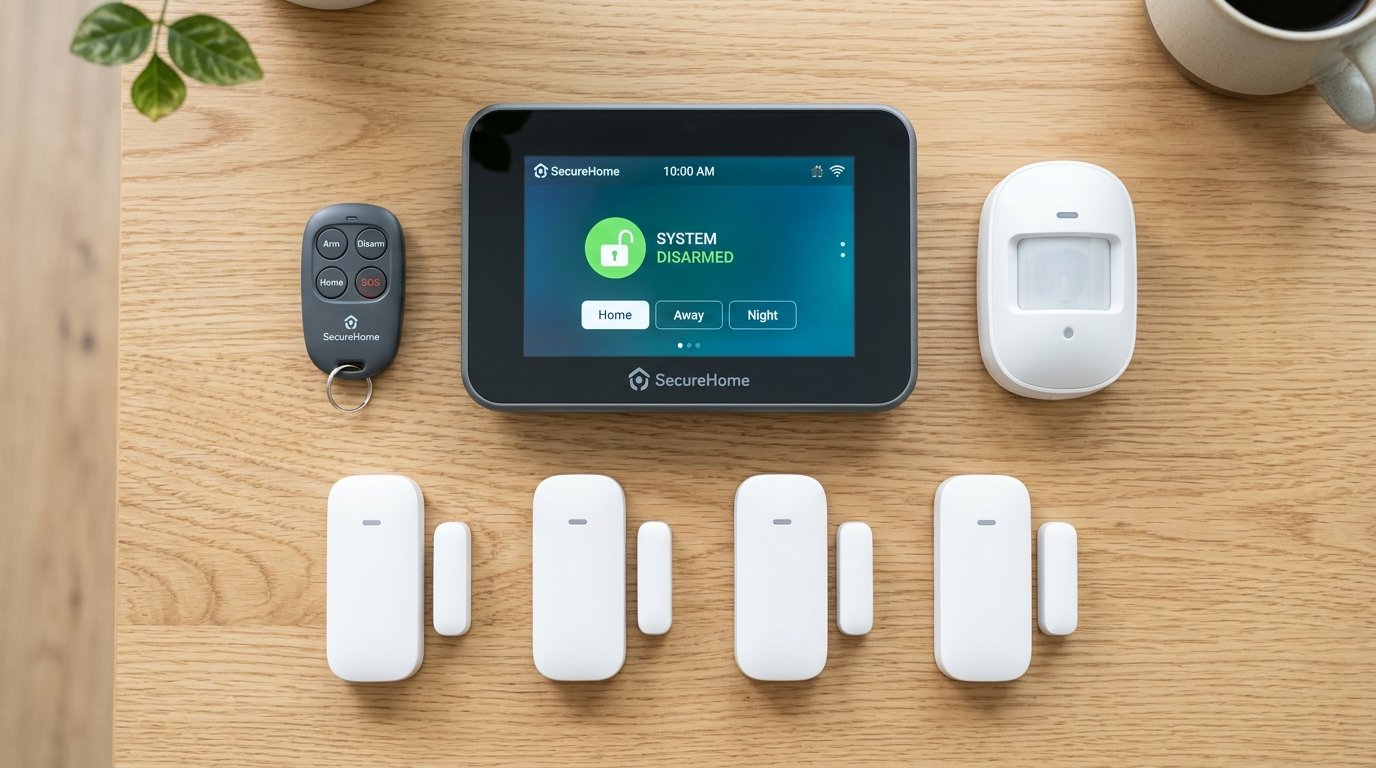
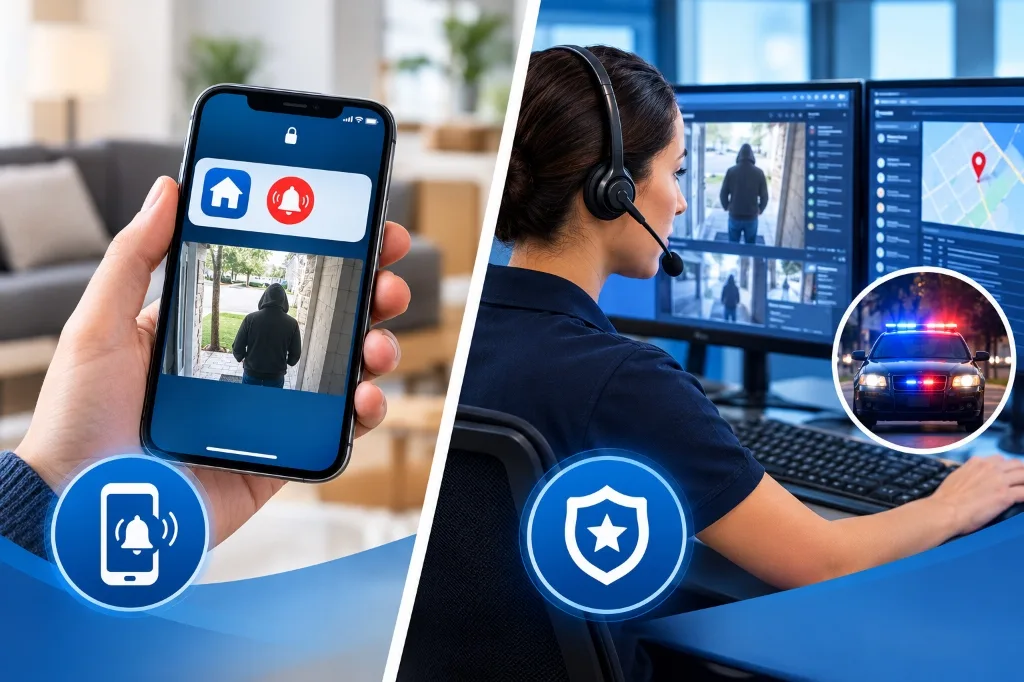
For most apartments, a sensible starter build is a wireless hub and keypad, door and window sensors on your entry door and any accessible windows, one motion sensor for the main living area, and optional camera coverage of the entry. Whether you add professional monitoring or self-monitor is a real choice, and our comparison of monitored versus self-monitored systems walks through it; for renters who travel or work long hours, the dispatch that professional monitoring adds is often worth the modest monthly cost.
Want a setup sized to your apartment, not a house?
Our advisors can help you build a no-drill, portable setup that fits your unit and your lease, and compare options across our provider partners. Free consultation, no pressure.
Call (855) 248-8052 or request a free quote online.Your Building's Security Doesn't Protect Your Unit
This is the point renters most often get wrong, and it's the one worth internalizing. A secured building lobby, a key-fob entrance, and cameras in the parking garage are real, but they protect the common areas. They do very little for the inside of your specific unit.
Think about what building security does not cover: your own apartment door, your accessible windows, the sliding patio or balcony door that can be quietly levered open, package theft from a shared lobby, and the person who tailgates through the front entrance behind a resident. Those are apartment-specific risks, and closing them is on you, not the building. A door sensor on your unit, a bar on the patio door, and a camera at your own entry address exactly the gaps a fob-controlled lobby leaves open.
One honest caution. Some managed buildings already fit entry sensors or a monitored system inside units. If yours does, adding a second system can create conflicting alerts or a false sense of coverage, so check with your building manager before buying, and build around what's already there.
Upgrades That Need No Permission
Alongside the electronics, a few physical reinforcements do a lot and require no landlord sign-off, because they don't permanently alter anything. These are some of the best value in this whole guide.
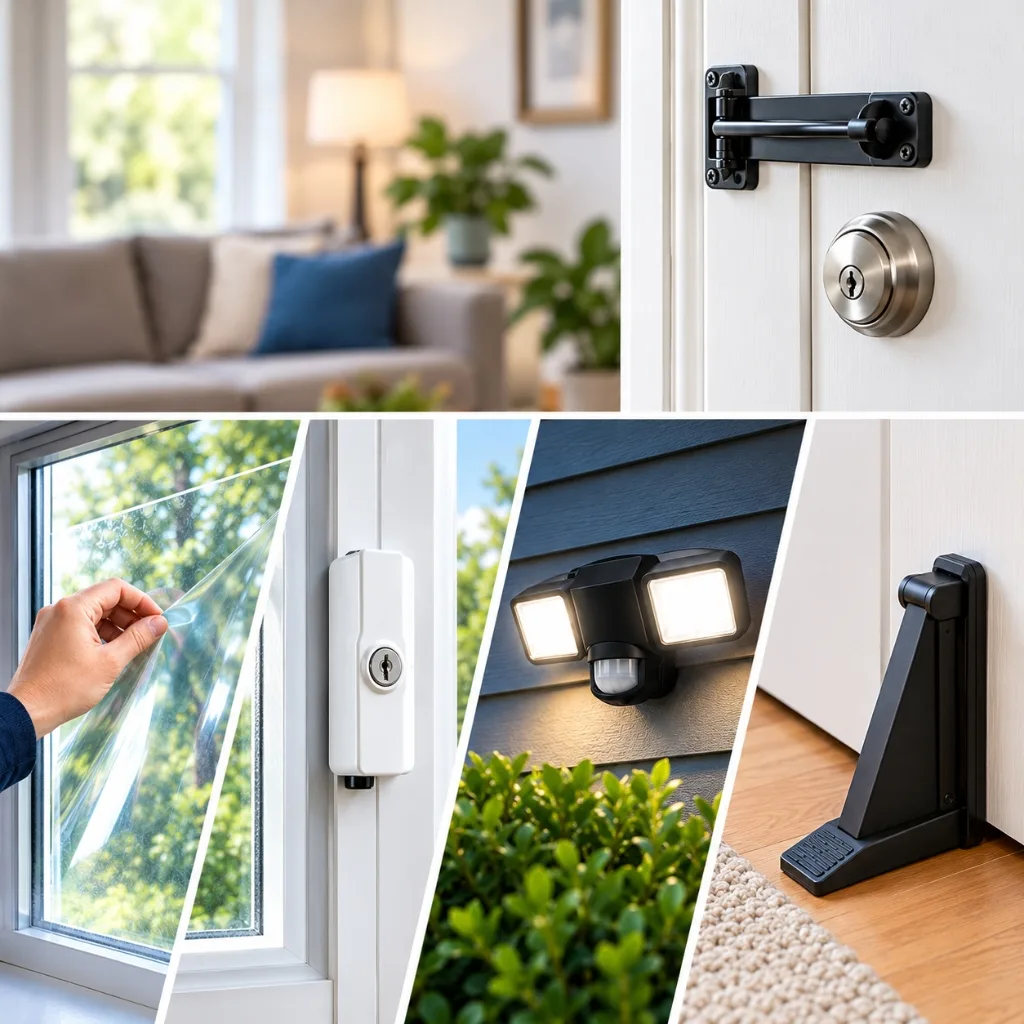
A door reinforcement plate
This strengthens the area around the lock and strike, the part most often defeated in a forced entry. Many install using the existing screw holes, so there's no new drilling, and they come off when you leave.
A sliding-door security bar
An inexpensive adjustable bar laid in the track of a sliding patio or balcony door stops it being forced open. It's one of the cheapest, most effective apartment upgrades, and completely temporary.
Security window film
A clear film applied to the glass makes a window much harder to break through quickly, without being visible and without altering the window.
A replacement smart lock, with a caveat
Some renters swap the deadbolt for a keyless lock, then keep the original to reinstall on move-out. This one does change a fixture, so unlike the others it's worth clearing with your landlord first.
Cameras in a Shared Building: Where the Line Is
Cameras are useful in a rental, for your entry and for package areas, but shared buildings add a privacy dimension that a standalone house doesn't, and it's worth getting right.
The principle is simple: point cameras at your own space, not other people's. Avoid recording shared hallways, a neighbor's door, or common areas, and don't record roommates without their clear agreement. Beyond being the decent thing to do, many landlords have specific rules about cameras facing common areas, and some jurisdictions have laws about recording shared spaces. This is the same line our guide to security for aging parents draws between security and surveillance: watch what's yours to watch.
On your account and privacy
Your system account is yours alone. Only people you explicitly add can see your feeds or control the system, and your landlord has no access to it. That's worth knowing if you're weighing whether a system compromises your own privacy; it doesn't.
Check These Before You Buy
A short pre-purchase checklist saves renters the two most common mistakes: buying something the lease restricts, or buying more than the situation needs.
- Read your lease for clauses on security systems or modifications. Most removable wireless systems don't trigger them, but some managed buildings explicitly require approval, so check.
- Ask whether your building already has in-unit sensors or monitoring, to avoid conflicts and duplication.
- If you're moving within about 90 days, consider whether a single camera is a lower-commitment fit than a full setup you'll soon repack.
- Check your renters insurance. Some providers offer a discount, often in the 5 to 10 percent range, for a monitored system, which our guide to insurance discounts explains.
And for the lease clauses, the landlord conversation, and a clean move-out, our renter's guide to home security covers the paperwork side in full.
Frequently Asked Questions
Can I install a security system in a rental without drilling?
Yes. Modern renter-friendly systems use adhesive-mounted sensors and a wireless hub, so nothing is drilled or permanently changed. The sensors peel off cleanly when you move, leaving no holes and no damage to your deposit.
Do I need my landlord's permission for a security system?
Usually not for a removable wireless system, since it alters nothing. Still, read your lease, as some managed buildings require approval. Anything that changes a fixture, like swapping the deadbolt, should be cleared first.
Does my apartment building's security protect my unit?
Only the common areas. Lobby fobs and garage cameras do little for your own door, windows, or patio slider, or for package theft in a shared lobby. Closing those unit-specific gaps is up to you.
Is a security system worth it if I rent?
Often yes. Apartments are burglarized at higher rates than houses, ground-floor units especially, and modern systems are cheap, portable, and no-contract. If you're rarely home or travel, the case is even stronger.
What's the best security setup for an apartment?
A wireless hub and keypad, sensors on your entry door and accessible windows, one motion sensor for the living area, and optional entry camera coverage. Add professional monitoring if you want dispatch when you're away.
Can I take my security system when I move?
Yes, that's a key advantage of renter-friendly systems. Peel off the adhesive sensors, pack the hub, and reinstall at your next place, often in about half an hour, with no reinstallation fees or service visits.
What can I do to secure a rental without any permission?
Several things: a door reinforcement plate using existing screw holes, an adjustable bar in a sliding-door track, and clear security film on windows. All are effective, temporary, and require no drilling or landlord approval.
Where can I point security cameras in an apartment?
At your own space: your entry, your windows, package areas you're responsible for. Avoid recording shared hallways, neighbors' doors, or roommates without agreement, since landlord rules and local laws often restrict recording shared areas.
Should I self-monitor or pay for professional monitoring as a renter?
Either works. Self-monitoring sends alerts to your phone so you can call for help; professional monitoring adds dispatch when you can't respond. For renters who travel or work long hours, professional monitoring is often worth the modest fee.
Can my landlord see my security camera footage?
No. Your system account is yours alone, and only people you explicitly add can view feeds or control the system. Your landlord has no access to your cameras or your alerts unless you choose to share them.
Related Reading
- A Renter's Guide to Home Security: Leases, Landlords, and Moving Out
- Monitored vs Self-Monitored Security Systems: The Real Cost Comparison
- Homeowner Insurance Discounts for Security Systems: The Real Math
- How Do Burglars Actually Choose Which Homes to Break Into?
Explore our services:
- Door, Window & Motion Sensors
- 24/7 Professional Monitoring
- Security Cameras & Doorbell Cameras
- Home Security Overview
Protection That Moves With You
Renting no longer means going without. The right setup is affordable, leaves no trace, and packs up with you when the lease ends, which is exactly what a rental needs.
Home Secure Connect is an independent home security advisor. We help renters across the USA build no-drill, portable, no-contract setups that fit their unit and their lease, and compare options across our trusted provider partners. Free consultation. No obligation. No pressure.
Call (855) 248-8052 or Request a Free QuoteAvailable Mon to Fri, 10am to 8pm ET.
Trending This Week
What to Do When Your Security System Sends a Fals…
September 30, 2026 · About 9 min read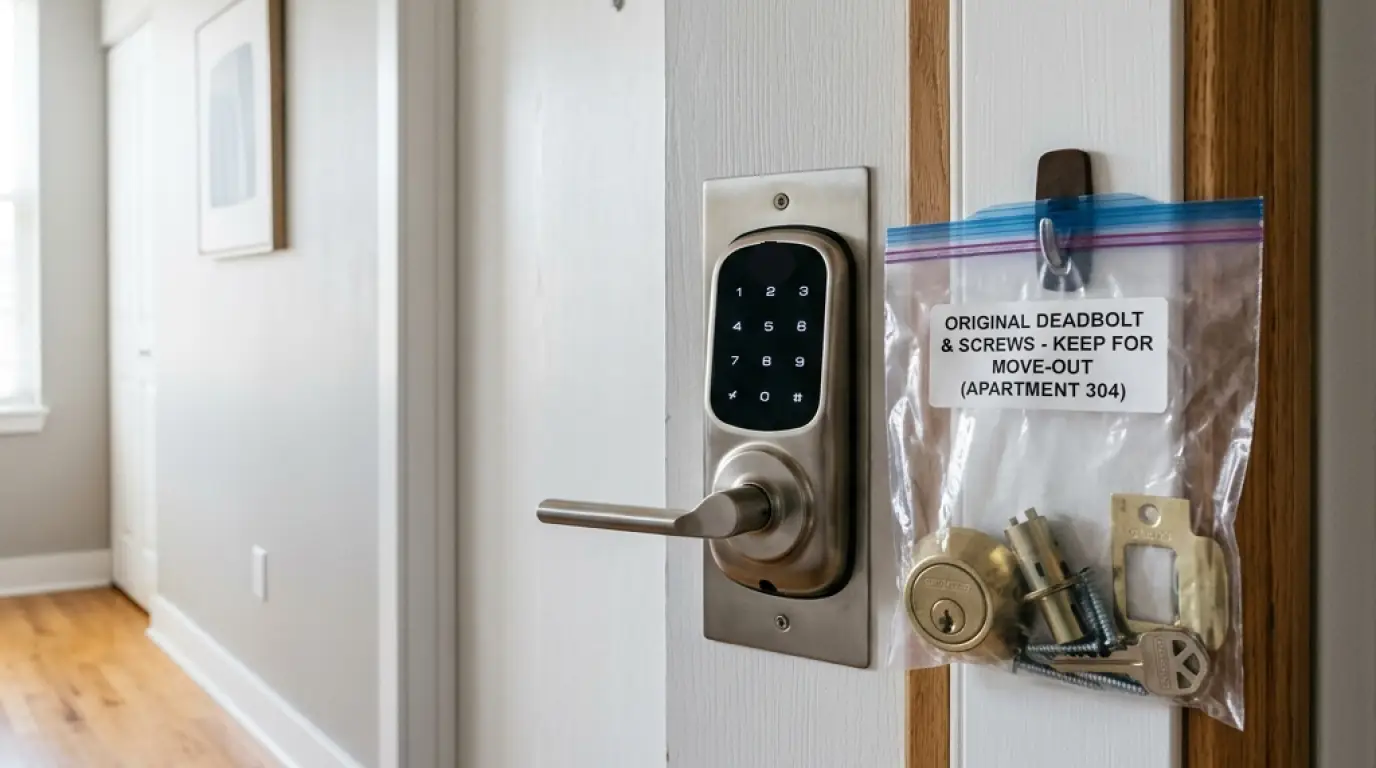
Smart Locks vs Traditional Deadbolts: Which Actua…
September 23, 2026 · About 8 min read
Alarm System vs Security System: What's the Diffe…
September 21, 2026 · About 8 min read