Quick Answer
In one sentence: An alarm system detects an event and sounds an alert, while a security system is a layered setup that also deters, responds, and documents, with the alarm as just one part of it.
The longer answer: The two terms get used as if they mean the same thing, and they don't. The simplest way to hold the difference: an alarm tells you something happened, a security system does something about it, and a camera shows you what happened afterward. Those are three different jobs. Knowing which one you have, or are being sold, is the difference between buying the right protection and paying for a word. This guide lays out the scope of each, and how to tell what you actually need.
Key Takeaways
- An alarm system does one job: detect an event and sound an alert. It's simple, and for some homes it's enough.
- A security system is layered: it deters, detects, alerts, responds, and documents. The alarm is one layer inside it.
- Cameras are a third thing: they document what happened but do not respond to it.
- The terms are marketed interchangeably, which leads people to buy the wrong scope for their risk.
- The right choice matches the layers to your actual situation, not the label on the box.
Walk through any home security marketing and you'll see alarm system and security system used as though they're the same product. They're not, and the slippage isn't harmless. It's how people end up with less protection than they thought they bought, or more than they needed to pay for. The fix is simple: understand what each word actually covers.
The Words Are Sold as Synonyms. They Aren't.
Here's the cleanest way to hold the distinction in your head, and it's worth memorizing before we go deeper:
An alarm tells you something happened.
A security system does something about it.
A camera shows you what happened afterward.
Three jobs, three tools. Marketing tends to fold all three into the single phrase security system, because it sounds the most complete. But a product sold as a security system might, under the label, be only an alarm, or only cameras. The word on the box does not guarantee the scope inside it.
What an Alarm System Actually Is
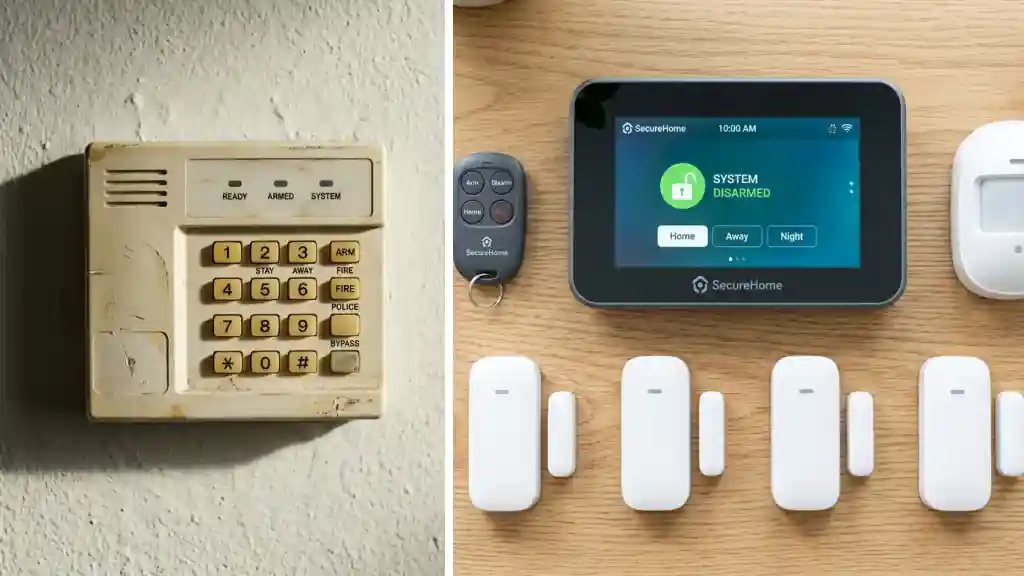
An alarm system is built around one primary task. As security providers describe it, it detects an intrusion and sets off a loud alert: when a door or window opens while the system is armed, the siren sounds, often with flashing lights or a phone notification. That's the core function, and it's deliberately simple. Many alarm systems are DIY kits with wireless sensors and a hub that install in under an hour.
The logic of an alarm is deterrence and warning. The noise is meant to scare off an intruder or alert a neighbor that something is wrong. For a lot of homes, particularly smaller residences, renters, or lower-risk areas, that straightforward, affordable protection is genuinely enough. An alarm is not a lesser product; it's a narrower one, and narrow is sometimes exactly right.
What a Security System Actually Is
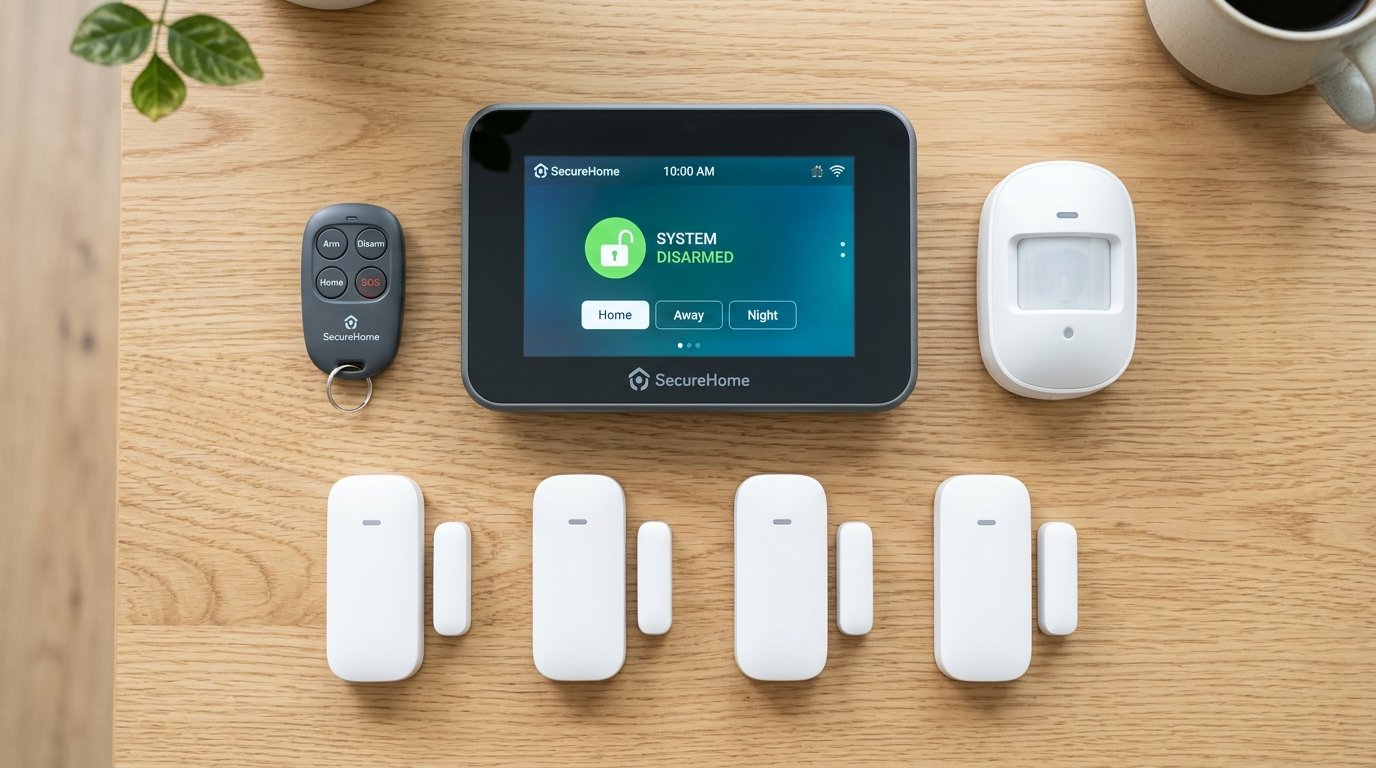
A security system is not a single device but a set of components working together. Security industry guidance describes it as sensors to detect, alarms to warn, notifications to alert, and monitoring to verify and coordinate a response, frequently with cameras, security lighting, and app control layered on top. The defining feature is not any one part; it's that the parts act as a system, often supported by 24/7 professional monitoring that responds to verified threats.
The key mental shift: an alarm is a component, and a security system is the whole. Every security system contains an alarm. Not every alarm is a security system. The alarm is the part that makes the noise; the system is everything around it that decides what happens next.
The Five Layers of Real Security
The easiest way to see where an alarm stops and a security system continues is to break protection into its five jobs. An alarm covers two of them. A full security system covers all five.
| Layer | What it does | Covered by |
|---|---|---|
| 1. Deter | Makes a burglar choose another house: signs, lights, visible cameras | Security system |
| 2. Detect | Notices an event: door, window, motion, glass break | Alarm and security system |
| 3. Alert | Sounds a siren and sends a notification | Alarm and security system |
| 4. Respond | Someone acts on it: you, or a monitoring center that dispatches | Security system |
| 5. Document | Captures evidence for police and insurance | Security system (cameras) |
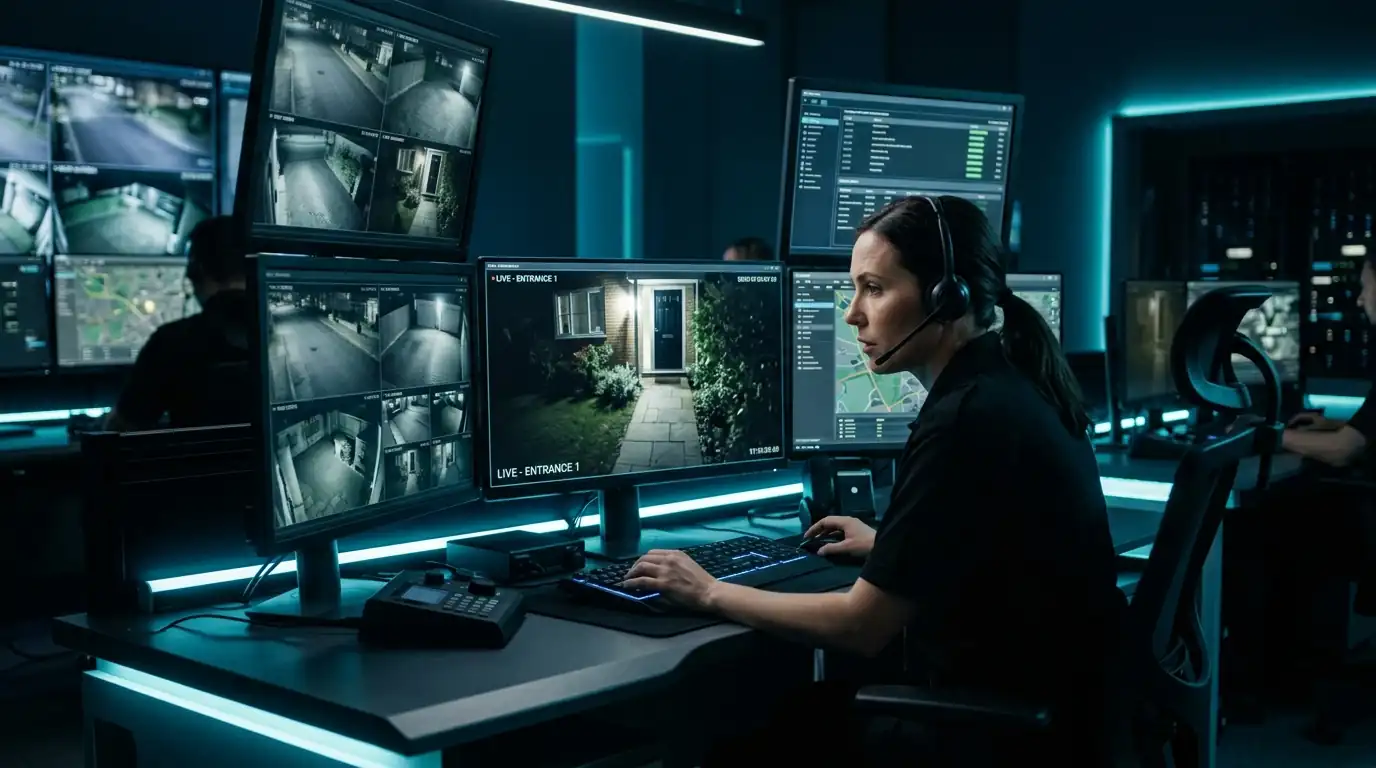
Look at layer four. An alarm detects and alerts, but on its own it does not respond; it relies on you, or a neighbor, to notice and act. A monitored security system closes that gap, which is the single biggest practical difference between the two, and the reason our guide to modern versus older systems calls the shift from detecting to responding the one that matters most.
Not sure how many of these layers you actually need?
Our advisors can map the layers to your home and risk, so you buy the right scope and not a label. Free consultation, no pressure.
Call (855) 248-8052 or request a free quote online.The Third Thing People Confuse: Cameras
Cameras deserve their own mention, because a lot of people buy them believing they've bought security, and they've actually bought something different again.
Security industry guidance draws the line clearly: a security system excels at immediate response, triggering alarms, contacting monitoring, coordinating action as an incident unfolds. A surveillance camera, by contrast, documents. It records what happens and creates a trail that's invaluable for investigations and insurance claims, but it does not, by itself, stop or respond to anything. As the guidance puts it, security systems shine during the moment a threat occurs, while cameras prove their worth after.

So a camera is a layer, deterrence and documentation, not a security system on its own. It's a powerful layer, and one our guide comparing a doorbell to a full system digs into, but a camera nobody is watching and that triggers no response is evidence-gathering, not protection.
Why the Distinction Costs People Money
This isn't just tidy terminology. Getting it wrong has a price, in two directions.
Paying for a word. Some products marketed as security systems are, underneath, an alarm plus a couple of cameras with no response layer at all. If you pay a premium for the label believing you're getting monitored, coordinated protection, you've overpaid for scope you didn't receive.
Buying less than you think. The opposite error is more dangerous. Someone buys an alarm, hears the reassuring word security in the marketing, and assumes a break-in will bring a response. If no one is monitoring it, the siren sounds to an empty street and nothing follows. That gap between what was assumed and what was bought is exactly where people get caught out.
The way to avoid both is to ignore the label and ask about layers. Which of the five does this actually include, and in particular, what happens at layer four when an alarm triggers? Our guide to monitored versus self-monitored systems is the natural next question once you know to ask it.
So Which Do You Actually Need?
This is a real choice, not a trick question with one right answer. Match the scope to your situation.
- An alarm may be enough if: you're in a lower-risk area, you're home often, you rent or want something simple and affordable, and your main aim is deterrence and a fast local warning.
- A security system makes more sense if: you travel or are away often, you want a response even when you can't provide one, you want evidence for police and insurance, or you simply want the fuller peace of mind that layered protection brings.
- Cameras are worth adding when: you specifically want to see and document what happens, screen visitors, or deter at a specific spot like a front door, on top of, not instead of, the detection and response layers.
There's no shame in choosing an alarm. The mistake is choosing one while believing it's something more.
Frequently Asked Questions
What is the difference between an alarm system and a security system?
An alarm system detects an event and sounds an alert. A security system is layered: it also deters, responds, and documents, with the alarm as one component. In short, an alarm warns you; a security system acts.
Is an alarm system the same as a security system?
No. An alarm is one component; a security system is the whole set of layers working together. Every security system contains an alarm, but an alarm on its own is not a full security system.
Is an alarm system enough for my home?
It can be. For lower-risk areas, renters, or homes where someone is usually present, an alarm's detection, deterrence, and fast warning may be all you need. The key is choosing it knowingly, not by accident.
Do security cameras count as a security system?
Not on their own. Cameras document what happens and can deter, but they do not detect intrusions across the home or trigger a response. They are a valuable layer to add, not a complete system by themselves.
What are the layers of a full security system?
Five: deter (make burglars choose elsewhere), detect (notice an event), alert (sound and notify), respond (someone acts, often a monitoring center), and document (evidence via cameras). An alarm covers detect and alert only.
Why does the difference matter when buying?
Because the terms are marketed interchangeably. You can overpay for a 'security' label that is really just an alarm, or buy an alarm assuming it brings a response it does not. Ask about layers, not labels.
What is the most important layer an alarm lacks?
Response. An alarm detects and alerts but does not act on its own; it relies on you or a neighbor noticing. A monitored security system adds a guaranteed response, which is the biggest practical difference.
Is a monitored system always better than an alarm?
Not always. It offers more, but more is not automatically right for you. If you're home a lot and in a lower-risk area, an alarm may fit better and cost less. Match the scope to your actual situation.
Can I start with an alarm and add layers later?
Often yes. Many setups let you begin with detection and alerting, then add cameras, monitoring, or automation over time. Starting simple and expanding as needs change is a reasonable, budget-friendly approach.
What's the difference between a security system and surveillance?
A security system responds to threats as they happen; surveillance, meaning cameras, documents them for afterward. Security shines during an incident, cameras prove their worth after it. The strongest setups use both together.
Related Reading
- What is 24/7 Professional Monitoring, and Is It Worth It?
- What Does Modern Home Security Actually Do That Old Systems Didn't?
- Monitored vs Self-Monitored Security Systems: The Real Cost Comparison
- Video Doorbell vs Full Security System: Is One Enough?
- Smart Locks vs Traditional Deadbolts: Which Actually Keeps You Safer?
Explore our services:
- 24/7 Professional Monitoring
- Door, Window & Motion Sensors
- Security Cameras & Doorbell Cameras
- Home Security Overview
Buy the Scope, Not the Word
Once you know the difference, the label on the box stops mattering and the layers start. That single shift is what stops you from overpaying, or underbuying, for your home's protection.
Home Secure Connect is an independent home security advisor. We help homeowners across the USA figure out which layers they actually need, then compare options across our trusted provider partners. Free consultation. No obligation. No pressure.
Call (855) 248-8052 or Request a Free Quote. Available Mon to Fri, 10am to 8pm ET.Trending This Week
Smart Locks vs Traditional Deadbolts: Which Actua…
September 23, 2026 · About 8 min read
Home Security for Aging Parents: Practical Advice…
September 16, 2026 · About 9 min read
Monitored vs Self-Monitored Security Systems: The…
September 14, 2026 · About 8 min read