Quick Answer
In one sentence: Old systems mainly made noise and hoped someone responded, while modern systems verify what is actually happening and bring a response whether or not you are home, which is the change that matters far more than any single feature.
The longer answer: It's tempting to describe the difference as a longer list of gadgets, but that misses the point. A traditional alarm had one purpose: sound a siren when a door opened. Its weakness was not detection, it was what happened next, because false alarms were so common that the alarm itself stopped being trusted. Modern systems changed the part that was broken. They confirm a real event, tell you about it instantly wherever you are, and can bring a faster, prioritized response. This guide walks through what genuinely changed, and what is simply convenient.
Key Takeaways
- Traditional alarms had a single job: make a loud noise so someone nearby would notice.
- Their real flaw was false alarms, which eroded trust and led responders to deprioritize alarm calls.
- The biggest modern change is verification: confirming a real event before dispatch, for a faster response.
- Modern systems give you real-time awareness and control from your phone, from anywhere.
- Not every new feature is a security upgrade. Some are genuine protection, others are just convenience.
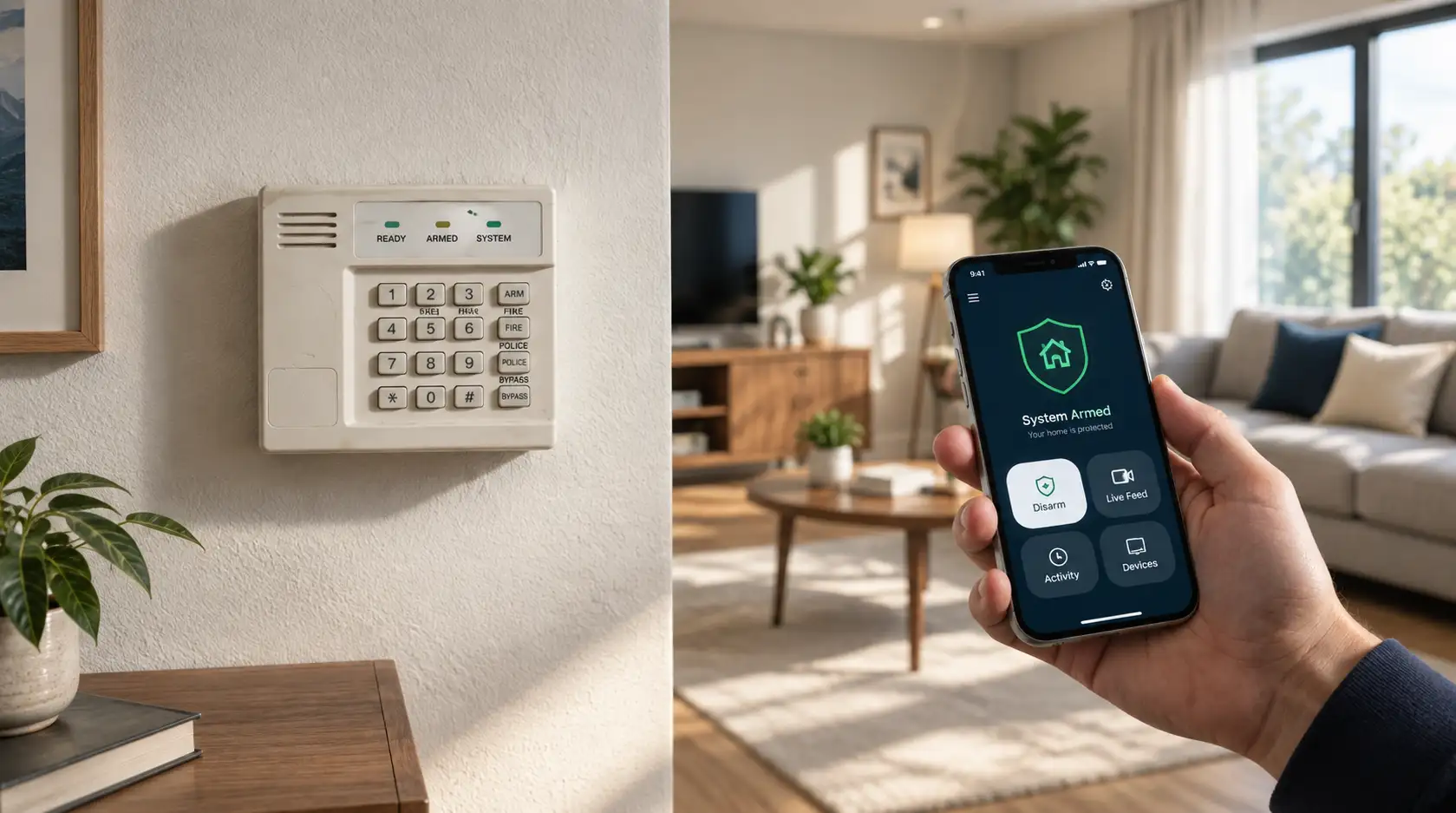
If your mental image of a home security system is a beige keypad by the front door and a siren that goes off when someone opens it, you're picturing technology that is decades old. What replaced it is not just fancier, it works in a fundamentally different way. Understanding that difference helps you tell a real improvement from a sales feature, which matters whether you're buying your first system or wondering whether an old one is worth keeping.
The Old System Had One Job: Make Noise
A traditional alarm system existed to do one thing. As one account of how these systems evolved puts it, the sole purpose was to make a loud noise so that people in the vicinity are alerted to an intruder. A sensor detected a door or window opening, and a siren sounded. That was the whole design.
The idea was that the noise would scare off the intruder or prompt a neighbor to call the police. And as a deterrent, alarms did work to a degree. An Electronic Security Association figure, cited in industry writing, credited widespread alarm adoption with reducing residential burglaries by a substantial margin over the decades. So this is not a story about old systems being useless. It is a story about a specific weakness.
The false alarm problem
That weakness was trust. Because older systems triggered on any door opening, without confirming whether anything was actually wrong, false alarms became extremely common. Accounts of the era note that this led to real consequences: police resources were repeatedly sent to nothing, and in many places alarm calls became low priority or, in some cases, went unanswered. Guidance on modern systems makes the same point, noting that high false-alarm rates desensitize users and emergency responders, which delays the response to a genuine emergency.
So the core problem was not that old systems failed to detect. It is that a system crying wolf several times a year trains everyone, including the police, to stop believing it. Fixing that is the thread that runs through almost everything modern security does.
The Real Shift: From Detecting to Verifying
If there is one change that defines modern home security, this is it. The question stopped being only 'did a sensor trigger' and became 'is this actually a real event.'
The pivotal development was verification. Rather than a siren firing blindly, a modern 24/7 professional monitoring system can confirm an alarm before help is dispatched, often using video or a sequence of sensor signals. Industry accounts describe video verification as the answer to the false-alarm problem: confirming an alarm before emergency services are sent. That confirmation matters enormously, because a verified alarm is treated as a known emergency rather than another possible false trip, which our guide to 24/7 professional monitoring walks through step by step.
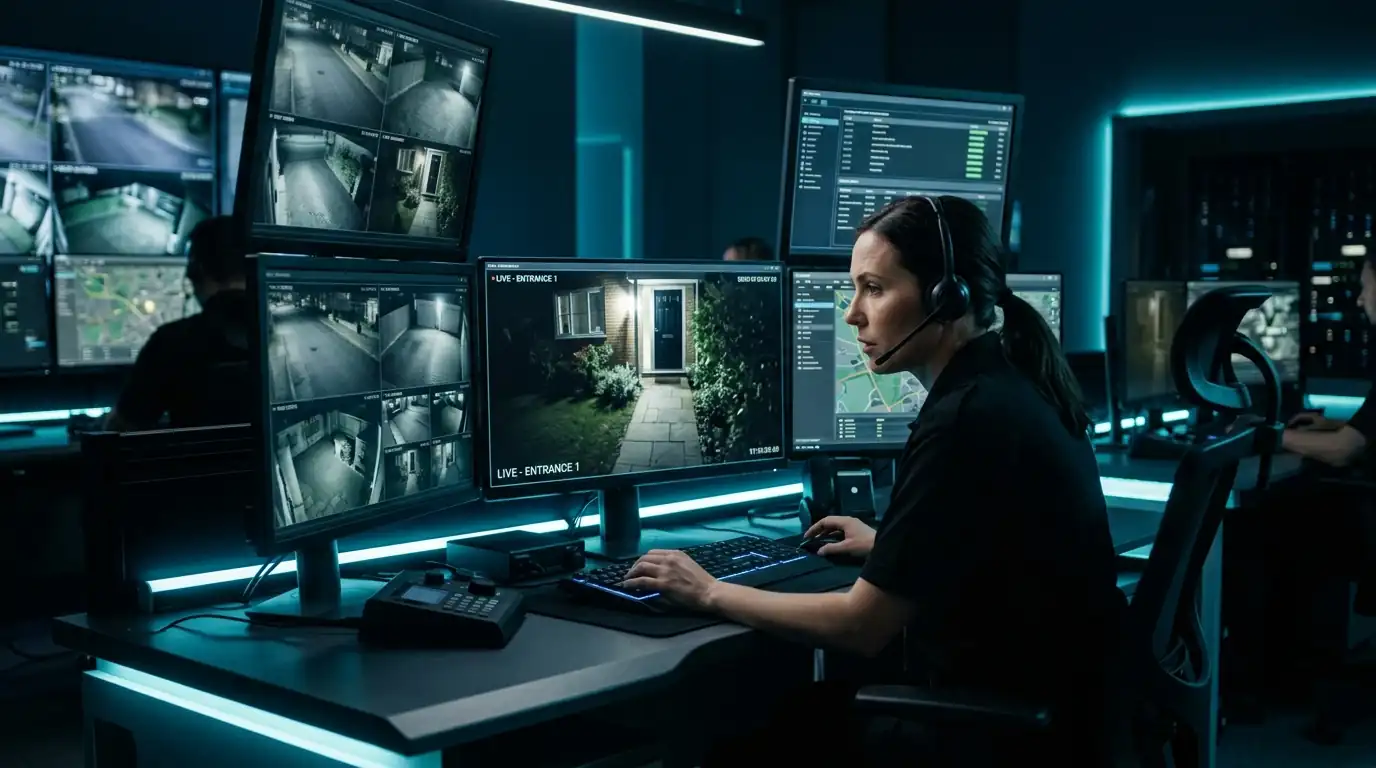
This is the difference between a siren that everyone has learned to ignore and a confirmed report that moves to the front of the queue. It is less visible than a shiny app, and it is the single most important thing that changed.
What Actually Changed, Point by Point
Set the old approach beside the modern one and the pattern is clear. Almost every change closes a gap that the noise-only model left open.
| Area | Old system | Modern system, and why it matters |
|---|---|---|
| On a trigger | Sound a local siren | Verify the event and dispatch, so a response comes even when you are away |
| Communication | Landline that could be cut | Cellular backup, so a cut line or outage does not disable it |
| Awareness when away | None; you learned about it later | Real-time phone alerts, so you know the moment it happens |
| Control | Keypad at home only | Arm and disarm from your phone, ending the 'did I set it' drive back |
| False alarms | Frequent, and trust eroded | Smart detection separates people from pets and passing cars, cutting false trips |
| What it protects | Burglary only | Adds fire, carbon monoxide, and water detection in one system |
| Structure | A standalone box | Linked sensors, locks, and lighting that can act together |
The communication change is easy to overlook and genuinely important. An old system that phoned the monitoring center over a landline could be silenced by cutting a single wire outside the house. Modern systems commonly use a cellular connection instead, which our comparison of wireless and wired systems covers in more detail.
Wondering what's worth having in a modern setup?
Our advisors can explain which modern capabilities actually improve safety for your home, and compare options across our provider partners. Free consultation, no pressure.
Call (855) 248-8052 or request a free quote online.What You Can Do From Your Phone Now
The old system knew nothing once you left the house, and told you nothing until you got home. The shift to remote awareness is the change most people notice first, and it turns security from something passive into something you can check and control from anywhere.
- See a live view of your cameras and check whether an alert was real
- Arm or disarm the system without being at the keypad
- Get an instant notification the moment a sensor triggers
- Let a visitor or contractor in, then lock up again, from wherever you are
- Receive separate alerts for smoke, carbon monoxide, or a water leak, not just intrusion
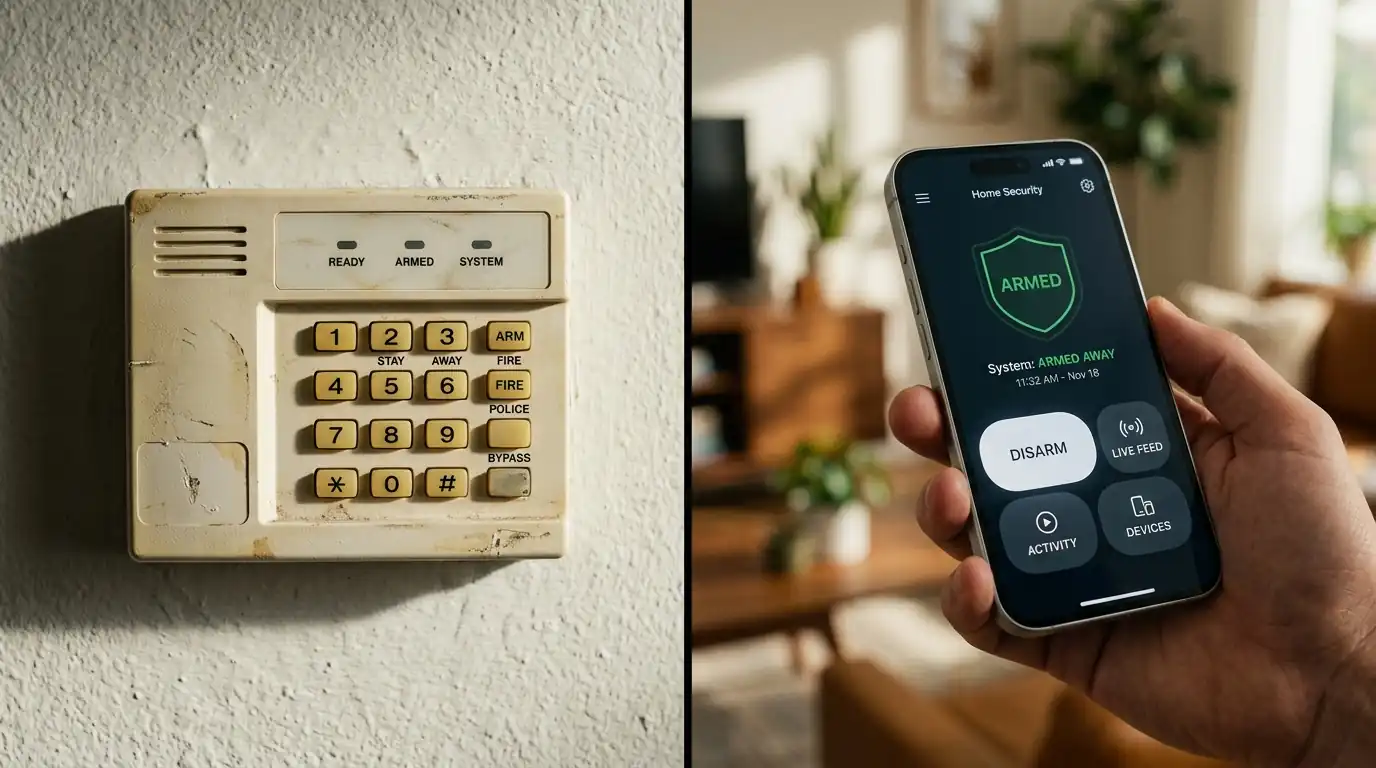
None of this was possible with a panel by the door. It is the practical, everyday face of the same underlying shift: a system that keeps you aware rather than one that only reacts.
What's a Real Upgrade, and What's Just Convenience
Here is where an independent view is worth more than a sales page. Not everything labeled modern is a security improvement. Some of it genuinely makes you safer, and some of it is convenience that is nice to have but should not drive the decision. Being honest about which is which saves you money.
| Genuine security upgrade | Mostly convenience |
|---|---|
| Verified alarms and professional dispatch | Voice-assistant control of the system |
| Cellular backup that resists tampering | Integration with lights and thermostats |
| Real-time alerts when you're away | Automated scenes and routines |
| Smart detection that cuts false alarms | Remote unlocking for convenience |
| Monitored fire, CO, and water detection | App dashboards and usage history |
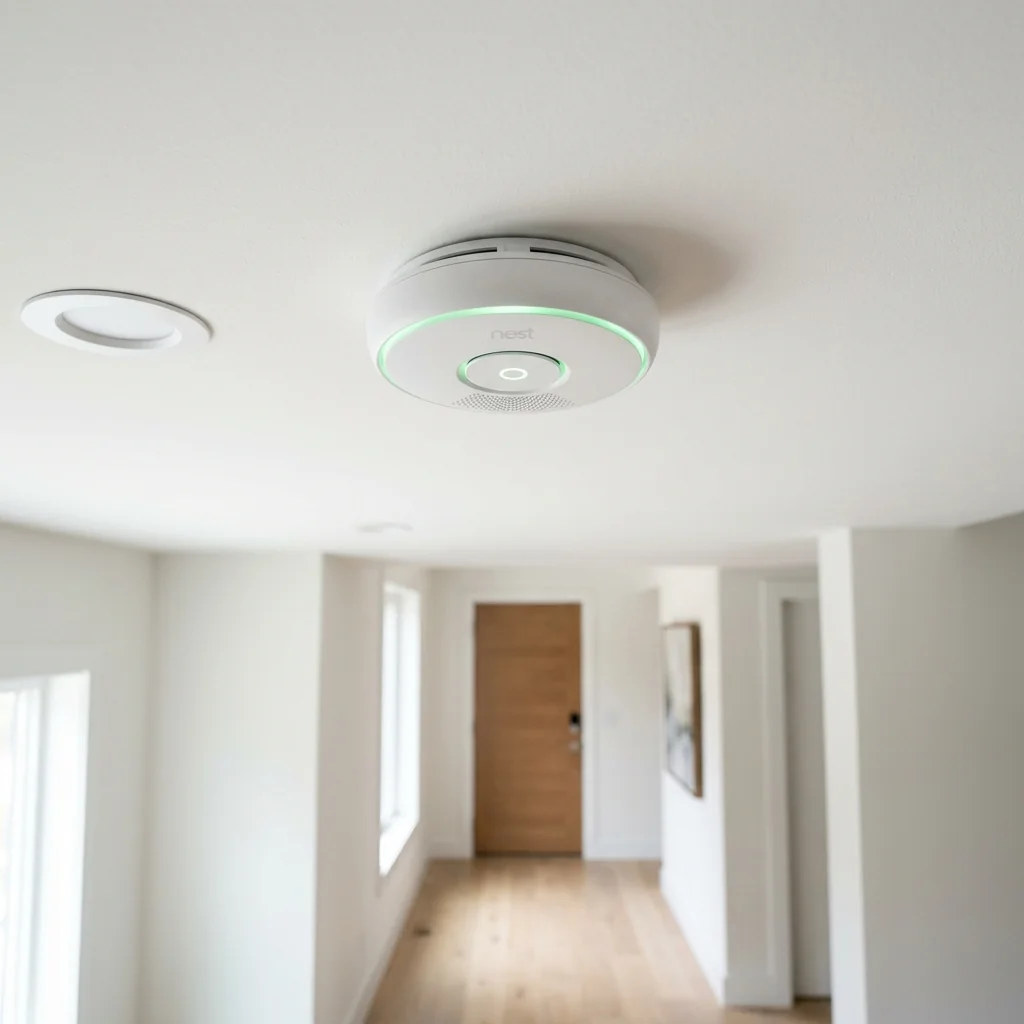
The convenience column is not useless, and plenty of people value it. The point is only that you should not pay a premium for automation and voice control believing it makes your home meaningfully safer. Decide what protection you need first, using our guide to what a system really costs, then add the convenient extras if you want them.
One more practical note: the genuine security upgrades in that left column are also the features most likely to earn an insurance discount, which our guide to insurance discounts explains. If you already own an older system and are weighing whether to modernize it, that is a decision worth its own careful look rather than an impulse buy.
Frequently Asked Questions
What is the main difference between old and modern home security?
Old systems mainly made noise and hoped someone responded. Modern systems verify whether an event is real and bring a response whether or not you are home. That shift matters more than any single feature.
What was wrong with traditional alarm systems?
Their weakness was not detection but trust. Frequent false alarms desensitized both homeowners and responders, so alarm calls were often deprioritized. A system that cries wolf trains everyone to stop believing it.
What is video verification and why does it matter?
It confirms an alarm is real before emergency services are dispatched, usually using video. A verified alarm is treated as a known emergency rather than a possible false trip, which typically means a faster response.
Can modern systems keep working if the power or internet goes out?
Many include battery and cellular backup, so a cut phone line or an outage does not disable them. This closes a real weakness of older systems, which a single cut wire could silence.
Do modern systems really reduce false alarms?
Yes, meaningfully. Smart detection can separate people from pets and passing vehicles, so the system reacts to genuine concerns rather than everyday movement. Fewer false alarms also means responders take real alerts more seriously.
What can I do from my phone that I couldn't before?
See live camera views, arm and disarm the system remotely, receive instant alerts when a sensor triggers, and get separate warnings for smoke, carbon monoxide, or water. None of this was possible with a keypad alone.
Is a smart home security system safer than a traditional one?
In the ways that matter most, yes, because of verification, remote awareness, and cellular backup. Some smart features, though, are convenience rather than security, so it helps to know which is which before buying.
Do I need to replace my old system entirely?
Not always. It depends on the system's age, whether it can be upgraded, and what it currently lacks. Weigh what it does not do against the cost of modernizing rather than replacing on impulse.
Are the smart features worth paying extra for?
The security-relevant ones usually are. Voice control, lighting integration, and automated routines are pleasant but are convenience rather than protection, so decide how much you value them separately from safety.
Does modern home security still deter burglars like old alarms did?
Yes, and arguably more. Visible deterrence still works, and modern systems add verified response and remote awareness on top, so they both discourage attempts and handle the ones that happen more effectively.
Related Reading
- What is 24/7 Professional Monitoring, and Is It Worth It?
- Wireless vs Wired Home Security Systems
- How Much Does a Home Security System Really Cost?
- Homeowner Insurance Discounts for Security Systems: The Real Math
Explore our services:
Get a Second Opinion, Free
Modern home security is a real improvement over the old noise-only model, but only some of what gets marketed as modern actually makes you safer. Knowing the difference is the whole point.
Home Secure Connect is an independent home security advisor. We help homeowners across the USA sort genuine security upgrades from nice-to-have extras, and compare options across our trusted provider partners. Free consultation. No obligation. No pressure.
Call (855) 248-8052 or Request a Free QuoteAvailable Mon to Fri, 10am to 8pm ET.
Trending This Week

Homeowner Insurance Discounts for Security System…
August 24, 2026 · About 8 min read
What to Do If You Think Someone Is Watching Your …
August 19, 2026 · About 8 min read
Video Doorbell vs Full Security System: Is One En…
August 17, 2026 · About 8 min read