Quick Answer
In one sentence: Buy outdoor cameras first, because their job is deterring and identifying someone before they get in, while indoor cameras verify what happened after an entry, and the two are not interchangeable.
The longer answer: The usual framing of this question is which type is better, which has no answer because they are built for different situations. Outdoor cameras are sealed against weather, see much further in the dark, cover wider angles, and often carry deterrence features like spotlights. Indoor cameras are compact, cheaper, easier to place, and better suited to confirming an alert inside the house. The one thing you should not do is use an indoor camera to watch outside through a window, which fails badly at night for a specific technical reason covered below.
Key Takeaways
- Outdoor cameras carry weatherproof IP ratings, commonly IP65 or higher, and industry guidance treats IP65 as the minimum for any outdoor mounting.
- Night vision range differs sharply: indoor infrared typically reaches around 30 feet, while outdoor units are reported up to roughly 98 feet.
- An indoor camera pointed through a window is blinded at night, because its own infrared light reflects off the glass.
- Outdoor cameras cover wider angles, commonly 120 to 180 degrees, against roughly 90 to 120 for indoor models.
- Indoor cameras sit within reach and can be unplugged easily, which is why exterior coverage is the higher priority.
Almost every guide to this topic tells you outdoor cameras are weatherproof and indoor cameras are not. True, and not much help when you're deciding what to actually buy. The more useful way in is to stop asking which is better and start asking what each one is for. If you already know where cameras should go, this is the companion question of which type belongs in each spot.
They Do Different Jobs, Not Better and Worse
This is the reframe that makes the rest of the decision straightforward.
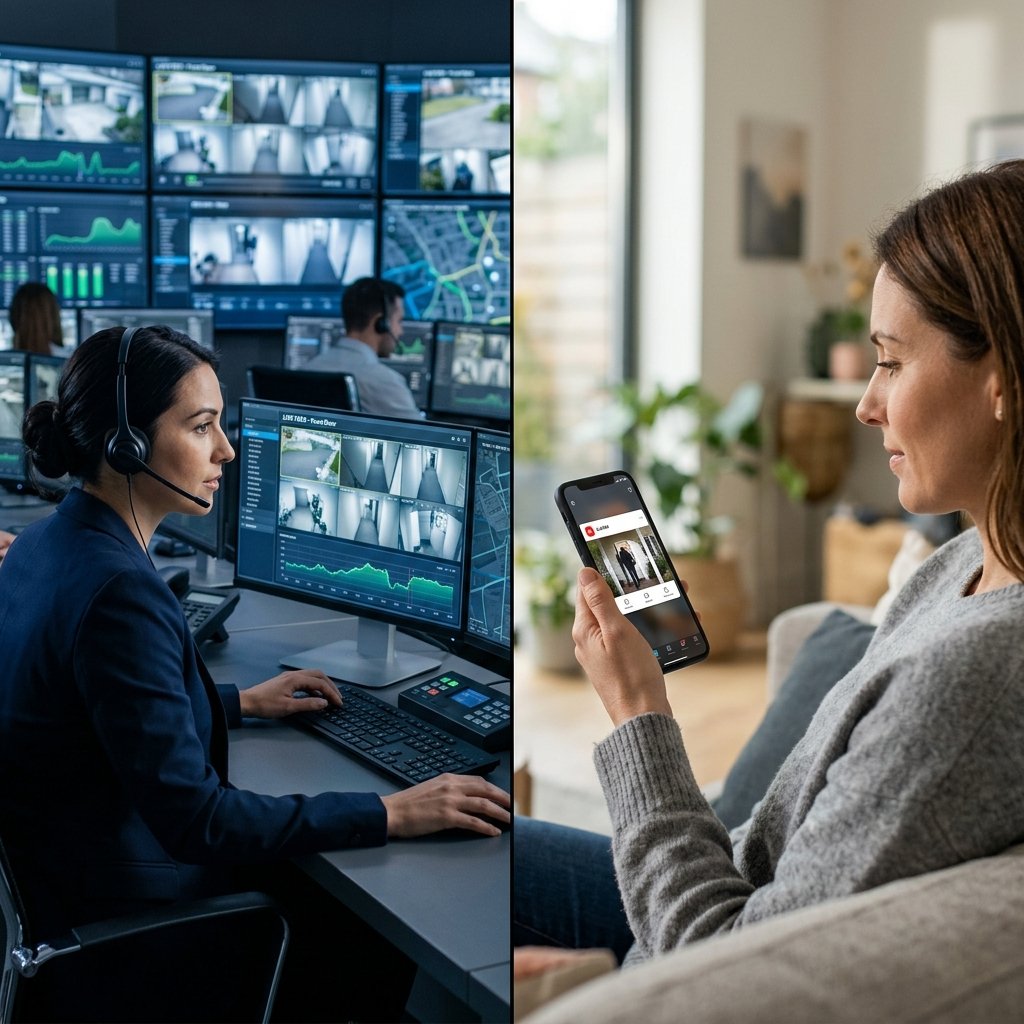
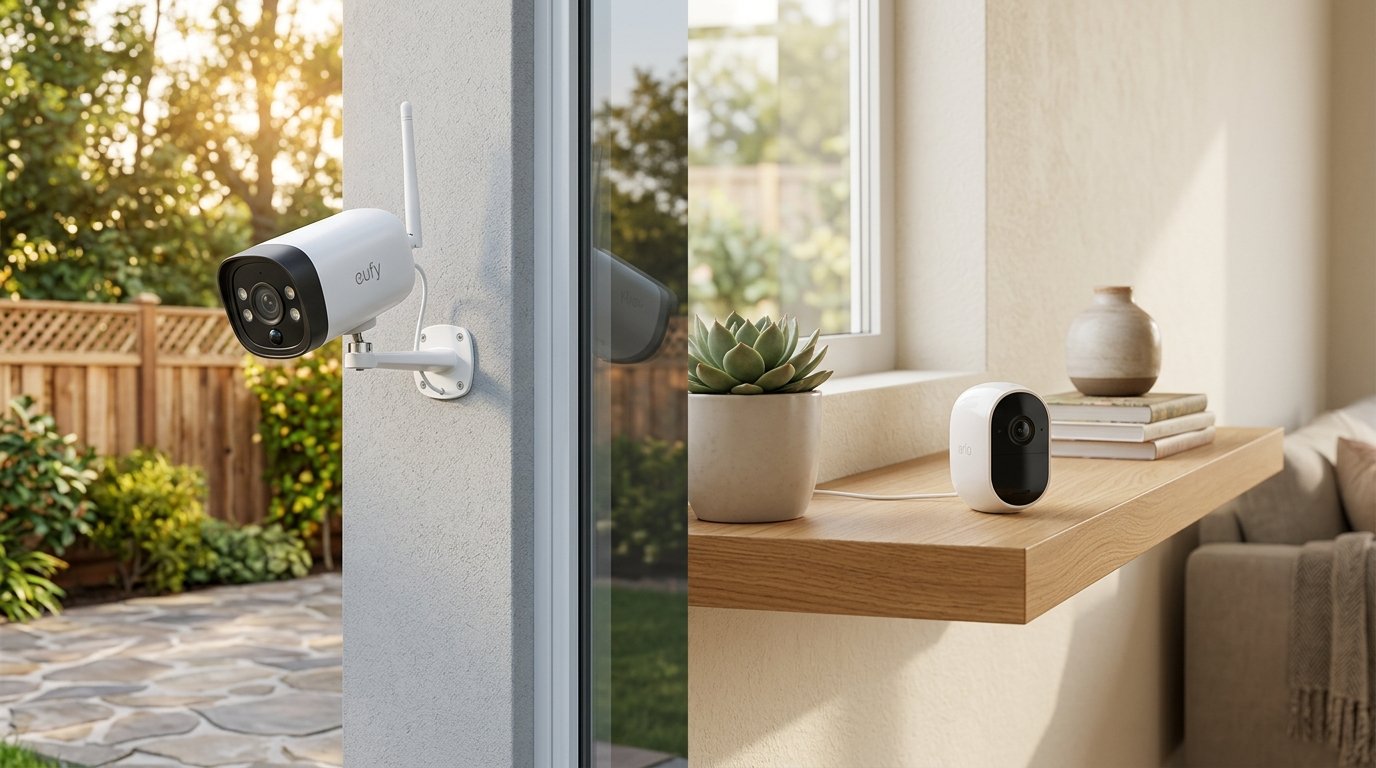
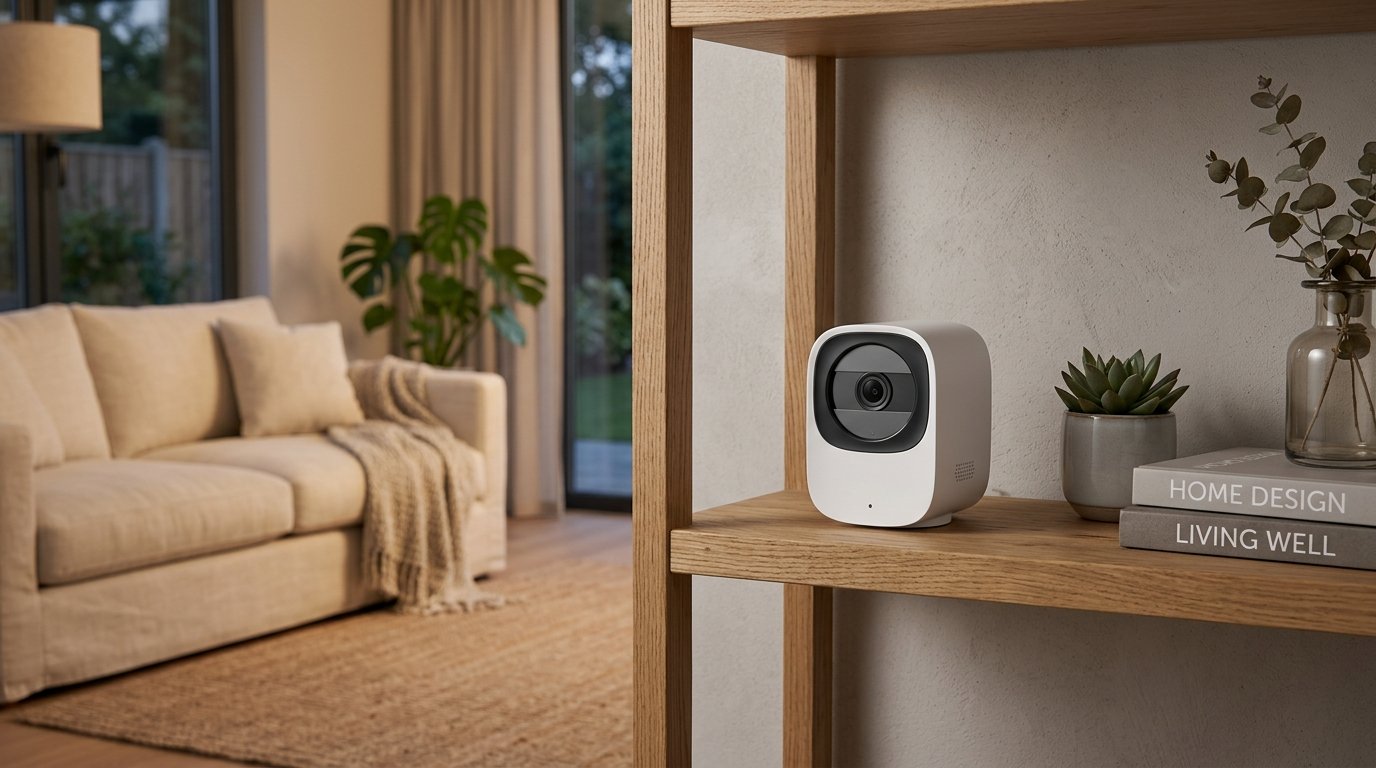
Outdoor cameras work before entry. Their job is to be seen, to cover approach routes, and to capture an identifiable face while someone is still outside. That's why they carry sealed housings, longer-range night vision, wider lenses, and increasingly deterrence features like motion-triggered spotlights and sirens. They're mounted high and out of reach so they're hard to disable.
Indoor cameras work after entry. Their job is to confirm what an alert actually was, and to record what happened inside. They're compact, designed for controlled lighting and shorter distances, and often include two-way audio and a privacy shutter. Because they sit within reach, anyone inside can unplug one without much effort.
That last point matters for prioritizing. A camera that can be unplugged by whoever it's recording is a verification tool, not a first line of defense. Since burglary research indicates most entries happen at ground level through doors and first-floor windows, as covered in our guide to how burglars choose homes, exterior coverage is where the first money goes.
What Actually Differs, Side by Side
Typical specifications for each type. Treat these as common ranges rather than guarantees, since they vary considerably by model and price point.
| Factor | Outdoor camera | Indoor camera |
|---|---|---|
| Weather sealing | IP65 to IP67, dust-tight and rain-resistant | None. Not built for moisture or temperature swings |
| Temperature range | Rated for heat and freezing conditions | Controlled indoor conditions only |
| Field of view | Commonly 120 to 180 degrees | Commonly 90 to 120 degrees |
| Night vision reach | Reported up to about 98 feet | Typically around 30 feet |
| Night vision type | Infrared, or color night vision with a spotlight | Usually standard infrared, black and white |
| Deterrence features | Spotlights and sirens on many models | Rare. Not the intended purpose |
| Tamper resistance | Mounted high, reinforced housings | Within reach, easily unplugged |
| Typical extras | Solar power options, vandal-resistant casing | Two-way audio, privacy shutter, compact design |
| Lifespan and upkeep | Weather exposure means more maintenance | Longer service life, less maintenance |
Why an Indoor Camera Fails in a Window
This deserves its own section because it's one of the most common camera mistakes, it seems perfectly sensible, and it fails at exactly the time you need footage most.
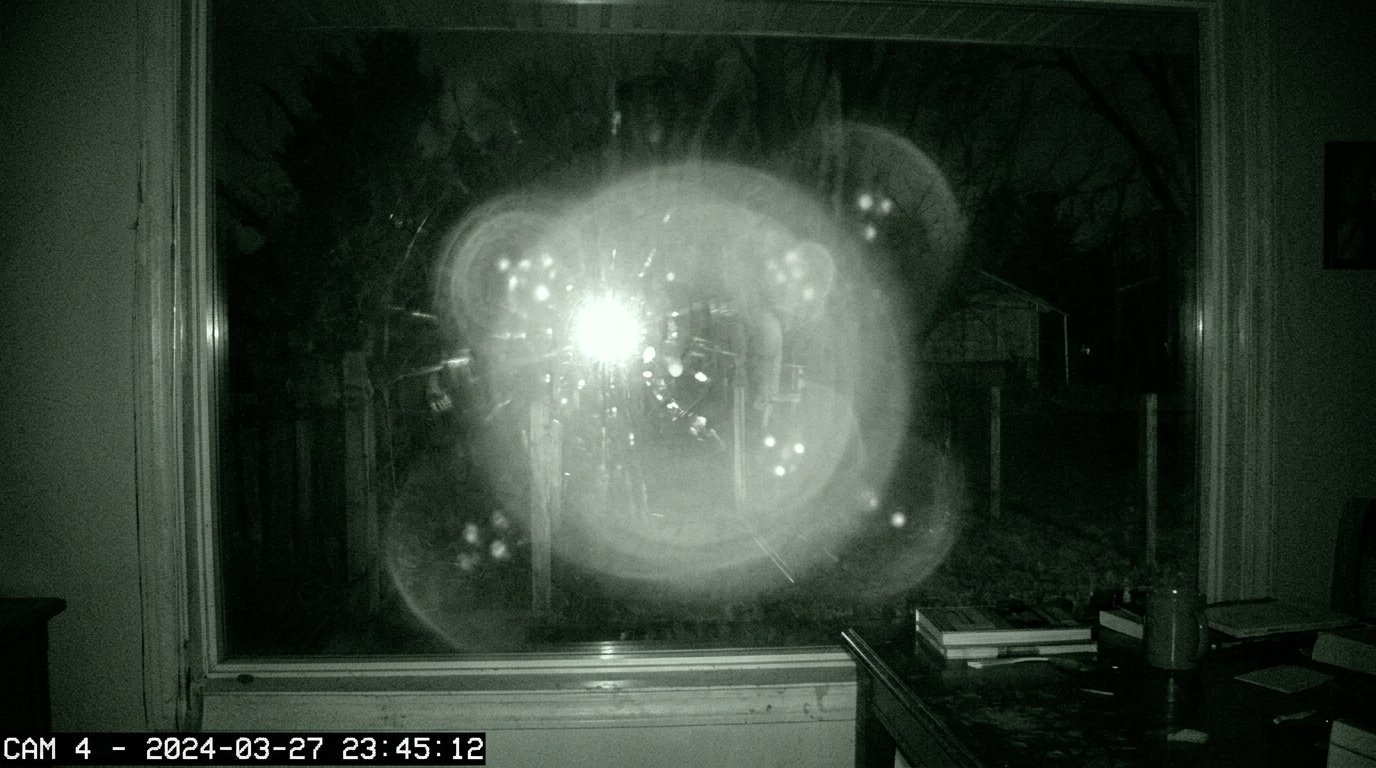
The setup: you own an indoor camera, you want to watch the driveway, so you set it on the windowsill pointing out. During daylight it works reasonably well. At night it produces a bright white blur and nothing else.
What's actually happening
Most indoor cameras use infrared LEDs for night vision. Pointed through glass, that infrared light reflects straight back off the pane into the lens. Camera guidance describes the result plainly: the reflection creates a bright blur that obscures everything beyond the window. The camera is effectively blinding itself, and no software setting fixes it.
What works instead
- Mount an actual outdoor camera outside. This is the reliable answer, and it also removes the glass between the lens and whatever you want to see.
- If mounting outside isn't possible, use a camera with starlight or low-light sensors that amplify ambient light rather than emitting infrared, so there is nothing to reflect.
- If you must use an infrared camera at a window, position it several inches back from the glass and keep indoor lights out of the frame. This reduces the problem but does not eliminate it.
Worth knowing: reflective surfaces outdoors cause a milder version of the same problem. Light-colored siding, metal fixtures, and nearby glass can bounce infrared back into the lens and create hotspots that wash out detail. A small change of angle usually fixes it.
Not sure which cameras your home actually needs?
Our advisors work out coverage from your home's layout, then compare equipment across our provider partners. Free consultation, no pressure.
Call (855) 248-8052 or request a free quote online.Decoding the Specs That Matter
Four specifications do most of the work in a camera listing. The rest is largely marketing.
IP rating. Two digits describing resistance to solids and liquids. Industry guidance treats IP65 as the minimum for outdoor mounting, with IP66 and IP67 offering more protection against heavy rain and dust. If a listing does not state an IP rating, treat the camera as indoor-only.
Resolution. Reported 2026 guidance puts 4MP, sometimes labelled 1440p, as a reasonable baseline for meaningful detail. 1080p remains adequate for small indoor spaces, while 4K is generally reserved for wide outdoor areas where you need to identify a face at distance.
Night vision type. Standard infrared produces black and white footage and is the most common. Color night vision uses either highly sensitive sensors or a supplementary white light, and makes identifying clothing, vehicles, and faces considerably easier.
Field of view. Wider covers more ground with fewer cameras but distributes detail across a larger frame. Around 120 to 180 degrees suits outdoor zones, while 90 to 120 is typical and sufficient indoors.
Which Should You Buy First?
For most homes the sequence is straightforward.
The buy-first sequence
- Front entry, outdoors. The most common entry point, and it covers deliveries and visitors too.
- Back or side entry, outdoors. Hidden from the street, which is exactly why it gets used.
- One indoor camera at the main interior entry. Confirms whether an alert was real before you call anyone.
- Additional outdoor coverage for the driveway, garage approach, or a side yard.
- Further indoor cameras only where a specific room genuinely needs watching.
The principle: exterior coverage prevents and identifies, interior coverage verifies. Spend on prevention first.
On the indoor side, keep cameras out of bedrooms and bathrooms, and point exterior cameras at your own property rather than a neighbour's. Our guide to camera placement covers the privacy line and mounting specifics in more detail. On budget, each camera adds both hardware cost and, frequently, per-camera video storage, which our guide to what a system really costs breaks down.
Frequently Asked Questions
Can I use an indoor security camera outside?
Not reliably. Indoor cameras lack weather sealing, so rain and humidity can damage the electronics. They also have narrower lenses and shorter night vision range, which leaves blind spots across a yard or driveway.
Why does my camera look white and blurry through a window at night?
Its infrared light is reflecting off the glass back into the lens. This is a physical problem, not a settings issue. Mount an outdoor camera outside, or use a camera that amplifies ambient light instead.
What does IP65 mean on a security camera?
It describes resistance to solids and liquids. IP65 means dust-tight and protected against water jets, which industry guidance treats as the minimum for outdoor mounting. IP66 and IP67 offer more protection.
Do I need both indoor and outdoor cameras?
Most homes benefit from both, but not equally. Outdoor cameras deter and identify before entry, indoor cameras verify afterwards. Start with exterior coverage at your entry points, then add one indoor camera.
How far can security cameras see at night?
It varies by type. Indoor infrared typically reaches around 30 feet, which suits a room. Outdoor cameras are reported reaching up to roughly 98 feet in darkness, since they need to cover larger areas.
Is color night vision worth paying for?
Often yes for outdoor use. Standard infrared produces black and white footage, which makes identifying clothing or vehicles harder. Color night vision, via sensitive sensors or a spotlight, substantially improves identification.
What resolution do I need for a security camera?
Reported 2026 guidance suggests 4MP as a sensible baseline. 1080p remains adequate for small indoor spaces, while 4K mainly matters for wide outdoor areas where you need to identify a face at distance.
Can someone easily disable an indoor camera?
More easily than an outdoor one. Indoor cameras sit within reach and can be unplugged quickly. Outdoor models are mounted high in reinforced housings, which is part of why exterior coverage is the higher priority.
Why does my outdoor camera have glare at night?
Usually infrared reflecting off a nearby surface. Light-colored siding, metal fixtures, or glass can bounce it back into the lens and create hotspots. A small adjustment to the mounting angle normally resolves it.
Are wireless outdoor cameras as good as wired ones?
For most homes, yes, provided the signal reaches. Wireless models install far more easily and many offer solar power options. Wired cameras remain preferable for long distances or areas with poor connectivity.
Related Reading
- Home Security Camera Placement: The Spots That Actually Matter
- How Do Burglars Actually Choose Which Homes to Break Into?
- Buying Your First Home Security System
- How Much Does a Home Security System Really Cost?
Explore our services:
Get a Second Opinion, Free
Buying the wrong camera type is one of the more expensive mistakes in home security, because the failure usually shows up months later on the night you needed the footage.
Home Secure Connect is an independent home security advisor. We help homeowners across the USA match camera types to real coverage needs, then compare equipment across our trusted provider partners. Free consultation. No obligation. No pressure.
Call (855) 248-8052 or Request a Free QuoteAvailable Mon to Fri, 10am to 8pm ET.
Trending This Week
Smart Locks vs Traditional Deadbolts: Which Actua…
September 23, 2026 · About 8 min read
Alarm System vs Security System: What's the Diffe…
September 21, 2026 · About 8 min read
Home Security for Aging Parents: Practical Advice…
September 16, 2026 · About 9 min read