Quick Answer
In one sentence: Place cameras to cover the entry points where break-ins actually happen, mounted 8 to 10 feet high outdoors and angled down 15 to 30 degrees, rather than wherever a power outlet happens to be.
The longer answer: A cheap camera covering your front door does more than an expensive one pointed at a fence. Good placement comes down to three things: putting cameras where intruders actually enter, mounting them at a height and angle that captures faces instead of the tops of heads, and covering the blind spots most people forget. This guide walks through all three, plus the privacy line to stay on the right side of.
Key Takeaways
- Cover entry points first. Research indicates about 34% of burglars enter through the front door and 23% through first-floor windows.
- Mount outdoor cameras 8 to 10 feet high and indoor cameras 7 to 9 feet, angled down 15 to 30 degrees.
- Too high is a real mistake. Above 10 feet you capture the top of a head, not a face.
- Side yards, the back fence line, and the area above the garage are the most commonly missed spots.
- Point cameras at your own property. Recording a neighbor's private space raises legal and privacy problems.
Most people mount their first camera wherever there's a convenient outlet, not where break-ins happen. That's the single most common placement mistake, and it's why so much home security footage turns out to be useless when it's finally needed. If you understand how burglars choose which homes to target, camera placement stops being guesswork and becomes a straightforward map of your home's real weak points.
Start Where Break-Ins Actually Happen
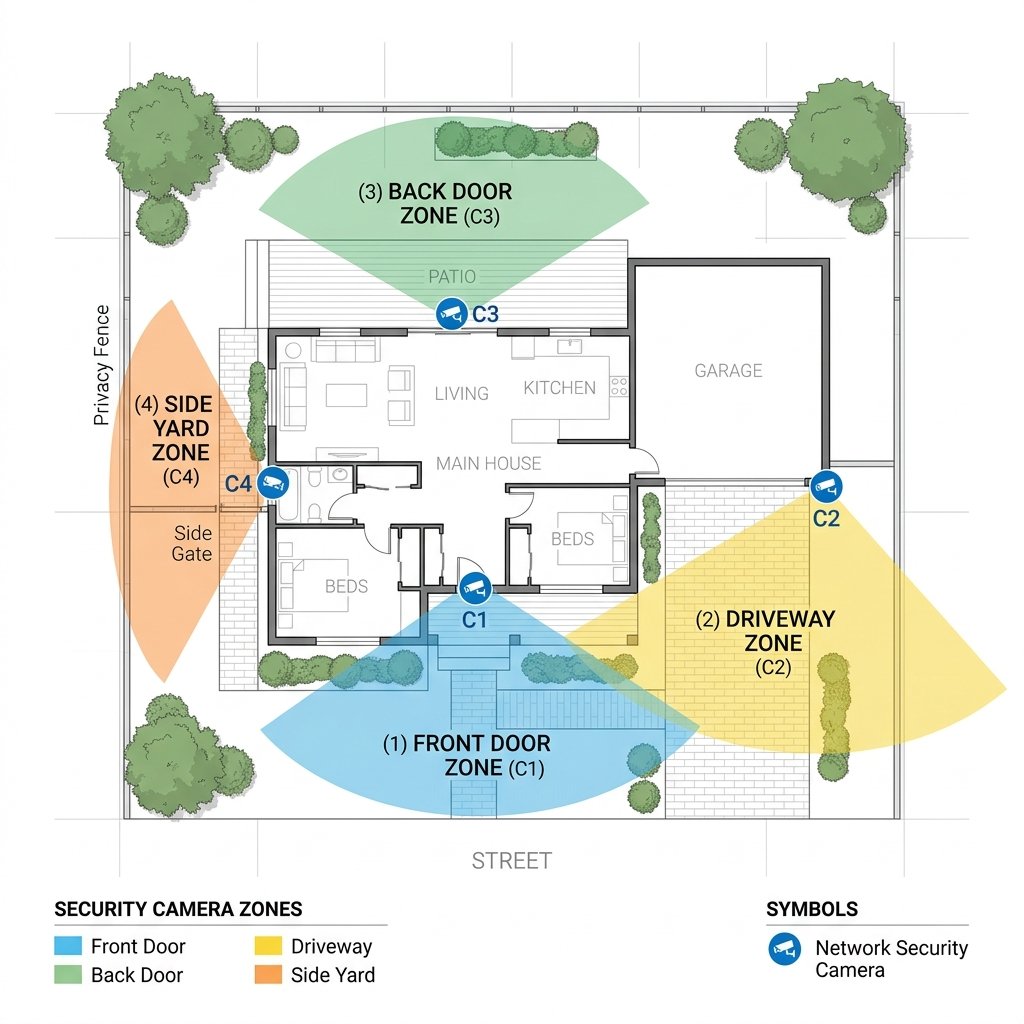
Placement should follow the data on how intruders get in, not the layout of your electrical outlets. Research from the University of North Carolina and the International Association of Certified Home Inspectors indicates that roughly 34 percent of burglars enter through the front door, about 23 percent through first-floor windows, and around 22 percent through the back door. That tells you exactly where your first cameras belong.
Priority order for your first cameras
- Front door. The single most common entry point, and it also captures deliveries and visitors.
- Back door. Hidden from the street, which is exactly why intruders favor it.
- First-floor windows. Rarely covered, frequently used. One camera per side of the house, mounted high and angled along the wall, catches anyone moving along the building line.
- Driveway and garage. The garage door is the largest opening in most homes, and a camera there also covers vehicles and anyone approaching.
Security professionals follow a simple order: protect entry points first, high-traffic paths second, and blind spots third. Get the first tier covered before spending on anything fancier.
Get the Height and Angle Right, or the Footage Is Useless
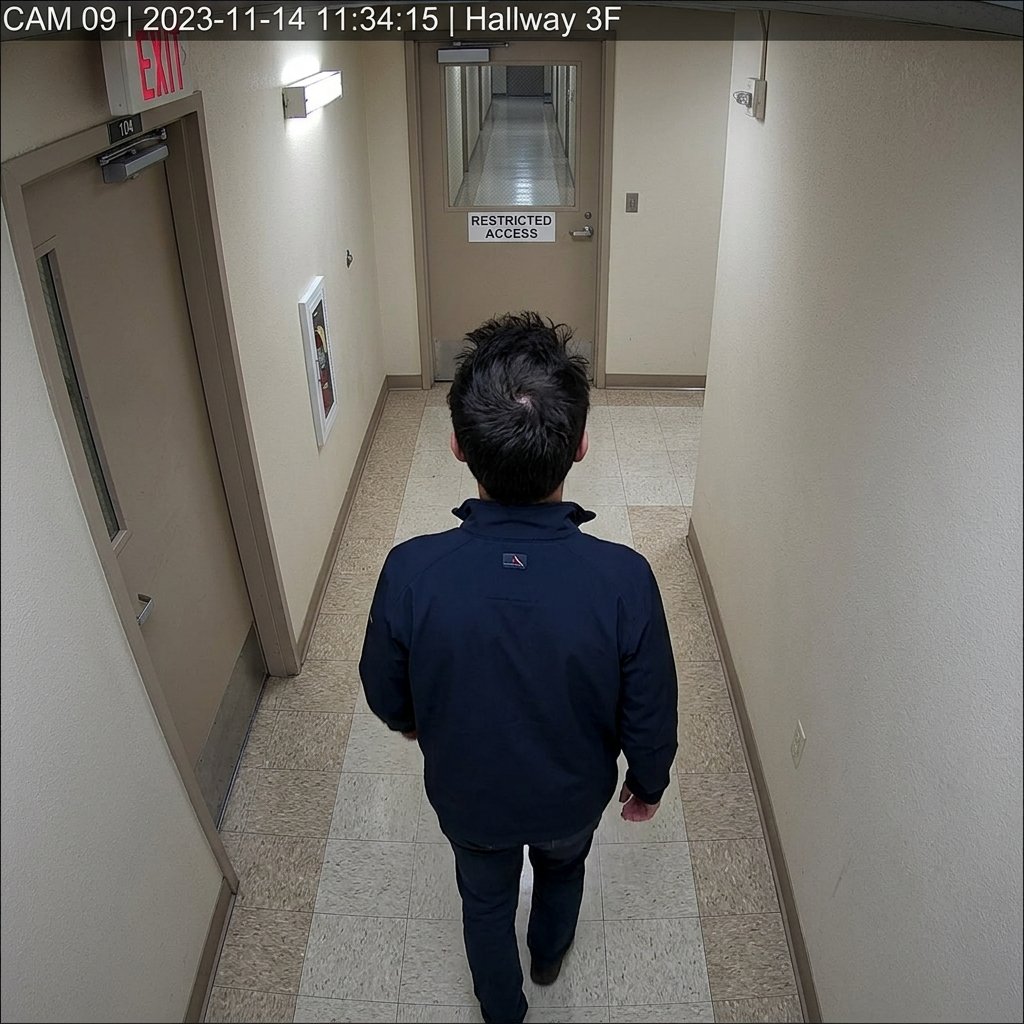
A camera in the right spot at the wrong height still fails. This is the part that separates footage that identifies someone from footage that shows the top of a hat.
| Setting | Target | Why |
|---|---|---|
| Outdoor height | 8 to 10 feet | High enough to resist tampering, low enough to capture faces |
| Indoor height | 7 to 9 feet | Same balance, scaled for interior ceilings |
| Downward tilt | 15 to 30 degrees | Level mounting shows the horizon, not the person |
| Field of view | 130 degrees or wider | Covers a full entry zone and reduces the number of cameras needed |
| Mounting spot | Under eaves where possible | Shields the lens from rain and direct sun glare |
| Too high | Avoid above 10 feet | You capture the top of a head, not an identifiable face |
Two more rules that matter. Overlap your coverage where you can, so two cameras watch a key zone from different angles. If one is blocked or tampered with, the other still records. And watch your lighting, because a camera pointed at a bright window or into direct sun will silhouette anyone in front of it, turning a face into a shadow.
Want help mapping coverage for your specific home?
Our advisors can review your home's layout and entry points and recommend a camera plan that covers the real gaps. Free consultation, no pressure.
Call (855) 248-8052 or request a free quote online.The Five Spots Most People Miss
Once the obvious entry points are covered, these are the zones that consistently get overlooked, and they're often exactly where an intruder moves to avoid the front of the house.
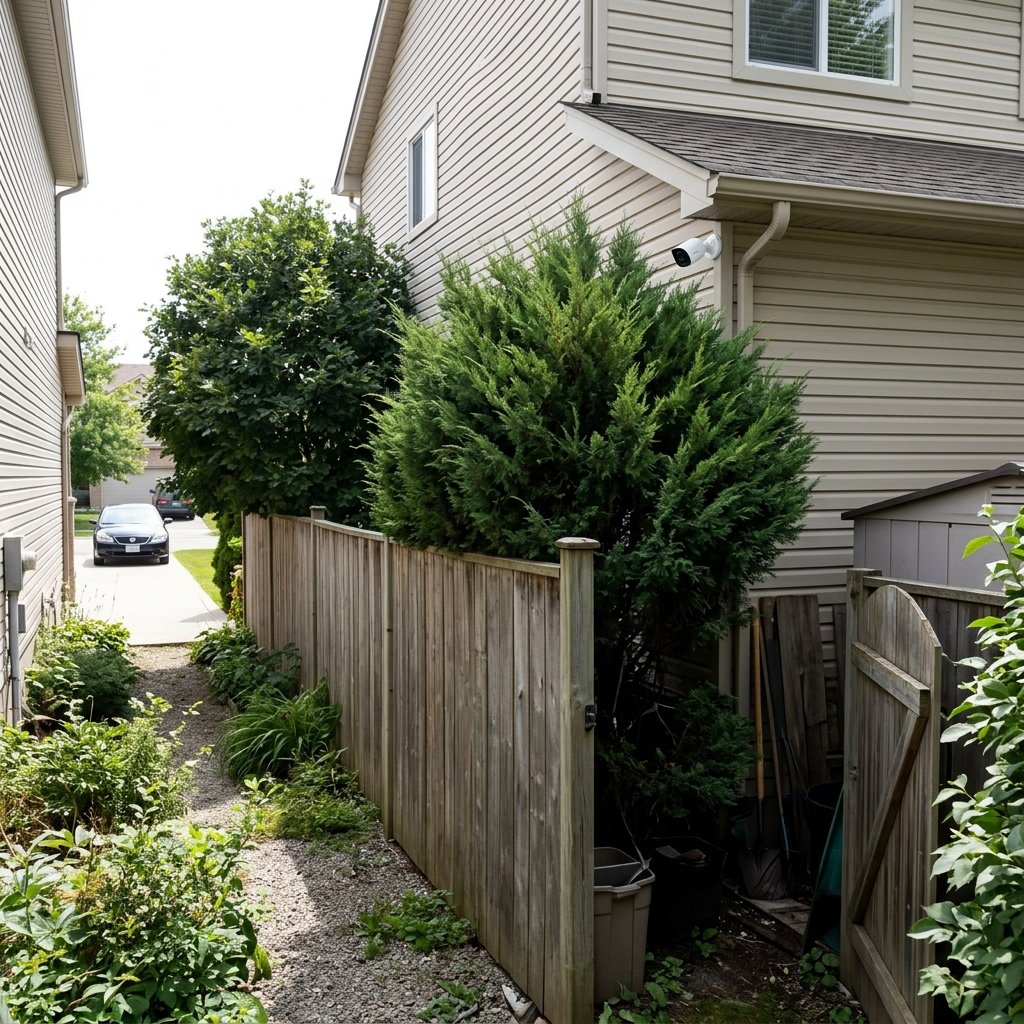
- The side yard and fence line. The most common blind spot. Intruders use side yards to reach back windows and doors without being seen from the street. A camera mounted high on the side of the house, angled down the fence line, closes this gap.
- The back fence, not just the patio. Most back-door cameras point at the patio, but someone hops the fence 15 to 20 feet away. Position the camera to cover the full fence line, where a wide angle earns its keep.
- Above the garage. The largest opening in most homes. A camera above the garage captures vehicle activity and anyone approaching down the driveway.
- Climbable access to upper windows. Less common but not rare. If a flat garage roof, a sturdy tree, or a balcony rail gives access to a second-floor window, add a camera or a sensor there.
- Side and mudroom entries. These secondary doors are often left unlocked and rarely watched. A door sensor or a small indoor camera covers what a front-door camera never sees.
Indoor Cameras and the Privacy Line
Indoor cameras add a useful second layer, catching anyone who gets past the exterior. Aim one at the inside of the front door and another at the back or patio door, which gives clean footage without the night-vision glare that outdoor cameras produce through glass.
But indoor placement carries obligations that outdoor coverage of your own yard does not.
Rules that keep you clear
- Keep cameras out of bedrooms and bathrooms, where anyone has a reasonable expectation of privacy
- Point exterior cameras at your own property, not a neighbor's windows, yard, or door
- Tell household members and regular guests where cameras are
- Check your state's rules on audio recording, which is often treated more strictly than video
Recording your own entry points is straightforward. Capturing a neighbor's private space is where placement crosses into legal territory, so angle cameras to cover what's yours.
A Simple Coverage Checklist
Before you finish, walk your property once at night and confirm each of these:
- All exterior doors are covered, front and back.
- Accessible first-floor windows are within a camera's view.
- The driveway and garage approach are covered.
- Side yards and fence lines have no blind gap.
- Cameras sit 8 to 10 feet high outdoors, angled down.
- No camera faces directly into a bright light or the setting sun.
- Key zones have overlapping coverage from two angles.
- No camera points into a neighbor's private space.
- Wi-Fi signal reaches every camera location.
Frequently Asked Questions
Where should I put my first security camera?
The front door. Research indicates about 34 percent of burglars enter there, and it also captures deliveries and visitors. Once that's covered, add the back door and accessible first-floor windows in that order.
How high should I mount a security camera?
Outdoor cameras work best at 8 to 10 feet, indoor at 7 to 9 feet, angled down 15 to 30 degrees. Higher than 10 feet is a common mistake, since you capture the top of a head instead of a face.
What is the most common camera placement mistake?
Mounting where a power outlet is convenient rather than where break-ins happen. The second most common is mounting too high, which produces footage that shows the top of someone's head but no identifiable face.
How many security cameras do I actually need?
Fewer than most people think. A few well-placed cameras covering entry points and blind spots outperform many badly positioned ones. Start with front door, back door, and one per accessible side of the house.
What areas do people most often forget to cover?
Side yards and fence lines, the back fence rather than just the patio, and the area above the garage. Intruders use these routes precisely because they're hidden from the street and rarely watched.
Can I point a camera at my neighbor's property?
You should not. Recording a neighbor's private space can raise legal and privacy issues. Angle exterior cameras to cover your own doors, windows, and yard, and keep neighbors' windows and yards out of frame.
Should security cameras be visible or hidden?
Visible, in most cases. A visible camera acts as a deterrent, and deterrence prevents the break-in rather than just recording it. Hidden cameras have niche uses but lose the preventive benefit entirely.
Do I need cameras inside the house too?
They add a useful second layer, catching anyone who gets past the exterior. Aim them at the inside of entry doors, and keep them out of bedrooms and bathrooms, where recording raises clear privacy problems.
Why does my camera footage look washed out during the day?
Usually backlighting. A camera pointed at a bright window or into direct sun silhouettes whatever is in front of it. Reposition it so the light source is behind the camera, and mount under eaves to cut glare.
Does camera placement matter more than camera quality?
For most homes, yes. A modest camera in the right spot at the right height beats a high-end one pointed at a fence. Placement determines whether footage is usable; resolution only matters once the framing is right.
Related Reading
- How Do Burglars Actually Choose Which Homes to Break Into?
- How to Prevent Package Theft During the Holidays
- Do You Actually Need a Home Security System?
Explore our services:
Get a Second Opinion, Free
The right camera in the wrong place is wasted money. Getting placement right the first time is mostly about knowing where to look.
Home Secure Connect is an independent home security advisor. We help homeowners across the USA map camera coverage to their actual home and compare equipment across our trusted provider partners. Free consultation. No obligation. No pressure.
Call (855) 248-8052 or Request a Free QuoteAvailable Mon to Fri, 10am to 8pm ET.
Trending This Week
How to Test if Your Home Security System Is Actua…
September 9, 2026 · About 8 min read
Should You Upgrade Your Old Home Security System?
September 7, 2026 · About 8 min read
Contract vs No-Contract Home Security: Which Actu…
September 2, 2026 · About 7 min read