Quick Answer
In one sentence: Burglars choose homes based on visible signs of low risk and high reward, which is why over 75 percent of burglaries are crimes of opportunity rather than random events.
The longer answer: Burglars are more predictable than most US homeowners realize. Research from the FBI, UNC Charlotte's study of 422 incarcerated burglars, and the US Department of Justice's ethnographic burglar research all point to the same conclusion: burglars evaluate homes using a small set of environmental cues. Visible security systems, occupancy signals, entry point accessibility, and neighborhood layout drive the decision. Understanding these cues is the first step to becoming a less attractive target.
Key Takeaways
- Over 75% of burglaries are crimes of opportunity, not premeditated targeting.
- 83% of burglars look for an alarm system before attempting a break-in, and 60% would choose a different neighborhood if extensive security was visible.
- Most burglaries happen during daytime work hours (10 AM to 3 PM), not at night.
- 81% of break-ins happen on the first floor, primarily through the front door (34%), first-floor windows (23%), or back door (22%).
- The average burglary takes just 10 minutes, and only about 13.6% of burglars are arrested.
Most homeowners assume burglars pick homes randomly, or that break-ins can not really be prevented. Both assumptions are wrong. Decades of research on burglar behavior, from FBI crime data to interviews with hundreds of convicted burglars, tell a consistent story: burglars use a small set of environmental cues to evaluate whether a home is worth the risk.
This guide walks through what the actual research says about burglar target selection: how they decide, what they look for, what deters them, and what most makes a home vulnerable. If you already read our post on whether you need a home security system, this one goes one level deeper into why security features actually work as deterrents.
Are Most Burglaries Random or Planned?
Neither, but closer to planned. A US Department of Justice ethnographic study interviewed 30 active burglars in a West Texas urban area and found that over 75 percent of reconstructed burglaries were crimes of opportunity. Burglars did not plan specific homes days in advance. Instead, they scanned neighborhoods and evaluated homes based on visible risk cues in real time.
That word "opportunity" matters. It means most burglars are not walking around looking for a specific target. They are looking for the easiest option in a given moment. If your home does not look like an easy option, they move on to another one. This is exactly what makes deterrence so effective.
The Journal of Quantitative Criminology has also studied neighborhood-level patterns and confirmed that burglars prefer lower-density neighborhoods, detached single-family homes, and areas close to where they already live. In other words, burglars follow patterns of familiarity and convenience just like anyone else.
What Do Burglars Actually Look For in a Home?
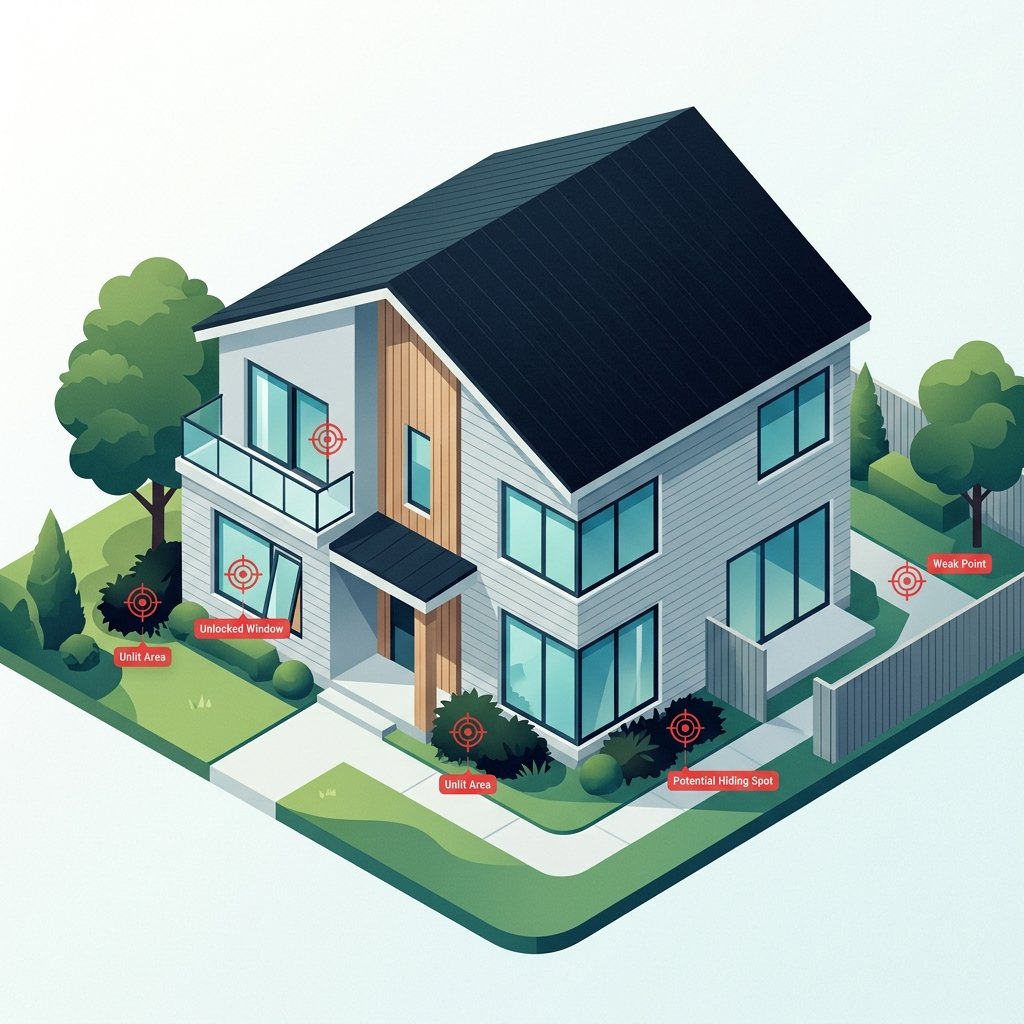
Based on the UNC Charlotte study of 422 incarcerated burglars, along with subsequent research, seven specific factors drive target selection. Here they are in order of importance.
1. Visible Security Measures
The single biggest deterrent. 83 percent of burglars look specifically for an alarm system before attempting a break-in. If they find one, 60 percent choose a different neighborhood entirely, and only 13 percent would continue if they discovered an alarm during the attempt. This includes visible security cameras, alarm keypads visible through windows, yard signs, motion lights, and visible door and window sensors.
2. Signs of Occupancy
Burglars want empty homes. Cars in the driveway, lights and TVs running, dogs, and visible activity all signal risk. Homes that look consistently occupied are avoided in favor of ones that look empty. This is why smart automation for lighting, TVs, and garage doors is such a strong deterrent tool.
3. Entry Point Accessibility
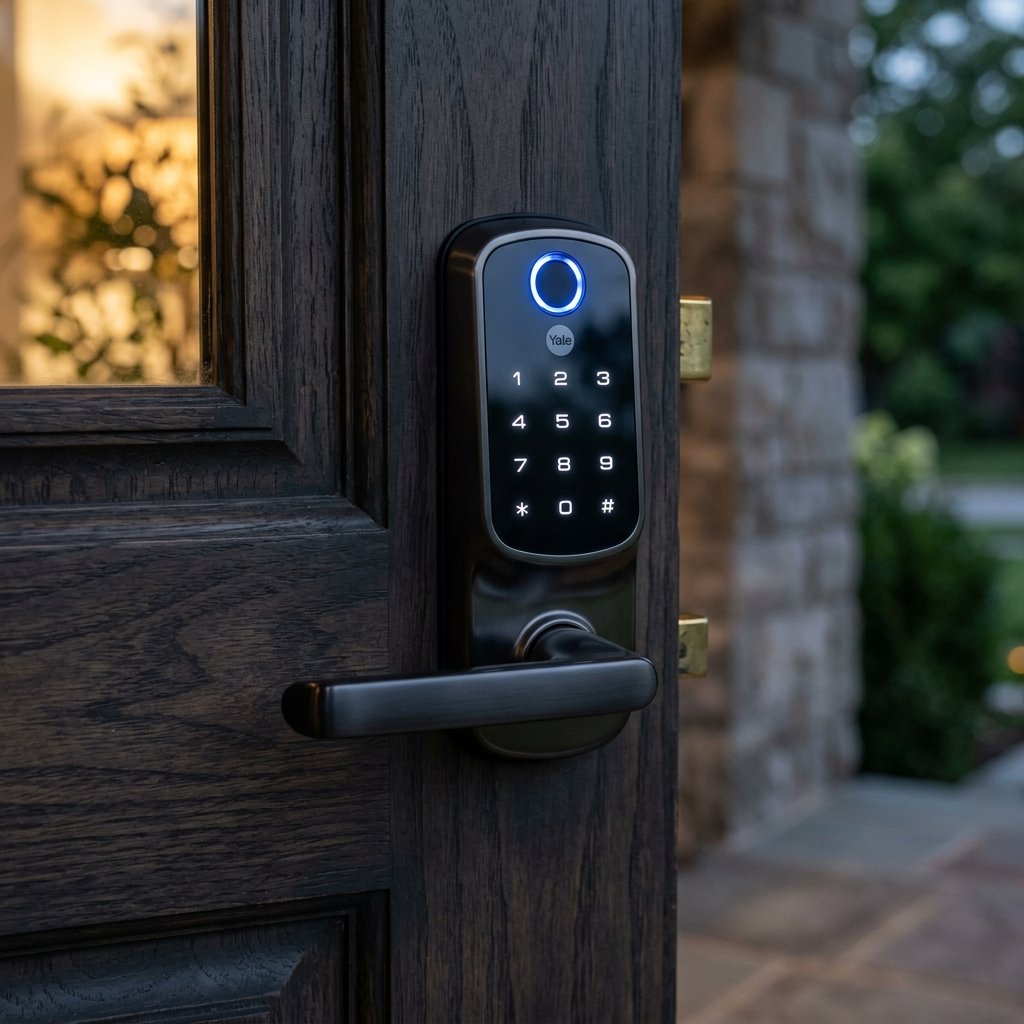
Sliding glass doors, ground-floor windows without secure locks, garages with visible interior access, and unlocked side doors are all attractive. Burglars prefer to enter quickly and quietly. A home with reinforced doors and secondary locks looks harder, which usually pushes them elsewhere.
4. Concealment (Landscaping)
Tall bushes, overgrown hedges, and dark corners create hiding spots. A burglar can approach a window without being seen from the street. Well-maintained landscaping with clear sightlines from the street is a subtle but meaningful deterrent.
5. Visible Valuables
A luxury car in the driveway signals valuables inside. Expensive electronics visible through the front window signal the same. Even a distinctive package delivery box left by the door tells a burglar what someone bought and roughly what it is worth. Burglars weigh potential reward against risk, and visible valuables shift that math.
6. Neighborhood Layout
Over 62 percent of burglars rely on vehicles (UNC Charlotte study), which means quick access to main roads matters. Cul-de-sacs and dead-end streets can look attractive because there is less through-traffic to spot the burglar, but corner lots and homes with easy escape routes are also favored. Neighborhoods with lower residential density and detached single-family homes are consistently preferred (Journal of Quantitative Criminology).
7. Recent Familiarity
Burglars often target neighborhoods they have already burglarized recently or areas near their own homes. This is why neighborhood-watch programs and neighbor communication networks are effective: they raise the perceived risk of being spotted or recognized.
What We See in Homeowner Conversations
Research tells one story. What our advisors regularly hear from homeowners across the country tells a slightly different one. Five patterns come up more than others:
- Homeowners in Florida and other coastal states often ask about deterrence during hurricane evacuations, when entire neighborhoods empty out for days at a time. This is a real risk period that traditional security marketing rarely addresses.
- Package theft in California, Texas, and dense metropolitan areas has become a distinct concern separate from traditional burglary. It is technically not a break-in, but it follows the same "opportunity" logic burglars use. A visible camera on the porch resolves this in most cases.
- Homeowners in Arizona, New Mexico, and other high-burglary-rate states often notice the deterrent value of visible security more than homeowners in low-crime areas. New Mexico has the highest home burglary rate in the US at about 604 break-ins per 100,000 people. Washington and Arizona follow closely.
- Rural homeowners in Chicago suburbs, Texas exurbs, and mountain communities often underestimate risk because they associate burglary with cities. The Journal of Quantitative Criminology data actually shows the opposite: lower-density areas are preferred by burglars.
- Social media exposure is more of a risk than most homeowners realize. Data from The Zebra shows that 61.1 percent of women post on social media when they are away from home, which effectively announces empty-house periods to a much wider audience than they realize.
None of these are reasons to panic. They are patterns worth knowing about, so you can decide which apply to your specific situation.
What Time of Day Do Most Burglaries Actually Happen?
The old image of a burglar creeping in at midnight is largely wrong. According to FBI 2024 crime data, there were 216,601 daytime residential burglaries versus 174,053 nighttime burglaries in the US. That is a clear majority happening during daylight hours.
The reason is straightforward: burglars want empty houses. During weekday work and school hours (roughly 10 AM to 3 PM), most people are away from home. Burglars know this and target these windows specifically. Weekends and evenings, when families are home, are actually lower-risk periods for burglary.
This has implications for home security: the biggest exposure is not nighttime, it is the workday. Motion-activated cameras and monitored intrusion detection during business hours is where most residential security matters.
Where Do Burglars Actually Enter Homes?
The pattern is remarkably consistent. Per research from InterNACHI and other sources, here is where US burglars actually enter homes.
| Entry Point | % of Burglaries | Practical Fix |
|---|---|---|
| Front door | 34% | Deadbolt with 3-inch strike plate screws, video doorbell, motion light. |
| First-floor window | 23% | Glass-break sensors, secondary locks, motion-activated cameras. |
| Back door | 22% | Deadbolt, sliding door bar for glass doors, motion light on back exterior. |
| Garage | 9% | Never leave garage door remote in a parked car, add smart garage controller. |
| Basement / other | 4% | Window well covers, motion sensors in basement. |
| Second floor | Around 2% | Very rare. Trim tree branches near second-floor windows. |
Around 81 percent of break-ins happen on the first floor. This means your first-floor doors, windows, and sliders are where residential security investment matters most. Second-floor exposure is relatively minor unless there is easy climbing access (trees, balconies, roof extensions).
What This Actually Looks Like
Imagine two houses next to each other on a quiet suburban street. Both are empty during work hours. House A has a visible security camera at the front door, motion lights on the sides, and an alarm sign on the lawn. House B has no visible security, tall bushes hiding the front window, and a car in the driveway that has not moved in three days. A burglar driving through the neighborhood in the afternoon sees both. According to the research, roughly 6 out of 10 would skip House A entirely and try House B. This is the actual math of burglary deterrence. It is not about stopping every possible attempt. It is about making your home the less attractive option compared to the ones nearby.
Wondering what would actually make your home less of a target?
Our advisors help homeowners identify the specific vulnerabilities burglars look for and prioritize the deterrents that give the best return. Free consultation, no pressure.
Call (855) 248-8052What Deters Burglars the Most?
The UNC Charlotte study of 422 burglars ranked deterrence factors. Here they are in order, from most effective to least:
- Visible security systems and alarm signs. 83% of burglars look for these. Most powerful single deterrent, and often the cheapest to implement.
- Dogs, especially large breeds. Barking creates immediate attention. Even small dogs create risk of noise and homeowner alertness.
- Visible cameras. Video doorbells and visible outdoor cameras signal that the burglar's face is being recorded. Very high deterrent value.
- Motion-activated lights. Cheap and highly effective. Sudden illumination signals the burglar has been noticed, even when no one is home.
- Signs of occupancy. Cars in driveway, TV/radio sounds, lights on timers. Anything that makes the home look actively lived-in.
- Reinforced doors and windows. Solid-core doors, deadbolts with 3-inch screws, and secondary window locks slow the burglar down and increase the risk of being seen.
- Neighborhood-watch signs. Community-level deterrence. Signals that neighbors are watching and communicating.
A layered deterrence approach is stronger than any single factor. This is exactly the logic behind modern home security systems and smart deterrence technology: combining visible cameras, motion lights, audible sirens, and automated lighting so a would-be burglar sees multiple risk signals simultaneously.
What Makes a Home Look Empty (and How to Fix It)?
Since burglars specifically target empty homes, understanding what signals emptiness helps you fix it.
Signals that say "nobody is home"
- Multiple newspapers or packages accumulating on the porch
- Same lights on 24/7 (obvious to a burglar casing the house)
- Same lights off 24/7 (obvious in a different way)
- No cars in the driveway for extended periods
- Overgrown lawn or unattended landscaping
- Blinds all closed at unusual times
- Social media posts announcing you are away
- Snow that has not been shoveled or leaves that have not been raked
How to fix it
The most effective fixes are the ones that create actual variation, not just constant activity. Smart lighting that follows a randomized schedule looks more realistic than lights on a rigid timer. Smart TVs that turn on for random periods signal occupancy. Trusted neighbors picking up mail and packages helps enormously. Smart home automation that varies lighting, blinds, and audio signals across the day is significantly more effective than static timers.
How Long Does a Break-In Actually Take?
Most residential burglaries are over in under 10 minutes on average. This is why professional monitoring response time matters so much: if a burglar has 10 minutes and monitoring dispatches police within 30 seconds, response time actually matters. And the arrest rate for residential burglary is only about 13.6 percent, meaning most burglars are never caught. Prevention through deterrence is far more effective than trying to recover after the fact.
Once inside, burglars head to specific locations: most go straight to the primary bedroom, where jewelry and safes are typically kept. Far fewer check a home office or bathroom. The primary bedroom is where valuables usually are, and burglars know this.
Quick Action Checklist
If you want to make your home a less attractive target this week, here are the 8 highest-return actions:
- Install a visible video doorbell at the front door.
- Add motion-activated lights to your porch, driveway, and back exterior.
- Reinforce your front and back door deadbolts with 3-inch strike plate screws.
- Trim bushes and hedges near ground-floor windows so there are no hiding spots.
- Add secondary locks to sliding glass doors and first-floor windows.
- Set lights on random smart schedules rather than fixed timers.
- Ask a neighbor to collect mail and packages when you travel.
- Stop posting on social media in real time when you are away. Post after you return.
Frequently Asked Questions
Quick answers to the questions US homeowners most often search about burglar behavior.
Do burglars really case a house before breaking in?
Sometimes, but not always. Over 75% of residential burglaries are crimes of opportunity, meaning burglars evaluate homes in real time rather than planning specific targets days in advance. Casing does happen for high-value targets, but most break-ins are opportunistic.
What time of day do most burglaries happen in the US?
During daylight hours between 10 AM and 3 PM, when most people are at work or school. FBI 2024 data showed 216,601 daytime residential burglaries versus 174,053 nighttime burglaries in the US.
How do burglars pick which neighborhoods to target?
Burglars typically target neighborhoods close to where they already live, favor lower-density areas with detached single-family homes, and often revisit neighborhoods where they have had success recently. Quick access to main roads is also a factor.
What is the single biggest deterrent for burglars?
Visible security systems. 83% of burglars look for an alarm before attempting a break-in, and 60% would choose a different neighborhood entirely if extensive security was visible. This makes visible security signs, cameras, and keypads the highest-return deterrent by a wide margin.
Do dogs actually deter burglars?
Yes. Dogs create noise risk and signal alertness. Even small dogs are deterrents because they bark and create attention. Large breeds are especially effective because they add physical risk on top of noise.
How long does the average burglary take?
About 10 minutes. Burglars want to be in and out quickly to reduce their risk of being seen or caught. This is why professional monitoring response times of under 30 seconds actually matter.
Are burglars usually caught?
Rarely. The arrest rate for residential burglary in the US is only about 13.6%. This means prevention through visible deterrence is far more effective than trying to identify or recover from a break-in after the fact.
Which US states have the highest burglary rates?
New Mexico consistently has the highest home burglary rate at about 604 per 100,000 people, followed by Washington at about 563 per 100,000. Arizona and Louisiana also rank in the top five in recent years.
Do burglars target social media when planning a break-in?
Increasingly yes. Data shows that a majority of homeowners announce travel or vacations on social media, effectively signaling empty-house periods. Delaying posts until after you return is one of the cheapest security improvements available.
Do burglars usually go to the primary bedroom first?
Yes. Most burglars head straight to the primary bedroom, where jewelry, cash, and safes are typically kept. Home offices and bathrooms are checked far less often. This is why keeping valuables in less obvious locations adds a layer of protection.
Do fake security cameras deter burglars?
Somewhat, but far less reliably than real ones. Experienced burglars can often spot fake cameras by the lack of wiring, blinking lights, or cheap housing. A real, visible camera is a much stronger deterrent, and it also records evidence if a break-in is attempted.
Do burglars come back to the same house?
Sometimes yes. Burglars occasionally return to a home they have successfully burglarized before, often 4 to 6 weeks later, expecting stolen items to have been replaced through insurance. Upgrading security after a break-in is strongly recommended for this reason.
Are corner houses more likely to be broken into?
Corner houses can be slightly more attractive to burglars because they offer more potential entry points, multiple escape routes, and often less direct neighbor visibility on one side. Extra attention to side-facing windows and doors helps offset this.
Related Reading
More honest guides from Home Secure Connect:
- Home Security Tips When You're Traveling for the Holidays
- Do You Actually Need a Home Security System? An Honest Answer
- Home Security Camera Placement: The Spots That Actually Matter
- Home Security for Apartments and Rentals: What Actually Works
Explore our home security services:
- Home Security Overview
- Security Cameras & Doorbell Cameras
- Door, Window & Motion Sensors
- Smart Deterrence Technology
- 24/7 Professional Monitoring
- New Home Security Installations
Get a Second Opinion, Free
Understanding how burglars think is one thing. Turning that understanding into practical protection for your specific home is another.
Home Secure Connect is an independent home security advisor. We help homeowners across the USA identify their specific home's vulnerabilities and design the right layered deterrence approach for their situation. Free consultation. No obligation. No pressure.
Call (855) 248-8052Mon to Fri, 10am–8pm ET
Trending This Week
What to Do When Your Security System Sends a Fals…
September 30, 2026 · About 9 min read
Home Security for Apartments and Rentals: What Ac…
September 28, 2026 · About 9 min read
Smart Locks vs Traditional Deadbolts: Which Actua…
September 23, 2026 · About 8 min read