Quick Answer
In one sentence: Wired home security systems are the most reliable and low-maintenance but require professional installation, while wireless systems are easier to install, portable, and modern enough for most homes, so the right choice depends on your property size, whether you rent or own, and how much installation work you want.
The longer answer: Wired systems connect every sensor and camera to a central panel with physical cables. They don't rely on batteries or Wi-Fi, which makes them extremely reliable, but installation means drilling and usually a professional. Wireless systems use encrypted radio signals and batteries, install in an hour with no drilling, and are portable when you move. Modern wireless systems with cellular backup are reliable enough for most homes. Wired still has an edge for very large properties or heavy-interference environments. Increasingly, the best answer is a hybrid that uses wired connections at critical points and wireless everywhere else.
Key Takeaways
- Wired systems are the most reliable and need no batteries, but installation is intrusive and usually professional.
- Wireless systems install in about an hour, need no drilling, and are portable when you move.
- The myth that wired is always more secure is outdated. Modern wireless with cellular backup and encryption is reliable for most homes.
- Wired still wins for very large properties, heavy signal interference, and tamper detection through supervised wiring.
- A hybrid system (wired at critical points, wireless elsewhere) is increasingly the best-of-both recommendation for 2026.
Ask two security installers whether wired or wireless is better and you'll often get two confident, opposite answers. The truth is less dramatic: both work, and the right choice depends on your home, not on which technology sounds tougher. The old assumption that wired is always safer hasn't kept up with how good modern wireless has become.
If you've already read our comparison of DIY vs professional installation, this post tackles the other big setup decision: the connection type itself. Here's the honest breakdown of wireless vs wired, where each genuinely wins, and why more homeowners are landing on a hybrid.
Wireless vs Wired: The Full Comparison
Here is the head-to-head across the nine factors that matter most when choosing between a wireless and a wired home security system.
| Factor | Wireless System | Wired System |
|---|---|---|
| Reliability | Very good with cellular backup. Can be affected by Wi-Fi issues. | Highest. No signal interference or dropouts. |
| Installation | Easy. About an hour, no drilling, often DIY. | Intrusive. Drilling and usually professional. |
| Batteries | Yes. Periodic battery changes needed. | None. Powered by home electrical. |
| Works in outages | Yes, with cellular and battery backup. | Yes, with battery backup at the panel. |
| Portability | High. Take it with you when you move. | Low. Stays with the house. |
| Best for property size | Small to large homes with good signal. | Large or multi-building properties. |
| Tamper detection | Heartbeat signals confirm each sensor is online. | Supervised wiring detects cut or shorted wires. |
| Renter friendly | Yes. No permanent changes. | No. Permanent installation. |
| Smart home integration | Extensive. Built for app control and automation. | Supported, sometimes less flexible. |
How Wired Home Security Works
A wired, or hardwired, system connects every sensor, camera, and detector to a central control panel using dedicated low-voltage cables. The panel continuously monitors each circuit. When a door contact opens or a motion sensor triggers, the circuit changes state and the panel processes the alert instantly. In any hardwired vs wireless alarm comparison, this direct physical connection is the root of wired's reliability advantage.
Because the connection is physical, the panel can also detect if a wire is cut or shorted, a capability the security industry calls supervised wiring. Wired systems draw power from your home's electrical system, so there are no sensor batteries to replace, and they aren't affected by Wi-Fi interference. According to industry references including SafeWise and commercial security sources, that combination is why wired remains the reliability benchmark, particularly for large or multi-building properties and environments with heavy electromagnetic interference.
Where Wired Wins
- Maximum reliability with no signal dropouts
- No sensor batteries to maintain
- Supervised wiring detects tampering
- Strong performance across very large properties
Where Wired Falls Short
- Installation means drilling and usually a professional
- Not portable, it stays with the house
- Not practical for renters
- Fewer providers still specialize in fully wired setups
How Wireless Home Security Works
A wireless system replaces cables with encrypted radio signals. Each sensor has its own battery-powered transmitter that signals the central hub when triggered. Sensors also send regular heartbeat signals, so the panel knows each device is online and working. Most modern wireless systems include cellular backup, so they keep communicating with the monitoring center even during power or internet outages.
Installation is the big advantage. Most wireless systems use adhesive mounts and app-guided setup, and industry sources such as Angi and consumer security reviewers report that a typical home is covered in roughly an hour with no drilling. When you move, you can uninstall the system and take it with you. Wireless systems are also built for smart home integration, app control, and easy expansion, which is a large part of why they have become the more common choice for everyday homes.
Where Wireless Wins
- Fast, non-intrusive installation, often DIY
- Portable and renter friendly
- Strong smart home integration and app control
- Easy to expand or reconfigure
Where Wireless Falls Short
- Batteries need periodic replacement
- Performance depends on Wi-Fi and signal strength
- Very large properties may need signal repeaters
The Big Myth: Is Wired Always More Secure?
This is the single biggest misconception in the wired vs wireless security system debate, so it's worth addressing directly.
Myth "Wired systems are always more secure because they can't be hacked or jammed."
The reality: Modern wireless systems use encrypted signals, cellular backup, and heartbeat monitoring that flags any sensor going offline. For the overwhelming majority of homes, wireless is more than secure enough. The idea that wireless is easily defeated comes from older, unencrypted systems, not today's technology.
Where Wired Genuinely Has an Edge
Wired keeps a real advantage in environments with heavy electromagnetic interference, across very long distances, and for supervised tamper detection on individual sensors. For a large estate or a commercial building, that edge matters. For a typical family home, it usually doesn't change the practical outcome.
The honest takeaway: reliability is real, but for most homeowners the wired advantage is smaller than the marketing suggests, and the convenience gap in favor of wireless is large.
Not sure whether your home needs wired, wireless, or a mix?
Our advisors match the connection type to your home size, layout, Wi-Fi coverage, and whether you rent or own. Free consultation, no pressure.
Call (855) 248-8052What We Hear From Homeowners on This One
This is one of the most common questions our advisors field. A few patterns come up again and again in those conversations:
- Homeowners in older, larger homes across the Northeast and Midwest often assume they need wired because of the size, then find that a wireless system with a couple of repeaters covers the house fine and installs in an afternoon.
- Renters and younger homeowners in California, Texas, and urban areas almost always land on wireless. The ability to take it to the next apartment matters more than the marginal reliability gain of wired.
- Homeowners with new construction sometimes ask about wiring during the build. That's the one moment when wired makes the most sense, since the walls are open and installation is easy and inexpensive.
- The single most common worry we hear about wireless is Wi-Fi reliability. The answer is almost always cellular backup, which keeps the system connected to the monitoring center even when the internet drops, a point we cover in our guide to professional monitoring.
The pattern: property size and whether you own or rent decide this far more often than any reliability debate.
Which Should You Choose?
Match your situation to the option that usually fits best.
Choose Wireless if...
- You rent, or expect to move within a few years
- You want fast installation with no drilling
- You want strong smart home integration and app control
- Your home has decent Wi-Fi coverage (or you'll add cellular backup)
Choose Wired if...
- You own a very large or multi-building property
- You're building new construction with open walls
- You want zero battery maintenance and maximum reliability
- Your environment has heavy signal interference
The Hybrid Option: Best of Both
Here's what many people don't realize: you don't have to choose one or the other. Security industry publications including Security.org and commercial integrators now frequently point to hybrid setups as a practical best-of-both option, and for good reason.
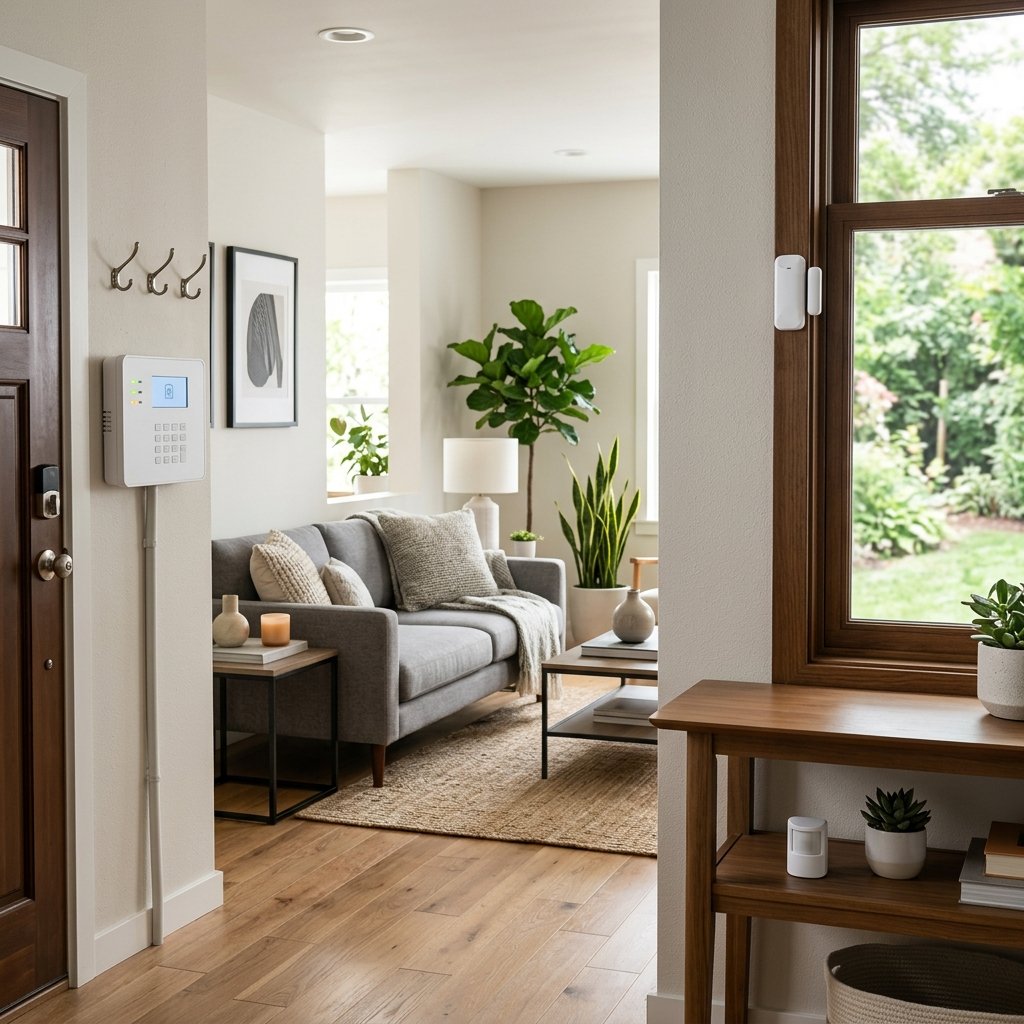
A hybrid system uses wired connections at critical points (the main control panel, key entry sensors, or a hardwired doorbell) combined with wireless sensors and cameras everywhere else. You get the rock-solid reliability of hardwired connections where it matters most, alongside the convenience, portability, and smart features of wireless for the rest of the home.
Hybrid Works Especially Well For...
Homeowners who already have some existing wiring from an older system. Rather than ripping it out or replacing everything, a hybrid setup reuses the reliable wired backbone and layers modern wireless devices on top. It's often the most practical and cost-effective path for an upgrade.
If you're planning a fresh setup or an upgrade, our guide to new home security installations covers how these components come together.
Frequently Asked Questions
Quick answers to the questions US homeowners most often search about wired and wireless security.
Are wired security systems better than wireless?
Not universally. Wired systems are more reliable and need no batteries, but wireless systems install faster, are portable, and are secure enough for most homes with cellular backup. Wired mainly wins for very large properties or heavy-interference environments.
Is wireless home security reliable?
Yes, for most homes. Modern wireless systems use encrypted signals, cellular backup, and heartbeat monitoring that flags any offline sensor. The main limitation is Wi-Fi dependence, which cellular backup solves by keeping the system connected during outages.
Can wireless security systems be hacked or jammed?
It's very difficult with modern encrypted systems. Today's wireless systems use encrypted signals and constant heartbeat monitoring, so a jammed or offline sensor is detected. The hacking concern mostly applies to older, unencrypted equipment, not current technology.
Do wired security systems work during a power outage?
Yes, if the panel has battery backup. Wired systems draw power from your home's electrical, but a backup battery at the control panel keeps the system running during an outage, typically for several hours.
Which is cheaper, wired or wireless home security?
It depends. Wireless has lower installation costs since it's often DIY with no drilling, while wired components can be affordable but installation is more expensive. Over time, wireless has battery costs and wired has virtually none, so total cost evens out.
Can I install a wireless security system myself?
Usually yes. Most wireless systems are designed for DIY installation with adhesive mounts and app guidance, and a typical home takes about an hour. Wired systems almost always require professional installation because of the drilling and cabling.
What is a hybrid security system?
A hybrid system combines wired connections at critical points, like the main panel and key sensors, with wireless devices elsewhere. It gives you the reliability of hardwiring where it matters plus the flexibility of wireless everywhere else, and is a popular 2026 choice.
Do I need wired security for a large house?
Not necessarily. Large homes can use wireless with signal repeaters to extend coverage, or a hybrid setup. Wired still has an edge for very large or multi-building properties, but many large single-family homes are covered well by wireless.
Is wired or wireless better for renters?
Wireless is almost always better for renters. It requires no drilling or permanent changes, installs quickly, and can be uninstalled and taken to your next home. Wired systems are permanent and designed for owned properties.
Can I upgrade from a wired system to wireless?
Yes, and a hybrid approach often makes this easy. Rather than removing existing wiring, many upgrades reuse the reliable wired backbone and add modern wireless sensors and cameras on top, which is usually more cost-effective than a full replacement.
Related Reading
More honest guides from Home Secure Connect:
- DIY vs Professional Home Security Installation: An Honest Comparison
- What is 24/7 Professional Monitoring, and Is It Worth It?
- Do You Actually Need a Home Security System? An Honest Answer
Explore our home security services:
- Door, Window & Motion Sensors
- New Home Security Installations
- 24/7 Professional Monitoring
- Home Security Overview
Get a Second Opinion, Free
Wired, wireless, or hybrid, the right answer depends on your home, not on which technology sounds tougher. Getting matched correctly saves money and frustration.
Home Secure Connect is an independent home security advisor. We help homeowners across the USA choose between wired, wireless, and hybrid systems from our trusted provider partners, based on your actual home rather than a sales script. Free consultation. No obligation. No pressure.
Call (855) 248-8052Available Mon to Fri, 10am to 8pm ET
Trending This Week

Contract vs No-Contract Home Security: Which Actu…
September 2, 2026 · About 7 min read
Fire Safety at Home: What Your Smoke Alarm Isn't …
August 31, 2026 · About 8 min read
What Modern Home Security Does That Old Systems D…
August 26, 2026 · About 8 min read