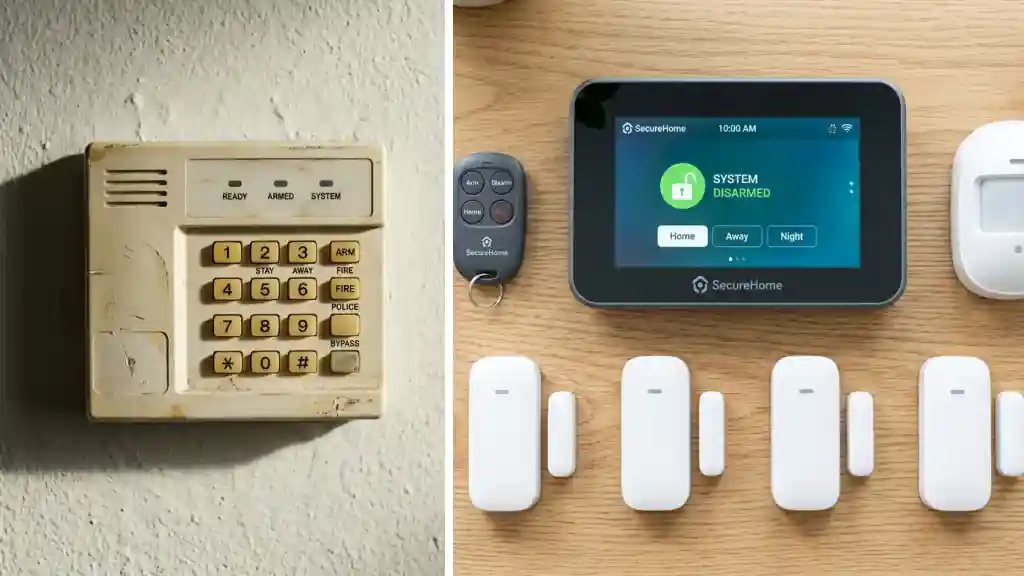
Quick Answer
In one sentence: Yes, a professionally monitored home security system is worth it for most US homeowners because it reduces burglary risk, can lower homeowner insurance costs by 10 to 15 percent, and provides faster emergency response than self-monitoring.
The longer answer: For most US homeowners, a home security system is worth the monthly cost when it produces measurable benefits: a homeowner insurance discount (typically 10 to 15 percent, saving $150 to $400 per year), lower risk of burglary (FBI data shows a burglary happens in the US roughly every 30 seconds), and faster emergency response through 24/7 professional monitoring (under 30 seconds typical). It may not be worth it if you have very low crime risk, no valuables at home, and a strong network of neighbors watching your property. This guide walks through both sides honestly.
Key Takeaways
- A burglary happens in the US roughly every 30 seconds, and 60% of burglars specifically avoid homes with visible security systems.
- A monitored security system typically earns a 10-15% homeowner insurance discount, saving $150-$400 per year.
- Monthly monitoring costs $25-$50, often 30-60% offset by insurance savings alone.
- A security system genuinely makes sense if you travel often, have valuables, live in a moderate-to-high-crime area, or care for aging parents.
- You may reasonably skip it if you are in a very low-crime area, rent short-term, or have someone home most of the time.
Most articles about home security assume you already want one. This one does not. If you are a US homeowner Googling whether a security system is actually worth the monthly cost, you deserve an honest answer. So let us do the math and cover the situations where a home security system is genuinely worth it, and the ones where it may not be.
We help homeowners across all 50 states figure out whether a security system fits their situation, from basic burglar alarms to full monitored alarm systems with smart security integration. About half the people we talk to end up getting one. The other half do not, and we tell them so. Here is the same framework we use during those conversations.
What Does a Home Security System Actually Do?
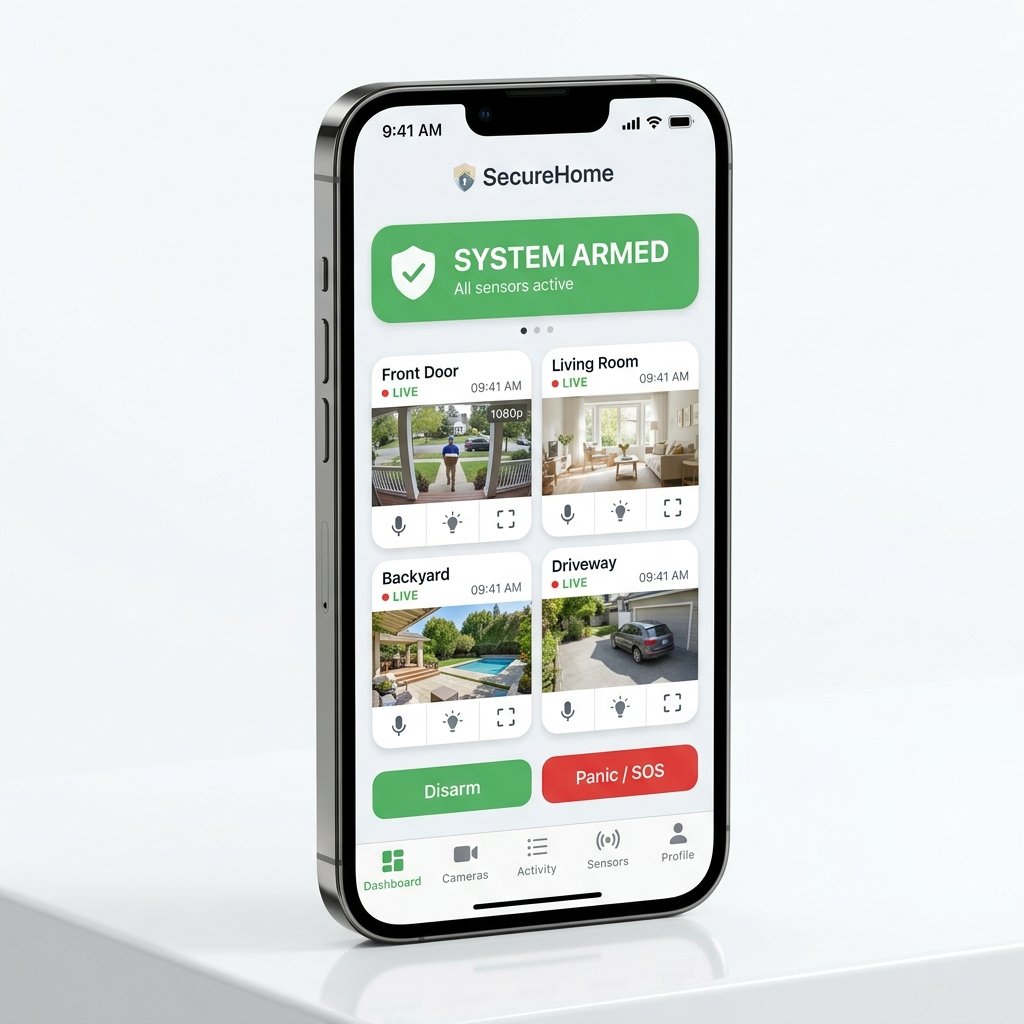
A modern home security system is more than an alarm. It is an integrated setup with four core functions:
- Detection. Door and window sensors, motion detectors, glass-break sensors, and cameras identify when something unusual happens.
- Notification. The system alerts you through a mobile app in real time, so you know what is happening even when you are not home.
- Deterrence. Visible cameras, audible alarms, and automatic lighting often stop a break-in attempt before it succeeds. This is the underrated part.
- Emergency response. A 24/7 professional monitoring center verifies the alert and dispatches police, fire, or EMS in under 30 seconds on average when needed.
The system does all four automatically, without you having to think about it. Modern systems combine security cameras with smart detection, door and window sensors, and 24/7 professional monitoring into one integrated setup. That is what you are paying for. The question is whether those four functions produce enough value for your specific home to justify the monthly cost.
What Do the Crime Statistics Actually Say?
Home security decisions should be grounded in real data, not fear-driven marketing. Here is what the verified US data shows in 2026:
Most burglaries happen during daylight hours, between 10 AM and 3 PM (when people are typically at work), not at night.
These numbers matter because they tell you something honest: burglars are opportunistic. They pick homes that look easier. Visible security features (cameras, signs, alarm keypads visible through windows) shift a burglar toward your neighbor's house instead. That is the deterrence value most homeowners underestimate.
What We See in Homeowner Conversations

Statistics tell one story. The other story comes from what our advisors regularly hear from homeowners across the country. Five patterns come up more than any others:
- The homeowners who regret waiting the most are the ones who called us after a break-in, not before. The cost of a security system is small compared to the emotional weight of walking into a home that was violated.
- Package theft has become the top concern in many California and metropolitan neighborhoods, especially since the shift to online shopping. Video doorbells alone often resolve this, even without a full home surveillance system.
- Homeowners in Florida and other coastal states often ask specifically about hurricane-resistant outdoor cameras and cellular monitoring backup. This matters because power and internet outages during storms are when residential security is most needed.
- Adult children calling on behalf of aging parents in Texas, Arizona, and rural Chicago suburbs are a growing segment. The concern is rarely just intrusion. It is fall detection, medical response, and water leak sensors during long absences.
- Many homeowners assume their existing homeowner insurance already discounts for basic security features. It usually does not. Only professionally monitored alarm systems with UL-listed certification typically qualify. This is one of the most common blind spots we help correct.
These are not reasons to buy a security system. They are what we have noticed after years of these conversations. Your situation may be entirely different, and that is fine.
What Insurance Discount Do You Get?
Most US homeowner insurance providers offer a discount for professionally monitored security systems. This is often the single biggest factor that tips a security system from "nice to have" to "pays for itself."
- Typical insurance discount: 10 to 15 percent off your annual premium for a monitored system. Some insurers offer up to 20 percent for systems that include smoke, carbon monoxide, and water leak sensors on top of intrusion detection.
- Real math: The average US homeowner insurance premium in 2026 runs $1,500 to $2,000 per year, according to the Insurance Information Institute. At a 12 percent discount, that is $180 to $240 back annually.
- How it offsets monitoring cost: Professional monitoring typically costs $25 to $50 per month ($300 to $600 per year). The insurance discount can offset 30 to 60 percent of the annual monitoring cost.
Important detail most homeowners miss: You need to actually notify your insurance company that you have a monitored system, and provide documentation. Most insurers require a UL-listed monitoring certification. The discount is not automatic. When we help homeowners with new installations, we make sure this documentation gets to the insurer so the discount actually applies.
Want to see what the math looks like for your specific home?
We help you calculate the actual insurance discount your specific insurer would apply, and compare that to monthly monitoring costs, before you commit to anything. Free consultation, no pressure.
Call (855) 248-8052When Does a Home Security System Actually Make Sense?
Based on the numbers above and the situations we see day to day, here are the scenarios where a security system genuinely produces enough value to justify the cost.
You have valuable items or important documents at home
If your home contains jewelry, electronics, artwork, firearms, or important documents worth more than a few thousand dollars, a monitored security system is one of the most cost-effective forms of protection. The average burglary loss of $2,800 exceeds an entire year of monitoring for most households.
You travel frequently or leave the house empty for long periods
Vacant homes are more attractive targets. If you travel for work, spend winters somewhere warmer, or have a second home, remote monitoring with real-time mobile alerts gives you visibility into what is happening while you are away.
Your neighborhood has been affected by burglaries or package theft
Burglars often work an area for weeks. If your neighborhood has recently experienced break-ins or package theft, visible security features shift them toward properties that look easier. This is the deterrence value the UNC Charlotte study documented.
You have aging parents living alone
Modern security systems include medical panic buttons, water leak sensors, and fall-detection integrations. For aging parents living independently, a monitored system provides both intrusion protection and health-emergency response. Many adult children help their parents with this setup as part of aging-in-place planning.
Your insurance discount makes the math work
If your homeowner insurance premium is high ($2,000+ annually) and your insurer offers a strong monitored-system discount, the insurance savings can offset most or all of the monthly monitoring cost. Effectively, you get the security system nearly for free.
What This Actually Looks Like
Imagine you are on vacation. Two hours into a beach day, your phone buzzes with an alert: motion detected at the back door of your house. Without monitoring, you are stuck 1,500 miles away trying to figure out if it is the neighbor's dog, a delivery driver, or something worse. With 24/7 professional monitoring, the monitoring center has already verified the alert, viewed the camera feed, and either confirmed it is a false alarm or dispatched local police. You get a text update either way, usually in under a minute.
That is the actual value of professional monitoring. Not the equipment. The peace of mind that someone is watching, verifying, and acting while you are not able to.
When Might a Home Security System Not Be Worth It?
Honest framing: not everyone needs a professionally monitored system. Here are situations where you might legitimately skip it or choose a simpler alternative.
You live in a very low-crime area with strong neighbor networks
If you live in a safe neighborhood with such low burglary rates and active neighborhood-watch programs that intrusion is genuinely rare, a full monitored security system may not be worth the monthly fee. A video doorbell and a couple of visible cameras may be sufficient deterrence, and you can revisit the decision if crime patterns shift.
You are renting short-term
If you will be moving in the next 6 to 12 months, a multi-year monitoring contract may not make sense. Self-monitored setups with simple cameras and DIY installation can cover the bridge period.
You do not have valuables and someone is home most of the time
If your home is rarely empty and you do not have items that would motivate a break-in, the risk math shifts. A basic setup (video doorbell, door lock) may be enough.
Your insurance does not offer a meaningful security discount
A few insurers do not offer security discounts, or offer only small ones. If that is your situation, the monitoring cost is not offset by insurance savings, and you are paying the full $25 to $50 per month. That may still be worth it for the deterrence and emergency response, but the math is less compelling.
Professional Monitoring vs DIY Security: Honest Comparison
For homeowners weighing whether to go with a monitored alarm system or a DIY setup, here is the honest side-by-side.
| Feature | DIY / Self-Monitored | Professional Monitoring |
|---|---|---|
| Monthly Cost | $0 (equipment only) | $25 to $50 per month |
| Response Time | Depends on you noticing the alert | Under 30 seconds typical |
| Insurance Discount | Not usually eligible | Typically 10-15% (UL-listed required) |
| Monitoring Type | You watch alerts on your phone | Trained monitoring center watches 24/7 |
| Emergency Dispatch | You call police yourself | Monitoring center dispatches automatically |
| Maintenance | You handle updates and battery changes | Often included in monitoring plan |
The short version: DIY costs less monthly but requires you to respond to alerts yourself, and typically does not qualify for insurance discounts. Professional monitoring costs $25-$50 monthly but handles verification, dispatch, and maintenance automatically. For most US homeowners with valuables or specific risks, the insurance discount alone often makes professional monitoring the better long-term deal.
How Much Does a Home Security System Cost in the US?
Industry pricing ranges for 2026, publicly available data across major providers:
| System Tier | Typical Equipment Cost | Monthly Monitoring |
|---|---|---|
| Entry / Basic | $200 to $500 | $20 to $35 / month |
| Mid-Range | $500 to $1,200 | $30 to $50 / month |
| Premium / Smart Home Integrated | $1,500 to $3,000+ | $50 to $100 / month |
Professional installation typically runs $99 to $199, often waived when bundled with a monitoring contract. Most homeowners land in the mid-range tier, with total first-year costs (equipment + installation + 12 months monitoring, minus insurance discount) somewhere between $700 and $1,300. You can also explore current promotional pricing on new home security installations if you are ready to compare specific options.
How to Decide: A Quick Checklist
Use this 5-point checklist to figure out whether a home security system makes sense for your specific situation.
- Call your homeowner insurance provider and ask what discount they offer for a monitored security system. Get a specific percentage.
- Multiply that percentage by your annual premium. That is your annual insurance savings from a monitored system.
- Compare that to a year of monitoring ($300 to $600 typical). If the insurance discount covers 50 percent or more of monitoring, the math is starting to work.
- Consider your risk factors: how often is the house empty, what is the crime rate in your area, do you have valuables, are you responsible for aging parents.
- If the math works and at least one risk factor applies, a security system is probably worth it for you. If neither is true, you may reasonably skip it or choose a lighter self-monitored setup.
Frequently Asked Questions
Quick answers to the questions US homeowners ask most often about whether they need a security system.
Do home security systems actually deter burglars?
Yes. About 60% of convicted burglars in a UNC Charlotte study said they would specifically avoid homes with visible security systems, and Rutgers research shows unmonitored homes are approximately 3 times more likely to be burglarized. Deterrence is the largest underestimated value.
Is a home security system worth it for a small house or apartment?
For a small owned home in a moderate-to-high-crime area, yes. For a small apartment where you would need landlord approval to install anything permanent, a video doorbell plus a couple of wireless cameras often makes more sense than a full monitored system.
What is the cheapest home security system in the US?
Basic self-monitored setups start at $150 to $250 in equipment with no monthly monitoring fee. Basic monitored systems run $200 to $500 in equipment plus $20 to $35 per month for professional monitoring.
Do I need professional monitoring, or can I self-monitor?
Self-monitoring saves the $25-$50 monthly fee but requires you to respond to alerts yourself. Professional monitoring provides 24/7 human verification and emergency dispatch, and is usually required to qualify for homeowner insurance discounts. Learn more about how 24/7 professional monitoring actually works.
How much does a home security system add to a US home's value?
Some real estate professionals report that professionally installed monitored security systems can increase market appeal, particularly for buyers with young children or valuables. The exact value bump depends on your local market, whether the system is transferable, and whether monitoring is included.
Will my home security system work during a power outage?
Yes, if properly configured. Modern security systems include backup batteries that keep the system running for 12 to 24 hours during power outages, and systems with cellular monitoring continue communicating even during internet outages.
Can I move my home security system if I move houses?
Usually yes for wireless equipment. Most systems can be uninstalled and reinstalled at a new address, though providers vary on transfer fees and contract terms. Confirm before signing an original contract.
Is a home security system tax deductible?
For most homeowners, no. Home security is considered a personal expense. However, if part of your home is used as a dedicated home office, a proportional share of monitoring costs may be deductible as a business expense. Check with a tax professional for your specific situation.
Can burglars disable home security cameras?
It is difficult to disable a modern wireless security camera without triggering an alert first. Cellular-monitored systems continue to communicate with the monitoring center even if internet is cut. Battery-powered cameras still record and upload footage if power is cut.
What happens to my security system if the WiFi goes down?
Depends on the setup. Basic WiFi-only systems stop working during internet outages. Systems with cellular backup (recommended) continue to communicate with the monitoring center during WiFi or power outages. Backup batteries typically last 12 to 24 hours.
Do security systems actually lower homeowner insurance premiums?
Yes, in most cases. Most US insurers offer 10 to 15 percent off annual premiums for a professionally monitored system with UL-listed certification. You must notify your insurer and provide documentation to receive the discount.
Do wireless home security systems actually work as well as wired systems?
Yes. Modern wireless security systems match or exceed wired systems on reliability, are far easier to install, and do not require drilling into walls. Wireless systems with cellular monitoring backup are especially reliable during power or internet outages.
Related Reading
- How Much Does a Home Security System Really Cost?
- Buying Your First Home Security System: The Five Places People Get Stuck
- Alarm System vs Security System: What's the Difference?
Explore our home security services and resources:
- Home Security Overview
- 24/7 Professional Monitoring
- Security Cameras & Doorbell Cameras
- Door, Window & Motion Sensors
- New Home Security Installations
- Current Installation Offers
Get a Second Opinion, Free
If you have read this far, you probably want to know whether a security system genuinely fits your situation. That is what we do.
Home Secure Connect is an independent home security advisor. We help homeowners across the USA compare options from our trusted provider partners, do the actual insurance discount math for your specific situation, and give you an honest recommendation. Sometimes that recommendation is to get a system. Sometimes it is not. We tell you either way.
Free consultation. No obligation. No pressure.
Call (855) 248-8052Mon to Fri, 10am–8pm ET
Trending This Week
What to Do When Your Security System Sends a Fals…
September 30, 2026 · About 9 min read
Home Security for Apartments and Rentals: What Ac…
September 28, 2026 · About 9 min read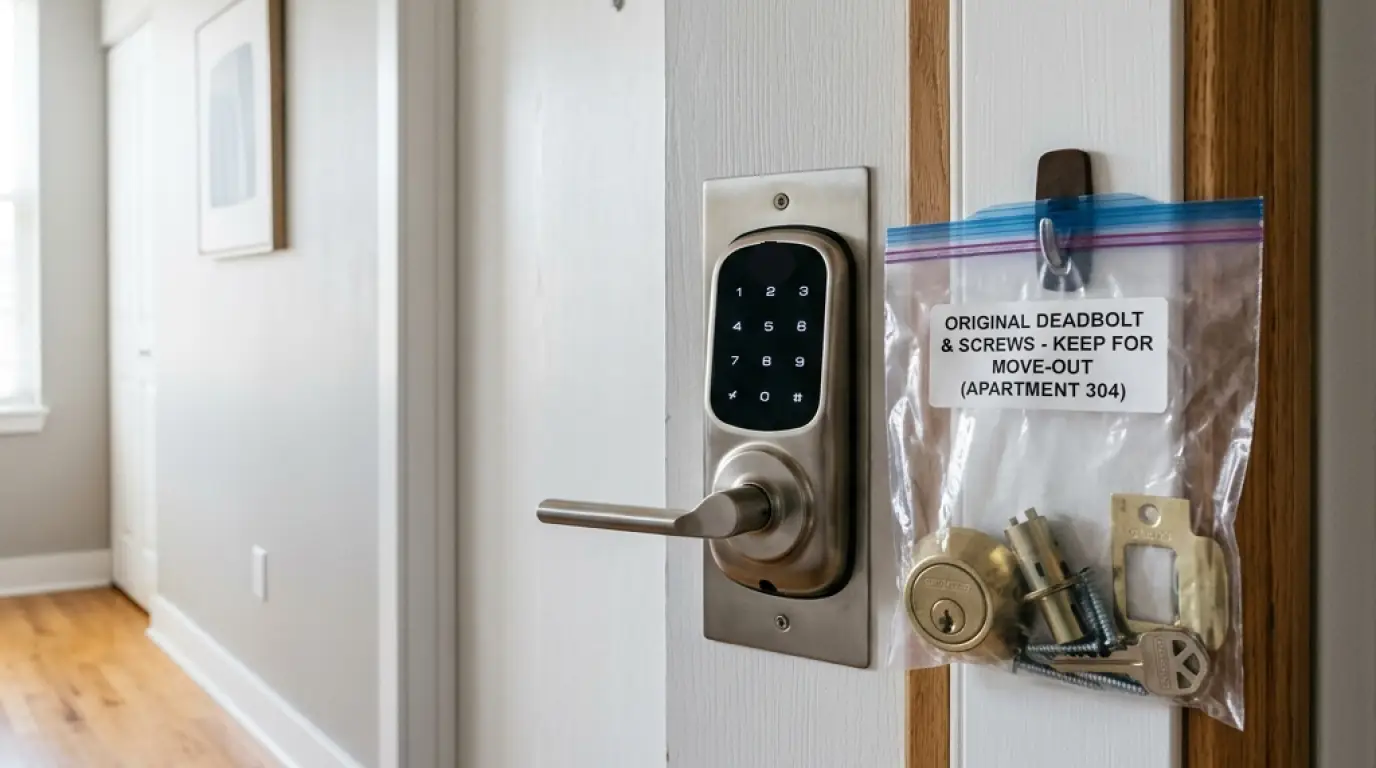
Smart Locks vs Traditional Deadbolts: Which Actua…
September 23, 2026 · About 8 min read