
Quick Answer
In one sentence: No-contract usually saves more for anyone who might move or change their setup, while a contract can edge ahead only if you are certain you will keep it for the full term, so the deciding factor is how long you will stay, not the monthly price.
The longer answer: On paper the two models can land close together over three years. What separates them is risk. A contract trades flexibility for a sometimes-lower monthly rate, but an early exit can cost hundreds of dollars. No-contract costs a little more upfront for equipment you own, and removes that exit penalty entirely. There is also a trap worth knowing: a plan advertised as no-contract can still tie you to a multi-year equipment payment, which is a separate obligation. This guide shows you how to decide based on your own situation.
Key Takeaways
- The deciding factor is how long you will keep the system, not the advertised monthly rate.
- No-contract plans let you cancel anytime with no termination fee, and you own the equipment.
- Contracts can carry a lower monthly rate but an early exit is costly, sometimes a large share of the remaining balance.
- A no-contract monitoring plan can still come with separate equipment financing that locks you in for years.
- Consumer reporting suggests owning equipment can cut five-year cost meaningfully versus leasing on a contract.
Ask which is cheaper and you'll get a different answer from every page you read, because the honest answer is 'it depends,' and what it depends on is you. The monthly rates are often closer than the marketing suggests. The real difference is what happens when your life changes. If you've already looked at what a system really costs, this is the narrower question of how to pay for it.
The Real Question Is How Long You'll Stay
Almost every comparison frames this as a price fight. It isn't. Consumer security guidance puts the trade-off plainly: are you willing to pay a little more upfront for freedom, or accept a longer commitment for a lower initial cost. And the single best predictor of which one wins is how long you expect to stay in your home.
A homeowner settling in for the long term can make a contract work, because they'll likely see out the term that makes the lower monthly rate worthwhile. Someone who might move, rent, or simply want the option to switch is far better served by no-contract, because flexibility is precisely what a contract takes away. So before comparing a single dollar figure, answer one question honestly: how confident are you that you'll keep this exact system for the next three to five years?

The Trap Nobody Explains: Two Obligations, Not One
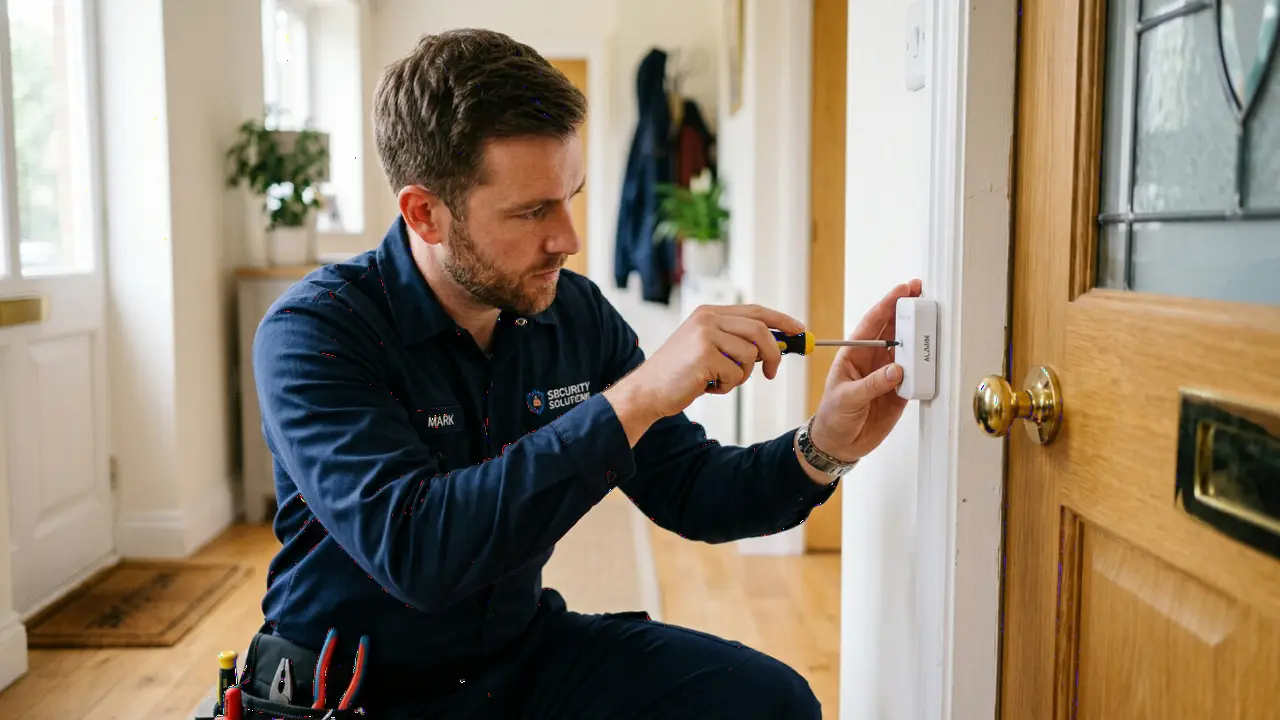
This is the part that catches people out, and it's the most useful thing in this article. When a provider says 'no contract,' that almost always refers to the monitoring agreement. It does not necessarily mean you have no financial commitment.
Here's the distinction. Your monitoring plan is the recurring fee for professional dispatch, and a no-contract plan lets you cancel that anytime. Your equipment is separate. If you financed it over time rather than buying it outright, that payment plan is its own obligation. Security industry reporting is explicit about this: a plan can have no monitoring contract while equipment financing still runs for 42 to 60 months, and those payments continue even if you cancel the monitoring.
The rule that protects you
Always separate the two questions. Ask: is the monitoring month-to-month, and separately, is the equipment paid off or financed? A truly commitment-free setup is one where you own the equipment outright and the monitoring is month-to-month. If either is financed or locked, you are committed, whatever the headline says.
The Break-Even, and the Cliff
Here is why time horizon decides it, with round numbers for illustration rather than a quote.
A simple worked example
Contract plan: free equipment, $30 a month, 36-month term. Three-year cost if you stay: about $1,080.
No-contract plan: buy equipment for about $400, then $20 a month. Three-year cost: about $1,120.
Stay the full three years and they finish within about $40 of each other, with the contract slightly ahead. That's the case the contract's marketing is built on.
Now the cliff. Suppose you move after 12 months. Industry reporting describes early termination fees that can reach a large share of the remaining balance, in some cases three quarters of it. On the contract above, that could add roughly $540 on top of the $360 you already paid, near $900 for a single year. The no-contract plan for that same year cost about $640, and you keep equipment you own.
That is the whole decision in one example. If you are certain you'll stay, the contract edges it. The moment there's a real chance you won't, no-contract wins clearly.
For the full cost picture across every component, not just the monthly fee, our guide to what a home security system really costs runs the complete three-year math.
Not sure which way your situation points?
Our advisors can look at your plans, your timeline, and the offers in front of you, then compare contract and no-contract options across our provider partners. Free consultation, no pressure.
Call (855) 248-8052 or request a free quote online.Which One Fits Your Situation
Match the model to your life rather than to a price. These are the situations that come up most.
| Your situation | Usually better | Why |
|---|---|---|
| You rent or may move soon | No-contract | Flexibility is the whole point; no exit penalty, and you take the equipment |
| You might switch providers | No-contract | You can leave the moment a better fit appears |
| Settled long-term, want lowest monthly | Contract can work | You'll likely see out the term the low rate depends on |
| You can't pay for equipment upfront | Contract or financing | Spreading the equipment cost is the main reason contracts exist |
| You're unsure about your plans | No-contract | Uncertainty is exactly what a termination fee punishes |
| You want simplest, cleanest terms | No-contract | One monthly fee you can stop anytime, nothing to exit |
Notice the pattern: no-contract is the safer default for most people, and a contract is the specialist choice for someone who is genuinely settled and wants to spread the equipment cost. That is close to the reverse of how the two are usually marketed.
The Hidden Costs on Each Side
Neither model is free of gotchas. Knowing them is how you avoid an unpleasant surprise.
On the contract side
Early termination fees, automatic renewal that can restart the commitment, and rate increases during the term. Our guide to choosing a provider covers the exact contract clauses to read before you sign.

On the no-contract side
You pay for equipment upfront, which is a larger day-one cost. And if you choose to self-monitor to save the monthly fee, remember that self-monitoring usually does not qualify for the home insurance discount, as our guide to insurance discounts explains. That lost discount can quietly narrow the saving you thought you were getting.
How to Decide in Five Minutes
- Answer honestly how long you expect to keep this exact system. Under three years, lean no-contract.
- Ask each provider two separate questions: is the monitoring month-to-month, and is the equipment owned or financed.
- If a contract is on the table, ask for the exact early termination cost if you cancel in month 12, in writing.
- If you're leaning no-contract, decide whether you want professional monitoring or self-monitoring, keeping the insurance discount in mind.
- Compare the honest total for the length of time you'll actually keep it, not the length the contract assumes.
If you cannot get a straight, written answer about termination costs or equipment ownership, treat that as its own answer about the provider.
Frequently Asked Questions
Is a no-contract security system cheaper?
Often, especially if there's any chance you'll move or switch. The monthly rates can be close, but no-contract removes the termination fee and leaves you owning the equipment, which consumer reporting links to lower long-term cost.
What is the deciding factor between contract and no-contract?
How long you'll keep the system. If you're certain you'll stay for the full term, a contract can edge ahead. If there's real uncertainty, no-contract usually wins because it carries no exit penalty.
Does no-contract mean no financial commitment at all?
Not always. No-contract refers to the monitoring plan. If you financed the equipment, that is a separate obligation that can run for years and continues even if you cancel monitoring. Always check both.
How much is a home security early termination fee?
It varies and can be steep. Industry reporting describes fees reaching a large share of the remaining balance, in some cases about three quarters of it, so cancelling a multi-year contract early can cost hundreds of dollars.
Do no-contract systems have professional monitoring?
Yes. Most no-contract systems offer professional monitoring on a month-to-month basis that you can start, pause, or cancel anytime. You get the same 24/7 dispatch without the long-term commitment a contract requires.
Why do contracts sometimes have lower monthly rates?
A contract lets the provider spread and recover equipment cost over the term and count on your commitment, so they can advertise a lower monthly figure. The trade-off is the exit penalty and the reduced flexibility.
Should a renter get a contract or no-contract system?
Usually no-contract. Renters move more often, and flexibility plus the ability to take owned equipment along matters more than a slightly lower monthly rate that a termination fee could erase on moving.
Can I switch from a contract to no-contract later?
Not without dealing with the contract's terms first, including any termination fee or remaining equipment balance. That's why the decision matters upfront; switching mid-term is exactly what the contract discourages.
Does self-monitoring on a no-contract plan save money?
It removes the monthly fee, but self-monitoring usually does not qualify for the home insurance discount that professional monitoring can earn. Weigh the saved fee against the lost discount before assuming it's cheaper overall.
What questions should I ask before signing?
Two above all: is the monitoring month-to-month, and is the equipment owned or financed. Then ask for the exact cost to cancel in month 12, in writing. Clear answers signal a provider worth trusting.
Related Reading
- How Much Does a Home Security System Really Cost?
- How to Choose Between Home Security Providers
- Homeowner Insurance Discounts for Security Systems: The Real Math
- Wireless vs Wired Home Security Systems
Explore our services:
Get a Second Opinion, Free
The cheaper plan and the right plan are not always the same, and the difference usually comes down to a question only you can answer: how long will you keep it?
Home Secure Connect is an independent home security advisor. We help homeowners across the USA weigh contract against no-contract for their real situation, and compare both across our trusted provider partners. Free consultation. No obligation. No pressure.
Call (855) 248-8052 or Request a Free Quote. Available Mon to Fri, 10am to 8pm ET.Trending This Week
Fire Safety at Home: What Your Smoke Alarm Isn't …
August 31, 2026 · About 8 min read
What Modern Home Security Does That Old Systems D…
August 26, 2026 · About 8 min read
Homeowner Insurance Discounts for Security System…
August 24, 2026 · About 8 min read